4 Montessori Color Mixing Activities
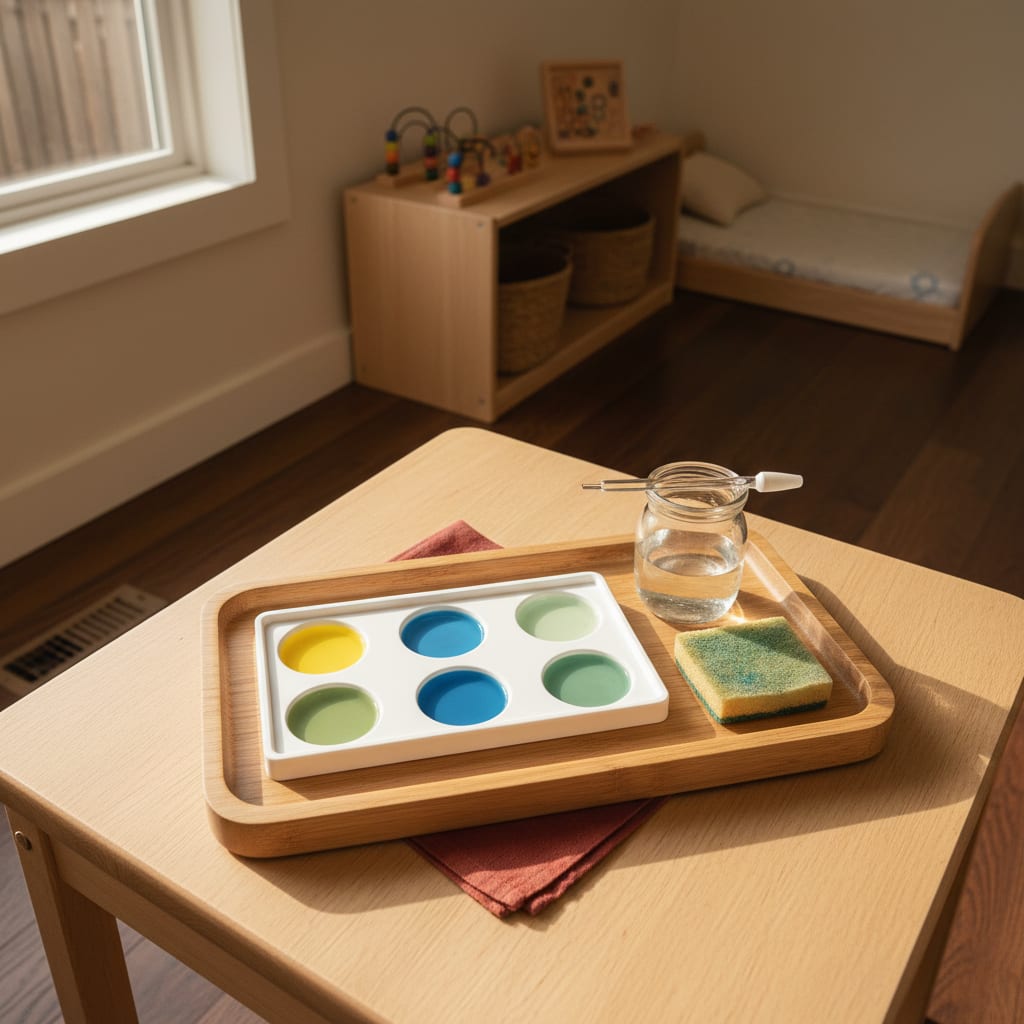
Here are four Montessori color mixing activities that work at home for roughly ages two to five: (1) dropper-and-dyed-water mixing in a white tray, (2) two-ball playdough blending you knead until a new color appears, (3) a three-jar primary mixing station with pipettes, and (4) translucent color paddles or tissue circles overlapped on a bright window. Each isolates one discovery — two colors, combined, become a third — and each is set up as self-contained tray work the child can choose, repeat and (mostly) clean up alone. One of this site’s most-shared posts in its first life was four color mixing lessons; this is that idea rebuilt for a normal kitchen.
Why color mixing earns its tray
Color mixing is a small science curriculum in disguise: cause and effect, prediction (“what will red and blue make?”), fine-motor work (droppers are secretly the best tong-alternative in the house), and the sensorial job of really looking. In Montessori terms it sits between sensorial and science, and it obeys the golden tray rule — everything needed, nothing extra, failure contained to a wipeable surface.
Two setup notes before the activities. First, present slowly once: squeeze, drip, watch, gasp; then hand it over and stop talking — the discovery is the child’s to make, a restraint I go on about in help your child concentrate. Second, food coloring stains fingers and grout, washable watercolors mostly don’t; choose your fighter accordingly.
Activity 1: droppers and dyed water (the classic)
Tray: two small jars of dyed water (start with just yellow and blue), one eyedropper or pipette (such as these jumbo eyedroppers), a white dish — ice-cube trays and sectioned paint palettes are perfect — and a small sponge or cloth for the inevitable.
The child drips one color into a well, adds the second, and watches green happen in the drop. That’s the whole lesson, and it does not get old for a startlingly long time. Rotate the pair weekly (red+yellow, red+blue) rather than offering all three at once — one combination per tray keeps the discovery crisp. Around age four, add a white crayon “recipe card” (blue dot + yellow dot = ?) and it becomes prediction work.
Activity 2: playdough color blending
Tray: two small balls of playdough in primary colors. The child mashes and kneads until the marbling gives way to a uniform new color — the slowest, most muscular version of the lesson, and the best one for two-year-olds because there’s nothing to spill. The marbled middle stage is genuinely beautiful; plenty of children stop there on purpose, which is allowed. Homemade dough in primary colors makes this nearly free.
Activity 3: the primary mixing station
The graduate version, for threes and up: three jars of primary-dyed water, three pipettes, a white six-well tray, and free rein. Now the child runs experiments — what do all three make? (brown; always, gloriously, brown) — and the work becomes self-directed chemistry. Add a small pitcher and the cleanup (pour wells back, wipe tray) becomes part of the work itself, which is the most Montessori sentence in this post — pouring and wiping being the same skills as the rest of toddler practical life.
Activity 4: colors on the window
No water at all: translucent color paddles, or circles cut from tissue paper or cellophane, overlapped against a bright window or on a light table if you have one. Blue over yellow makes green with zero drips, and the same discovery arrives through a different sense-door. This one travels (car windows count), pairs with a color-hunt walk — naming the colors as you go is toddler language work in disguise — and makes a lovely quiet option for days when dyed water sounds like a threat.
Seasonal versions of all four — icy colors in winter, flower-petal color walks in spring — show up throughout the Network Reader roundups, and the maker of the original version of this idea still writes at Sugar, Spice and Glitter, whose kitchen-science archive is worth an afternoon. For hundreds more themed variations, Living Montessori Now has collected the community’s color activities for a decade.
FAQ: Montessori color mixing
What age can toddlers start color mixing activities?
Around two for the playdough and window versions (no spills, no droppers), around two-and-a-half to three for water-and-dropper work, whenever pouring and pipette-squeezing are physically doable. The mixing station suits threes and up.
What colors do you start with?
One primary pair per tray — yellow and blue is the classic opener because green is such a dramatic reveal. Rotate pairs before offering all three primaries at once; a single crisp discovery beats a muddy free-for-all early on.
Is color mixing actually Montessori?
It’s Montessori-aligned home work rather than a canonical classroom material: it isolates one concept, runs as self-chosen tray work, and builds sensorial discrimination. The classroom’s color tablets do the grading work; mixing adds the transformation the tablets deliberately leave out.
How do I keep the mess survivable?
Tray with a lip, white surface, tiny quantities (an inch of water per jar), a sponge on the tray, and washable colors. The mess ceiling is set by how much water you put out — set it low and the cleanup is part of the child’s work, not yours.