Lovevery Alternatives: What to Buy Instead
The best Lovevery alternative for most families isn’t another subscription — it’s buying three or four anchor materials per stage yourself and rotating them properly. That route costs a fraction of a full subscription, and the choosing is the part that actually teaches you your child. If you do want a box to arrive, KiwiCo’s Panda Crate is the cheaper stage-based option, and buying Lovevery kits secondhand gets you the real thing at a discount. Here are the five routes, with what each one honestly costs and what it costs you in effort.
Buy the anchor materials yourself
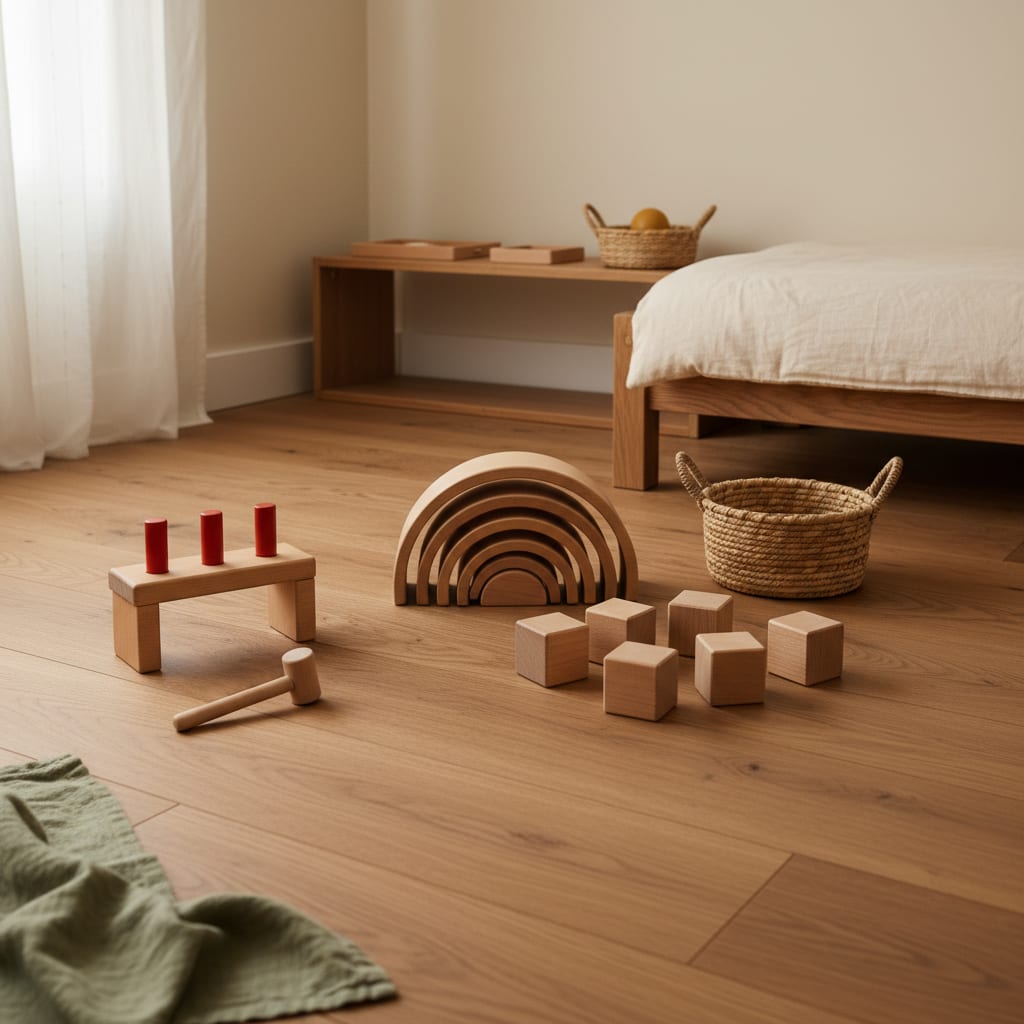
This is the route I’d recommend first. Every stage really only needs a handful of things, and the same short list turns up in every good toy guide because children keep proving it. Four purchases that carry a child from around one to four:
- A rainbow or arch stacker. The Grimm’s large 12-piece rainbow is the archetype — stacking, nesting, tunnels, fences, bridges — and it’s the single wooden object I’ve watched survive the longest span of ages. Expensive once; used for years.
- A set of unit blocks. PlanToys’ 50-piece unit block set is proportioned properly, which matters more than the number of pieces: unit blocks are built to fixed ratios, so towers actually work and the math sinks in through the hands.
- One pounding or hammering work. The Hape pound and tap bench covers the whole hitting-things phase with a job attached, and the slide-out xylophone gives it a second life at two.
- Real practical-life tools. A child-size pitcher, a small sponge, a dustpan and brush that work. These cost almost nothing and get used more than anything in any subscription box — the full ladder is in practical life activities by age.
Add a couple of good puzzles and a language basket and you have covered what four Lovevery kits would have brought, for well under the price of two. What you don’t get is the play guide or the timing prompts, which is a genuine loss if you want the thinking done for you.
The cheaper subscription: KiwiCo’s Panda Crate
Panda Crate is KiwiCo’s baby-and-toddler line, shipping every other month for children from birth to around three. It runs roughly $40–45 per crate — around half a Lovevery kit — and includes a parent booklet in the same spirit.
Be clear about what changes at that price. Panda Crate leans more craft-and-activity, with more paper and plastic in the mix, and the objects are not built to the same standard: they’re good for the stage, not heirlooms for the shelf. If what you liked about the Lovevery idea was a box arrives and I know what to do this month, Panda Crate delivers that for less. If what you liked was the materials, it won’t.
Secondhand kits: the real value play
Used Lovevery kits move constantly through local parent resale groups and the big secondhand marketplaces, usually at a large discount, and because the wood and cloth are durable, “used” is mostly cosmetic. Two ways to use that:
- Buy one kit for the stage you’re in — the cheapest possible trial of the whole format, and if it flops you’ve lost very little.
- Buy a stage behind the market. Kits for younger stages come up cheapest, because everyone is selling out of them at once. Buying the 19–21-month kit when your child is 18 months is the same box for less.
Check for the complete parts list before buying, wash the cloth items, and inspect wood for splitting. What you lose is the surprise and the shipping cadence; what you gain can be half the cost or better.
Toy libraries and lending shelves
Many public libraries now lend toys, puzzles and sensory kits alongside books, and dedicated toy libraries exist in a lot of cities — often for a small annual fee. This is rotation without acquisition: the child gets novelty every few weeks, and nothing accumulates in your cupboard.
It’s the most under-used alternative on this list, and it fits the anti-clutter case perfectly. The catch is availability, condition, and the discipline of due dates with a toddler who has bonded with a borrowed shape sorter.
Lovevery à la carte, without the plan
Lovevery sells individual products outside the subscription, and buying one or two of the pieces you actually want — rather than the whole staged run — is a perfectly reasonable middle path. Their play kits and standalone products share the same build quality; you’re just declining the calendar. If you decided against subscribing after reading our Lovevery Play Kits review, this is how you keep the two items you liked without the other forty.
The alternative that no longer exists
If a 2021 blog post sent you looking for Monti Kids — the subscription designed around certified-guide-approved materials — it stopped manufacturing and selling in 2023 and its site has since closed. Occasional secondhand sets still surface, and they’re good materials, but there is nothing to subscribe to. Any “Monti Kids vs Lovevery” comparison you find is now history rather than shopping advice.
Comparing them side by side
| Route | Rough cost | Effort | What you’re really getting |
|---|---|---|---|
| Buy anchor materials yourself | Lowest per stage | Highest — you choose | Better objects, fewer of them |
| Panda Crate | Around $40–45 per crate, every 2 months | Low | Stage-timed activity boxes, lighter build |
| Secondhand Lovevery | Often a fraction of retail | Medium — hunting | The real materials, no cadence |
| Toy library | Small fee or free | Medium — trips, due dates | Rotation with zero accumulation |
| Lovevery à la carte | Per item | Low | The pieces you actually wanted |
Whichever route you take, the deciding factor isn’t the box — it’s whether the material ends up on a shelf a child can reach, in small enough numbers to be seen. Four things out and forty things stored beats forty things out, every time; the mechanics are in our toy rotation system, and the standards for judging any wooden object are in wooden toys worth buying.
FAQ: Lovevery alternatives
What is the cheapest alternative to Lovevery?
Buying three or four anchor materials per stage yourself, plus real practical-life tools, is the cheapest route by a wide margin. A toy library is cheaper still if you have one nearby, since you’re borrowing rather than buying.
Is Panda Crate as good as Lovevery?
Not on materials — Panda Crate is lighter-built and more activity-led. It is roughly half the price and it does the same core job of delivering age-appropriate play and parent guidance on a schedule. Which matters more depends on whether you were buying the objects or the plan.
Is it worth buying Lovevery secondhand?
Usually yes. The materials are durable, the resale market is active, and a secondhand kit is the cheapest way to test the format. Confirm the parts list is complete before you buy.
What happened to Monti Kids?
The company stopped manufacturing and selling toys in 2023 and its website has since closed. Older sets appear secondhand, but there’s no active subscription to join.