Help Your Child Concentrate: 10 Montessori Moves
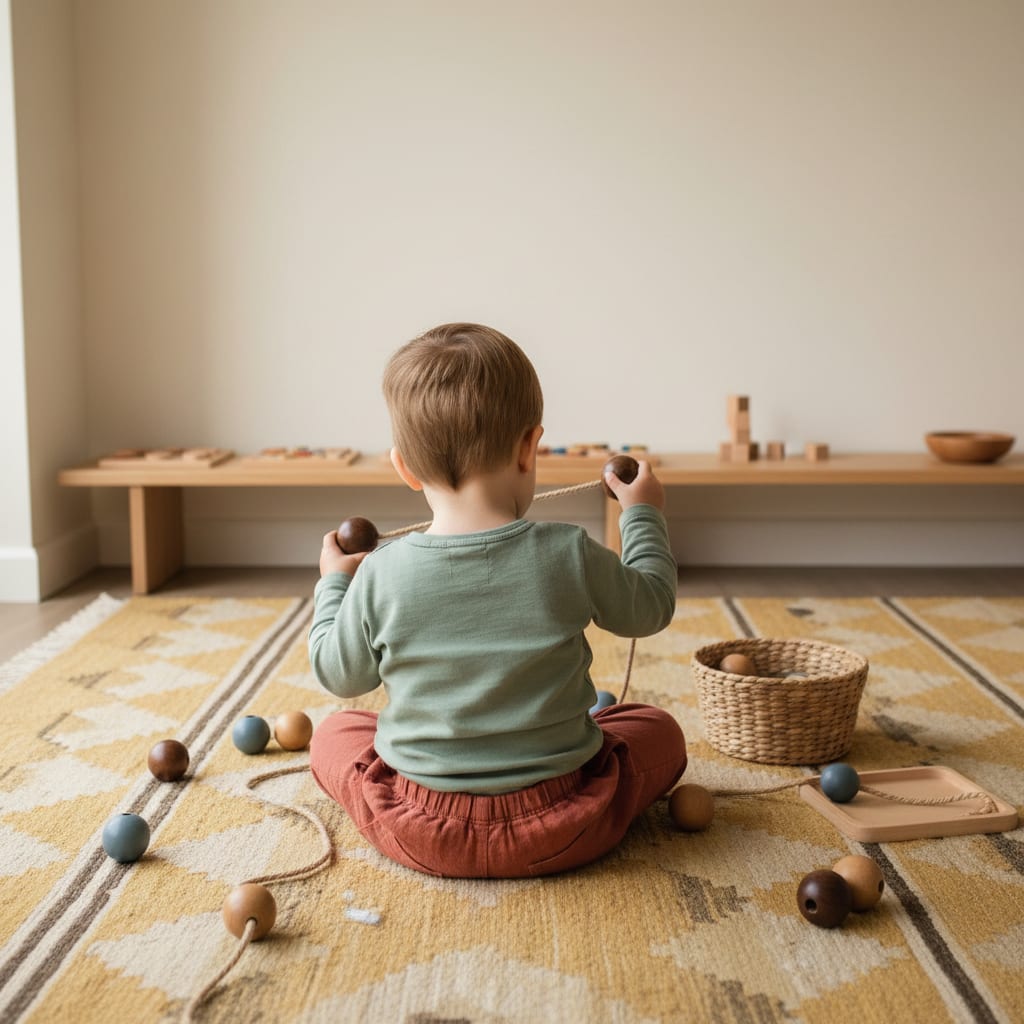
To help your child concentrate, the Montessori playbook says: protect attention rather than train it. In practice that means ten concrete moves — never interrupt deep play (even with praise), shrink the shelf to a few real choices, give whole unhurried blocks of time, cut background noise and screens-as-wallpaper, offer work with real stakes, prepare materials so the child can start without you, sit on your hands, narrate less, accept repetition as the point, and let the activity end on the child’s schedule, not yours. Concentration isn’t a talent some toddlers have; it’s a flame any toddler grows when nobody keeps blowing it out. One of this site’s best-loved posts made this argument in 2015; here’s the revival, with a decade more mess on my sleeves.
The reframe: attention is protected, not produced
Montessori’s most quietly radical observation is that young children already concentrate — ferociously — when three conditions line up: freely chosen work, hands involved, and no interruption. The classroom is engineered around defending that state. Homes can borrow the engineering without buying anything. The ten moves:
1. Never interrupt deep work — including with praise
The hardest one first. A child absorbed in posting coins does not need “Great job, buddy!” — the interruption costs the same whether it’s criticism or applause. The look-up you triggered broke a thread the child was spinning. Save the commentary for after the work ends on its own; a quiet nod covers the in-between.
2. Shrink the shelf
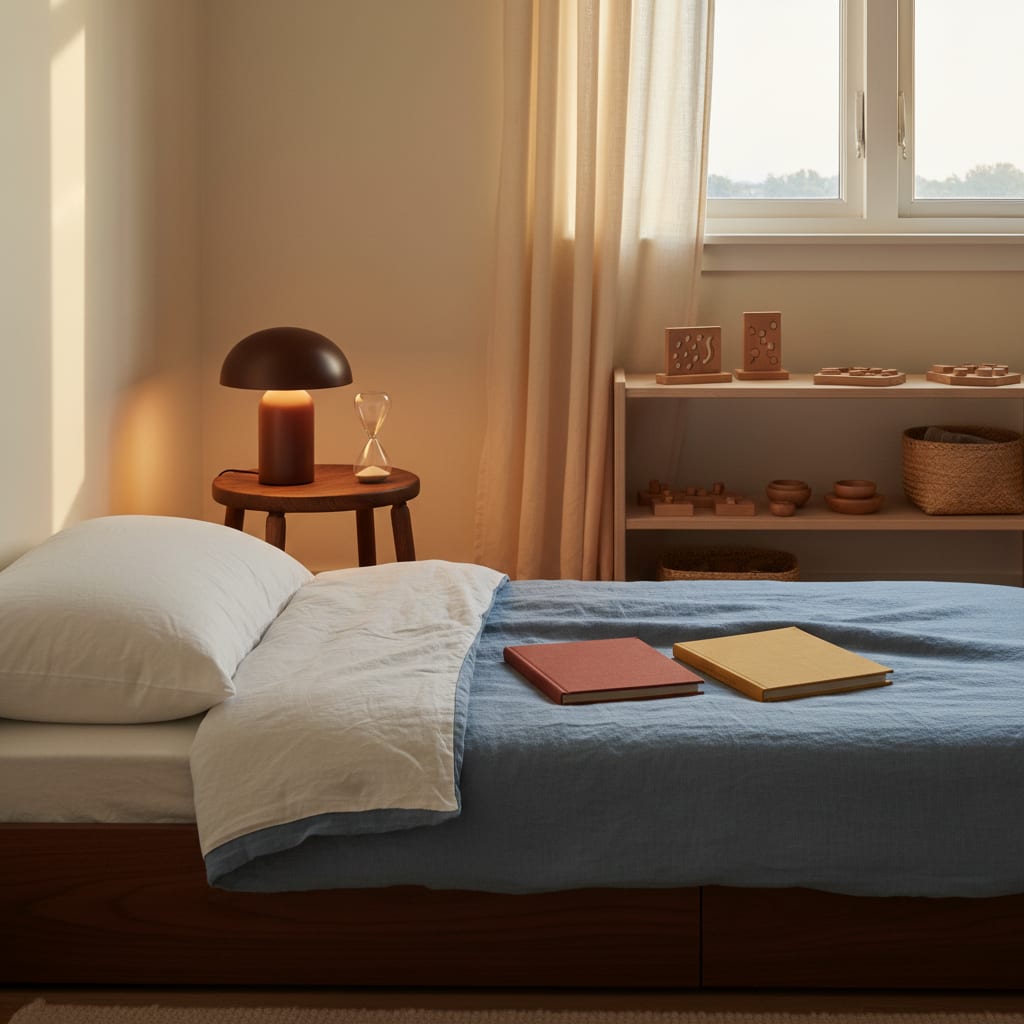
Six choices concentrate; twenty-six scatter. Display a handful of options face-out and rotate the rest — the shelf logic behind our materials-by-age guide. A shelf with four toys beats a toy box with forty, and this post is where that house motto earns its rent.
3. Give real time blocks
Classroom work cycles run long for a reason: deep engagement has a warm-up cost, and a child who learns that play gets cut off at any moment stops investing. You can’t do three-hour cycles at home on a Tuesday — but you can stop scheduling toddler days in twenty-minute confetti. One genuinely open morning stretch beats four supervised mini-sessions.
4. Kill the background noise
TV-as-wallpaper measurably fragments children’s play attention — the show keeps making bids for it. Music has its moments; during work time, silence is the luxury option. (Adult phone-checking counts as noise too. Ask me how I know.)
5. Offer work with real stakes
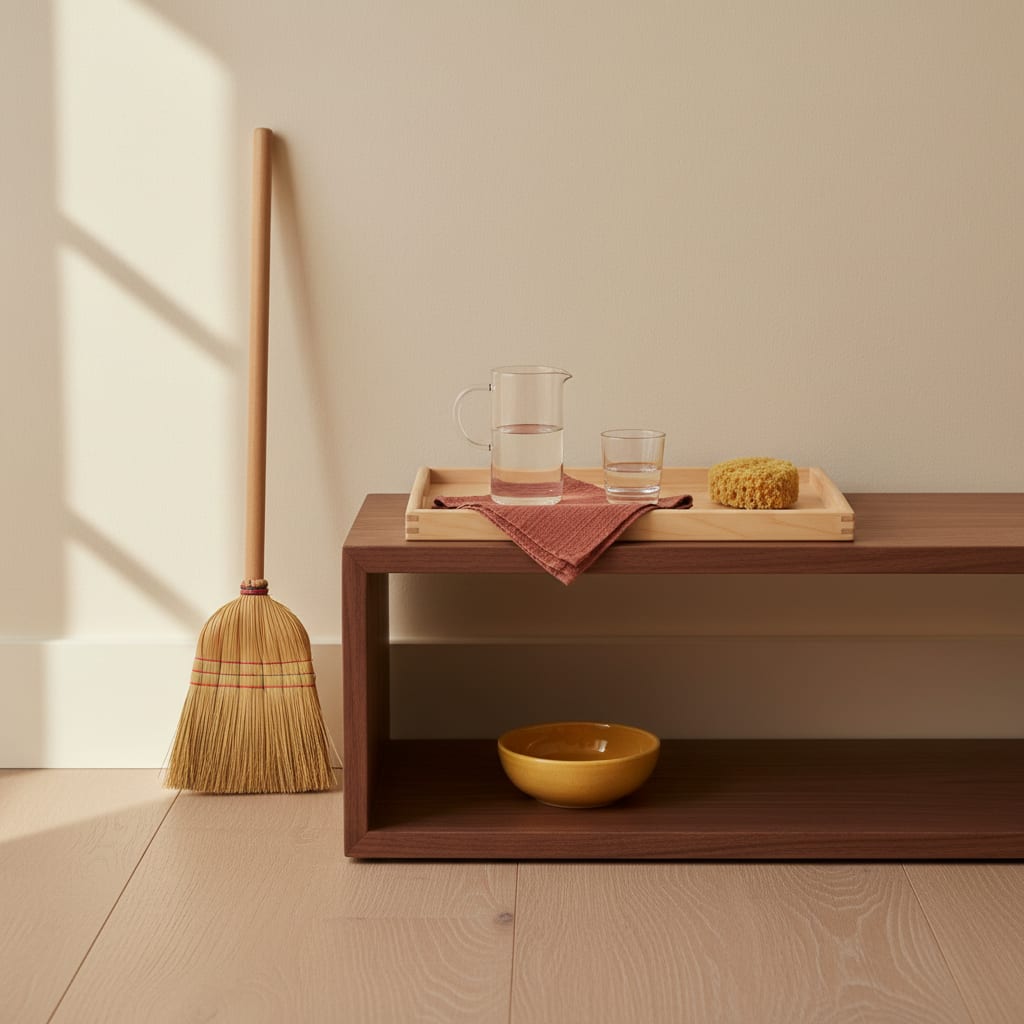
Water actually pours, banana slices get actually eaten, the mirror gets actually clean. Real consequence holds attention in a way pretend feedback can’t — it’s why practical life work reliably produces the longest concentration stretches in the room, and why droppers full of dyed water outperform most electronic toys — see the color mixing trays.
6. Prepare the start
A child who must find you, ask, and wait has already spent their spark. Complete trays, reachable shelf, water pre-filled, apron hanging where hands reach: the environment says begin whenever you like.
7. Sit on your hands
Every unrequested “here, like this” teaches the same lesson: your effort was wrong, wait for staff. Help when asked; otherwise, struggle is the workout. Watch the frustration level like a lifeguard, not a coach.
8. Narrate less
A running commentary keeps attention pointed at your voice instead of the work. This is also the argument against “careful!” as a reflex — children who hear it constantly check your face instead of their grip, on ladders and everywhere else (same logic as the spotting rules in the Pikler triangle guide).
9. Respect repetition
The ninth pouring of the same water is not a rut; it’s a rep. Repetition is what mastery looks like from the outside, and the urge to “extend” or upgrade an activity mid-love is adult boredom, not child need. The activity ends when it stops being chosen.
10. Let it end on the child’s clock
Where possible, build buffer so “time to go” doesn’t routinely guillotine deep play. When transitions must happen, warn early and specifically. A childhood of finished thoughts is the actual concentration curriculum.
None of this is my invention — it’s bog-standard Montessori, said plainly. For the credentialed versions: Nduoma (whose founder’s writing on concentration linked to this very site’s original post, a link we’re honored to return), The Montessori Notebook, and Montessori in Real Life all cover the home work-cycle beautifully.
FAQ: children and concentration
How long should a toddler be able to concentrate?
There’s no number worth policing. Rules of thumb like “a few minutes per year of age” float around, but absorbed toddlers routinely blow past them and distracted ones under-shoot for reasons of environment, not deficit. Track the trend in your house, not a benchmark.
Does my child have an attention problem?
This post is about ordinary attention in ordinary environments — it isn’t diagnostic. If concentration concerns persist across settings and your gut or a teacher flags it, talk to your pediatrician. Environmental tuning helps every child; it isn’t a substitute for evaluation when one’s warranted.
Do screens ruin concentration?
“Ruin” oversells it, but background TV demonstrably fragments young children’s play, and fast-cut content out-stimulates slow hands-on work. The Montessori home move is boring: screens off during work time, and never as wallpaper.
My child flits between activities constantly. Where do I start?
Moves 2 and 4: shrink the choices and kill the noise, then give one open morning and watch. Most flitting is a rational response to an over-supplied, over-interrupted room — fix the room before worrying about the child.