Montessori Floor Bed: The Complete Guide
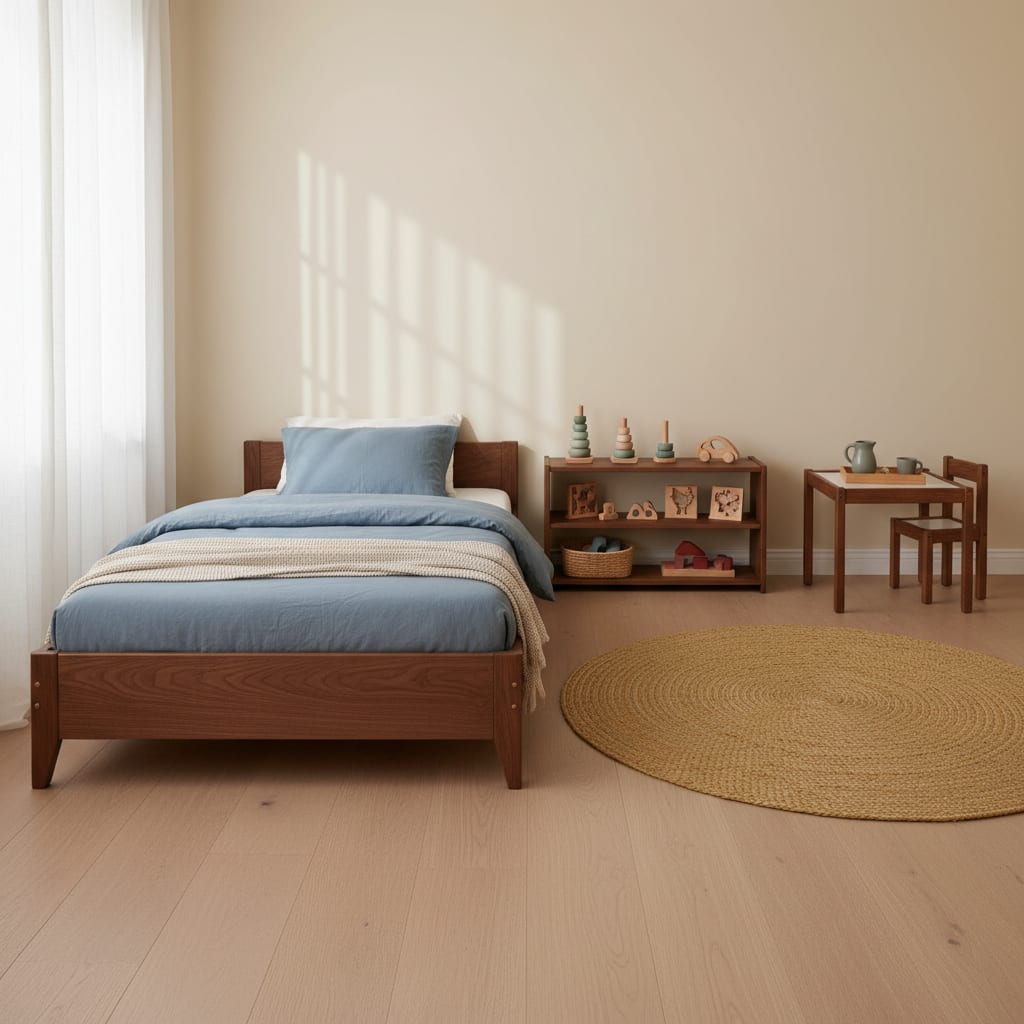
A Montessori floor bed is a mattress at floor level — on the floor itself or on a low frame — that a baby or toddler can get into and out of without help. The point isn’t the furniture; it’s the freedom. A child who can leave their bed when they wake doesn’t have to cry for a rescue, and a child who can climb in when they’re tired starts learning what tired feels like. Most families who use one start somewhere between when independent rolling is established and about 18 months, prepare the whole room as if it were the crib, and keep it until a regular bed makes sense. Here’s the full picture, roll-offs and all.
What makes it “Montessori”
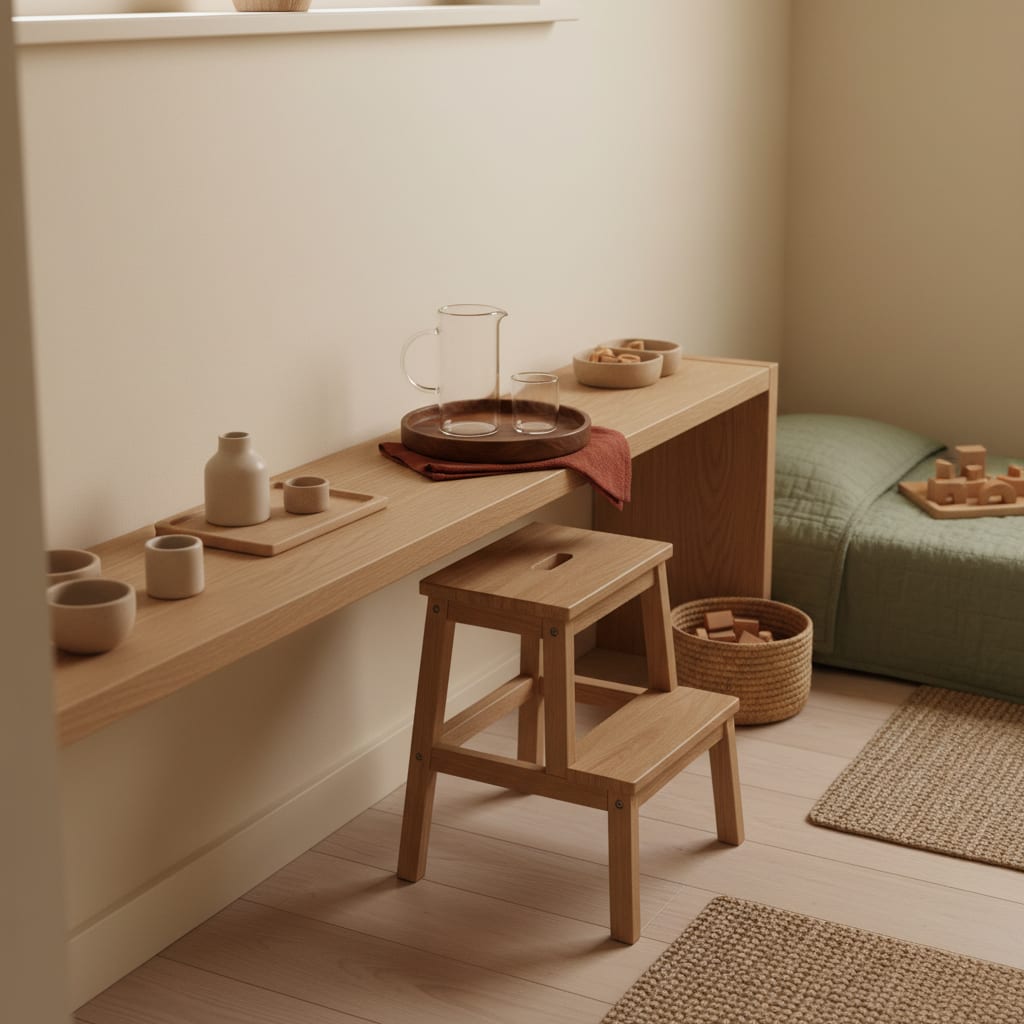
Maria Montessori’s core idea for the home is the prepared environment: rooms scaled to the child, so the child can act without an adult’s hands. The floor bed is the sleep-shaped version of that idea — the same logic as the low shelf and the small pitcher. Nothing about a bed on the floor is magic. What matters is what it makes possible: movement, self-serve wake-ups, and a room the child owns rather than a container the child is placed in.
It’s worth saying plainly, because the internet won’t: a floor bed is a choice, not a requirement, and using a crib does not disqualify a family from anything. I spent three years as an assistant in a Montessori toddler community and I’ve seen both work. If the floor bed idea stresses you more than it frees your child, that trade is not worth it — and if it’s the sleep piece you’re weighing, I’ve written an honest companion post on floor beds and independent sleep.
When to start
There are three common on-ramps:
- From early infancy. Some families use a floor bed nearly from the start. If you go this route, follow safe-sleep guidance exactly as you would with a crib — firm flat mattress, nothing soft in the sleep space, and talk it through with your pediatrician first. The American Academy of Pediatrics’ safe-sleep basics apply to any sleep surface, floor beds included.
- Around 6–12 months, once rolling and crawling are established — the child can actually use the independence the bed offers.
- At the crib-to-bed transition, anywhere from 15 months to 3 years. This is the easiest sell: you were leaving the crib anyway, and a floor bed is a gentler landing than a big-kid bed with a rail.
Later is fine. A two-and-a-half-year-old who has never seen a floor bed will figure it out by nap two.
Prepare the room, not just the bed
The honest rule of a floor bed: the room becomes the crib. Before the first night, get on your knees — literally, at child height — and check:
- Anchor everything. Dressers, shelves and bookcases strapped to the wall. This is non-negotiable; a room a child roams at 5 a.m. must have nothing that tips.
- Cords, outlets, blinds. Outlet covers in, blind cords wrapped and cleated, lamp cords out of reach or gone.
- The door plan. A gate at the doorway or a firmly childproofed door — the room’s boundary is now the boundary.
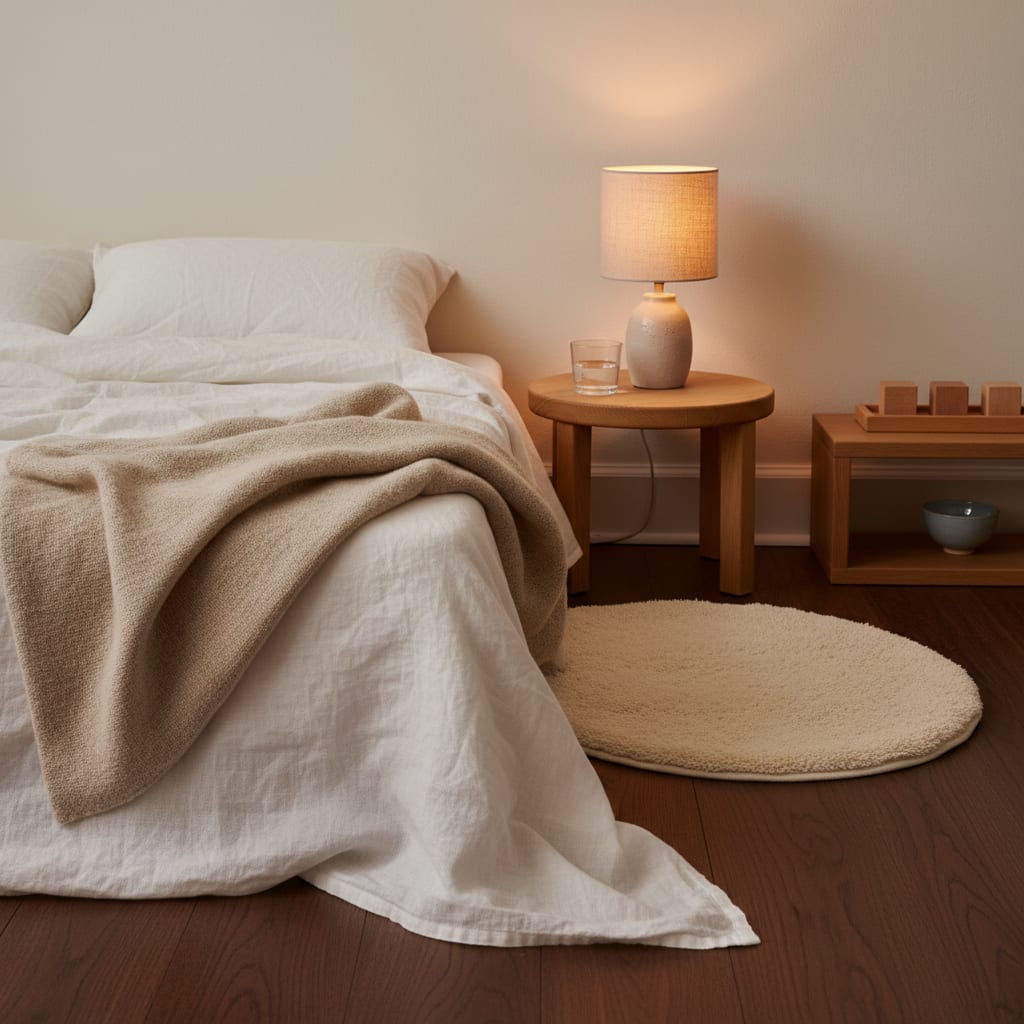
- Underfoot. A rug beside the bed for the inevitable roll-off. In my house the roll-off era lasted about two weeks per child, and a floor-level landing is a non-event.
- Less is more. A floor-bed room with four toys gets slept in; a floor-bed room with forty gets partied in. Keep the shelf small and rotate — the same logic as our materials-by-age guide.
Choosing the actual bed
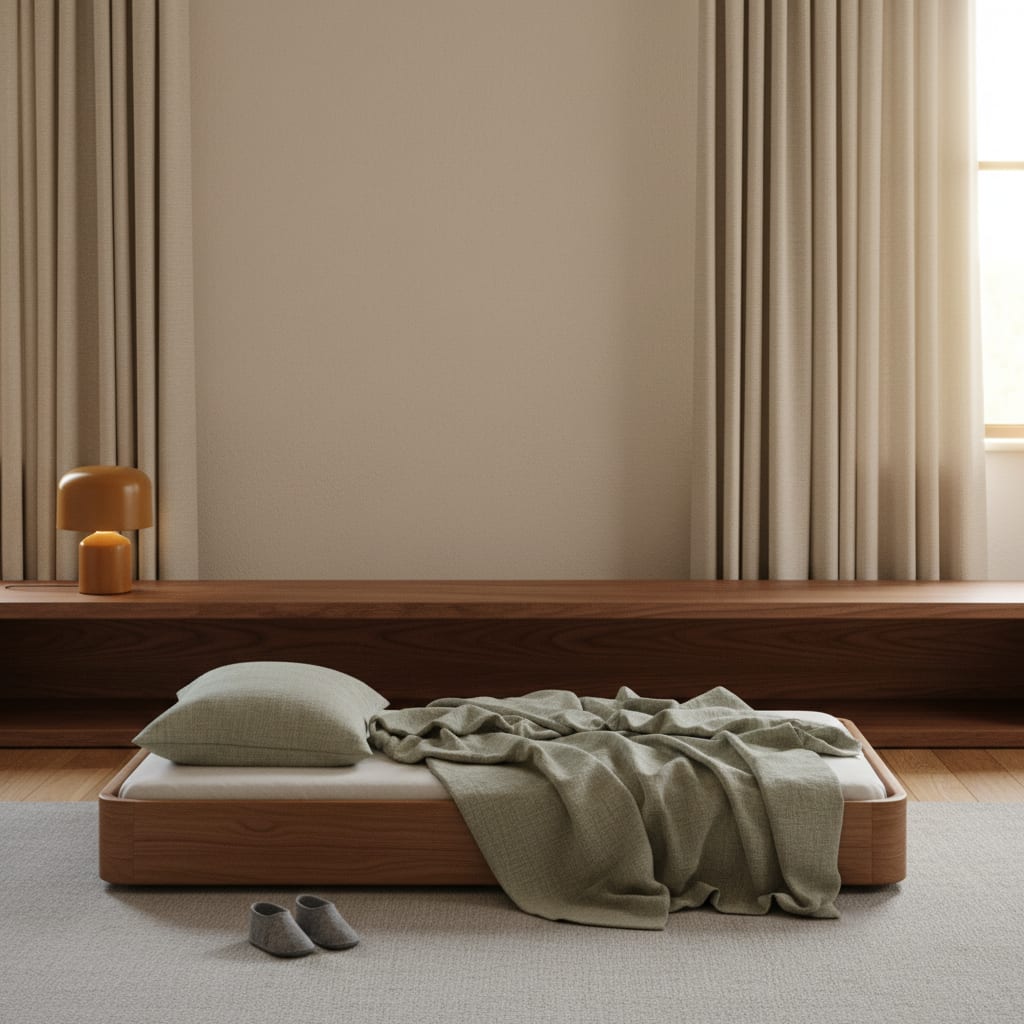
You need exactly two things: a firm mattress (crib-size for babies, twin for toddlers if space allows) and, optionally, a low frame to keep it off the floor for airflow. Everything else is aesthetics.
- Mattress on the floor is a legitimate version. Lift it weekly to air out the underside; humid rooms can grow mildew under a flat mattress.
- Low slatted frames solve the airflow problem and look like furniture. Simple pine frames start at roughly $100–200; the “house bed” frames run more, often around $150–400 depending on size and maker. Sprout is the maker whose slatted frames turn up most often in Montessori room tours.
- House frames (the peaked-roof kind) are charming and entirely optional — the roof does nothing functional. If you want a ready-made one from a real furniture maker, South Shore’s solid-poplar Sweedi house bed sits at true floor level and takes a standard crib mattress. If the rails tempt your child to climb, skip it.
- What to avoid: tall headboards, gaps a limb can wedge into, and frames with a lip so high the “floor bed” is effectively a crib with worse rails.
If you like reading room tours before buying, How We Montessori has years of photographed floor-bed setups across ages, and The Montessori Notebook covers the philosophy side better than I ever will.
The first weeks: what actually happens
Expect the party phase: a child who can leave the bed will leave the bed, repeatedly, grinning. Keep responses boring — walk them back, minimal chat, same words each time. Most children stop testing within a couple of weeks once the novelty dies and the routine holds. Naps usually wobble before nights do. None of this is a sign the bed failed; it’s the cost of handing over control, paid once. For the sleep-science half of that story — and what to do when the wobble doesn’t settle — see floor beds and independent sleep. And if you’re setting up for a baby rather than a toddler, the room half of this guide pairs with a Montessori infant room on a normal budget.
FAQ: Montessori floor beds
Are floor beds safe for babies?
A floor bed can be set up to meet the same safe-sleep standards as a crib: firm flat mattress, fitted sheet only, no pillows, blankets or bumpers for young babies, and a fully childproofed room. The bed is the easy part — the room is the safety project. Ask your pediatrician about your specific setup and follow current AAP safe-sleep guidance.
What age should a child start a Montessori floor bed?
There’s no single right age. Common starts are early infancy (with strict safe-sleep setup), 6–12 months when mobility arrives, or at the crib transition between 15 months and 3 years. Starting “late” costs nothing.
Will my child just get up and play all night?
For the first stretch, sometimes — that’s the party phase, and it fades with boring consistency. Long-term, most floor-bed kids do what everyone does: sleep when tired. If the room is calm and the shelf is small, the bed wins.
Do I need a special Montessori bed frame?
No. A firm mattress on the floor is the original version. Frames add airflow and looks — a simple low frame around $100–200 does everything the beautiful ones do.