A Montessori Infant Room on a Normal Budget
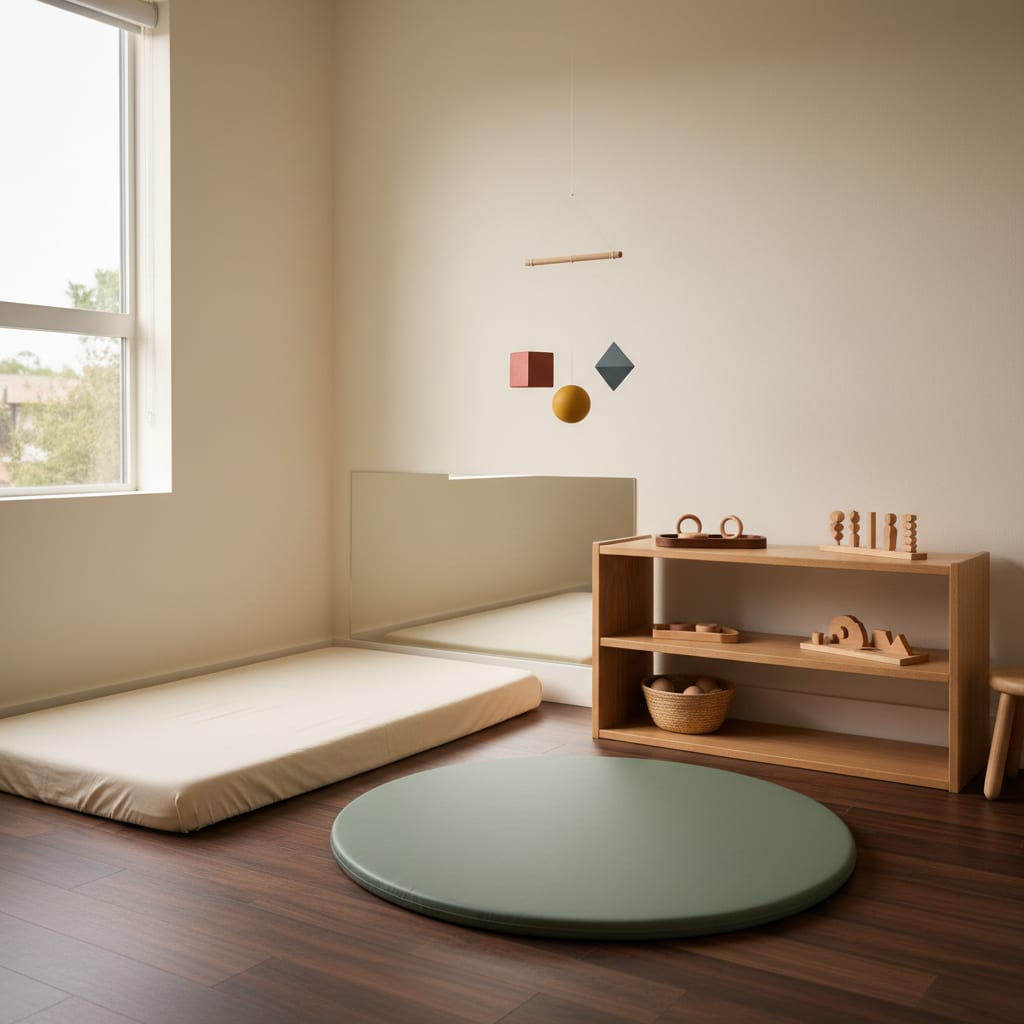
A Montessori infant room needs four zones and not much money: a place to sleep (floor bed or crib — both can work), a place to move (a simple mat with a sturdy mirror at floor level), a place to feed (any comfortable adult chair), and a place for care (a changing setup you won’t outgrow in a season). That’s it. The version in the catalogs — matched walnut furniture, linen canopy, heirloom mobile hanger — is beautiful and utterly optional. The version that serves the baby costs mostly thought, and this site covered infant rooms back in its first life; here’s the modern, budget-honest rebuild.
The idea underneath the room
An infant’s room, in Montessori terms, should be readable from the baby’s position: low, calm, and consistent, so that the small person slowly learns this is where I sleep, this is where I kick and reach, this is where things happen to my body with warning and respect. Order is the luxury infants actually notice. Nobody five months old notices the brand of the shelf.
Two practical translations. First, less furniture, lower: what exists should mostly live at floor level, because that’s where the baby lives. Second, one function per zone: the movement mat isn’t storage, the sleep space isn’t a play space. Small rooms do this fine — zones are about consistency, not square footage.
Zone by zone, with real numbers
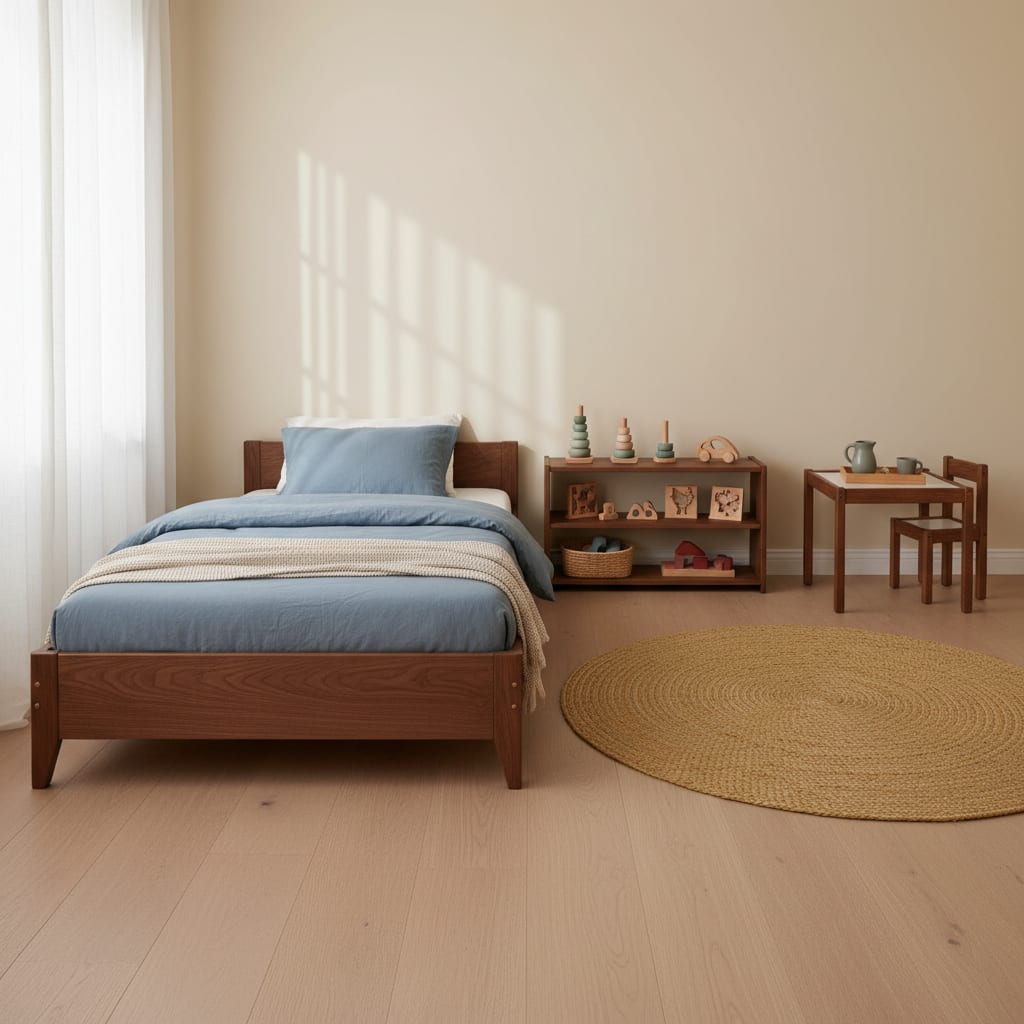
- Sleep. A floor bed from the start is the classic Montessori move; a crib is a legitimate choice, especially for young babies — I’ve laid out that whole decision in the complete floor bed guide and the sleep half in floor beds and independent sleep. Either way: firm flat mattress, bare sleep surface, and current AAP safe-sleep guidance as the non-negotiable floor. Cost if you go floor-bed: a crib mattress you may already own, roughly $50–150 new.
- Movement. A firm mat or low-pile rug, next to a shatterproof acrylic mirror mounted horizontally at floor level. The mirror is the single highest-value object in the room — babies work at it for months — and acrylic panels run roughly $30–80. Add a simple wooden play gym or a mobile hung from a ceiling hook, and rotate what hangs.
- Bar and mirror, once pulling up starts. A Montessori pull up bar is a plain wooden handrail fixed horizontally along the wall in front of the floor mirror, low enough to grab from sitting. Together they make the classic “bar and mirror”: the baby pulls to stand on something that cannot tip, then cruises along it while watching themselves do it. Nicole Kavanaugh’s DIY pull-up bar tutorial is the honest budget version. It is an unfinished stair handrail cut to length and hung with ordinary handrail brackets. Her rule for height is that babies “should be able to grab fairly easily from a seated position and then walk along with their hands not far above their chests” (she hung hers at 17 inches, and later at 14). If you would rather buy a ready-made unit, Nienhuis sells a mirror with a wooden bar that adjusts to three heights. The one thing not to improvise is the fixing. A baby hangs their whole weight on that bar, so screw the brackets into wall studs, not into drywall anchors, and fix the mirror to the wall too. The AAP’s tip-over guidance is blunt about it: “Secure all furniture and mirrors with anti-tip devices,” which “may require relocating the furniture so the wall anchors can be placed in a stud.” Before every new stage, give the bar a hard pull yourself.
- Feeding. Any chair you can survive 3 a.m. in. Montessori adds nothing here except the suggestion of calm and dim light. Do not buy a special chair for this. If you use a topponcino for holding and passing a newborn, it belongs here with the people and the feeding chair, never in the sleep space.
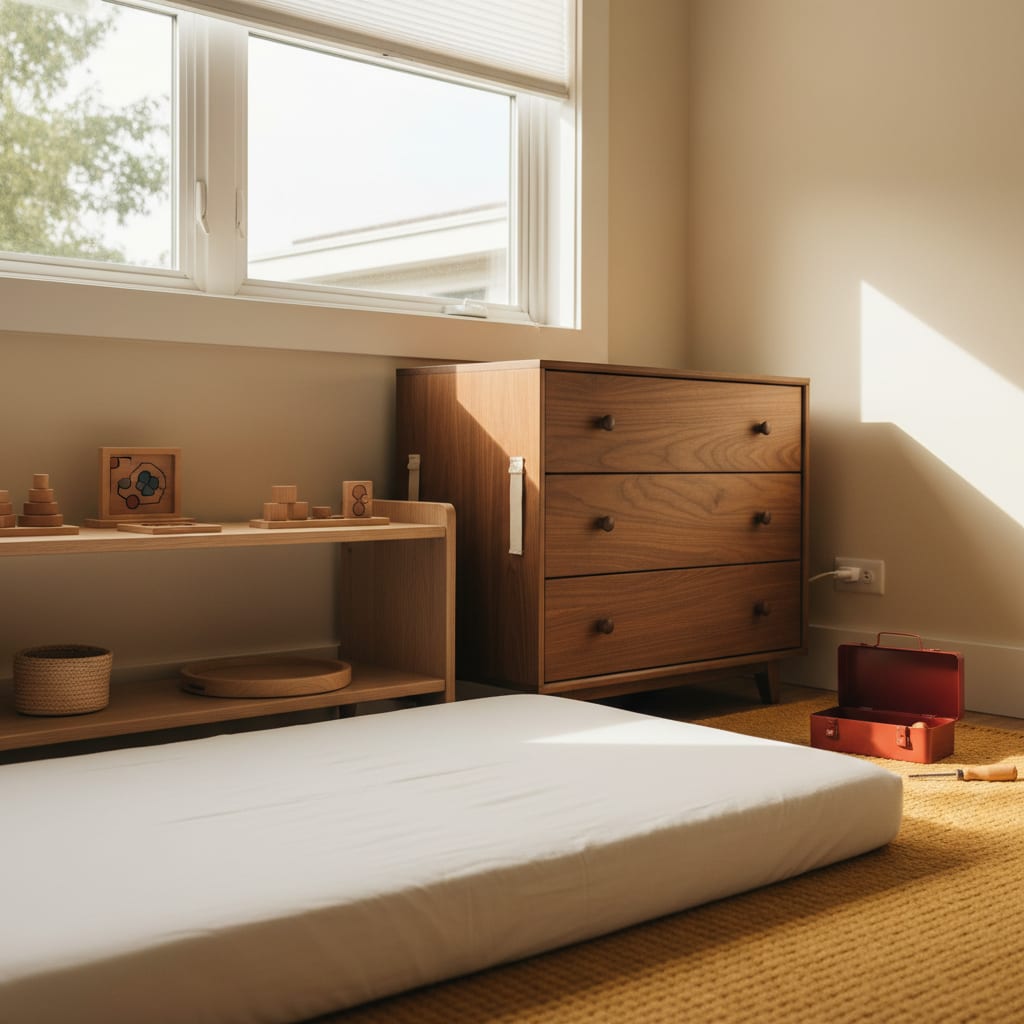
- Care. A changing pad on a low dresser you’d own anyway, topper around $20–40. Narrate what you’re doing — the respect is free.
A basket of the right first playthings finishes the room; I keep that list short and specific in Montessori toys for 0–6 months.
What you can skip entirely
The skip list saves more than the buy list costs: a wipe warmer, a themed decor set, a mobile collection (one at a time is the point), a “Montessori infant shelf” before the baby can move to it, wall art at adult height, and most containers — swings, loungers and sit-me-up seats aren’t sleep spaces and, from a movement perspective, mostly hold babies in positions they can’t get into or out of themselves. A blanket on the floor outperforms almost all of it.
For the aspirational version of all this — the photographs I stare at too — Nduoma is the gold standard on infant spaces, written by an actual AMI-trained guide, and How We Montessori documents real rooms evolving as babies grow. I link them because that’s this site’s job: I set up the shelves; they hold the diplomas.
Growing the room, not replacing it
The infant room becomes a toddler room by subtraction and lowering, not by a new furniture haul. The mirror stays. The mat becomes a work rug. A low shelf arrives when crawling does, holding four things, not fourteen. The floor bed just continues — that’s its quiet superpower; there’s no big-kid-bed cliff. Around the first birthday you’ll add a small wardrobe area with two choices of clothes, and the room is done evolving for a good while. Total spend for the whole arc, done modestly: usually somewhere in the low hundreds, most of it mattress and mirror.
FAQ: Montessori infant rooms
Can I do a Montessori infant room with a crib?
Yes. The room’s Montessori-ness lives in the floor-level movement area, the order, and the respect of the care routines — not in the sleep container. Many families run crib-plus-movement-mat for the early months and switch to a floor bed with mobility.
What is the floor mirror for?
Self-discovery and movement motivation. A baby on a mat beside a mirror watches a fascinating colleague kick, roll and eventually crawl — visual feedback that rewards effort. Mount it horizontally at floor level, use acrylic (never glass), and anchor it firmly.
How much does a Montessori infant room cost?
Done modestly — floor mattress or existing crib, acrylic mirror, a mat, a changing topper, a basket of simple toys — most families land in the low hundreds of dollars total. The expensive versions online are aesthetic choices, not method requirements.
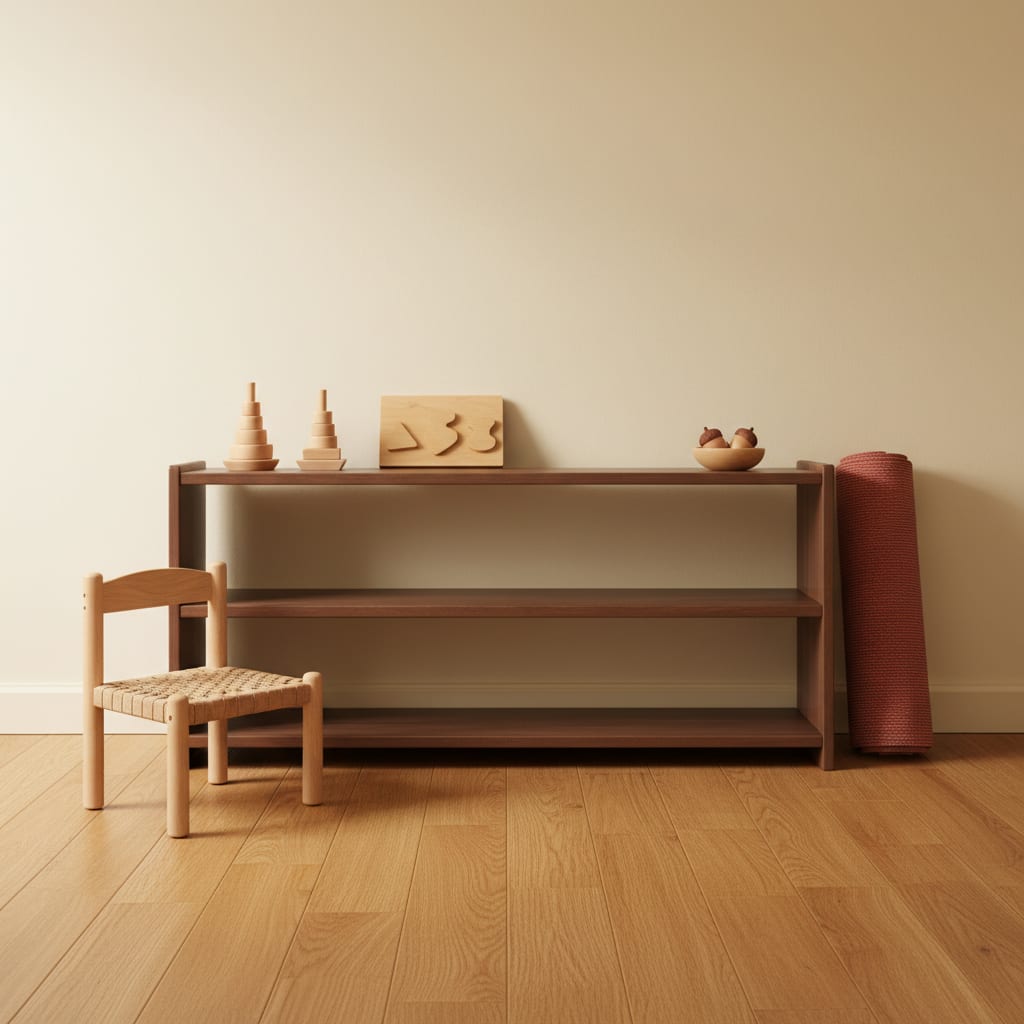
When should I add a shelf?
When the baby can move toward it — crawling is the natural trigger. Before that, a shelf is decor. Start with three or four objects and rotate; a full shelf overwhelms exactly the concentration you’re trying to grow.