Montessori Quiet Time: When the Last Nap Ends
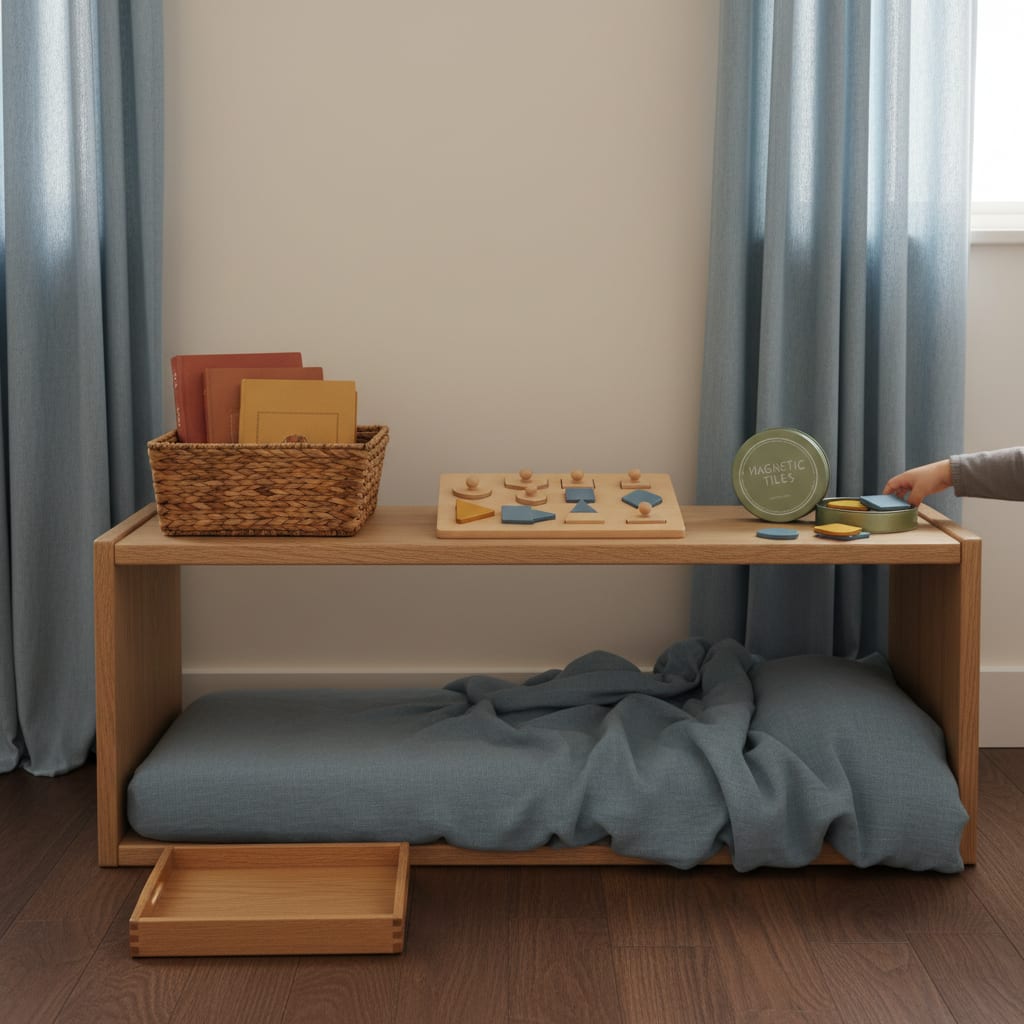
When a child drops their last nap — typically somewhere between two and a half and four — the Montessori answer is quiet time: a daily stretch, often 30–60 minutes after lunch, when the child works alone in a prepared space with a small dedicated shelf of calm, independent activities. Not screen time, not enforced lying-down, not a nap by another name: independent work in a room set up so the child can sustain it without you. The nap disappears; the midday reset doesn’t have to. The whole trick is preparation — the shelf, the space, and the rhythm — so here’s how to build all three.
Quiet time is shelf work, not a time-out
The version of quiet time that fails is the one framed as containment: “stay in your room for an hour.” A child parked with nothing to do experiences that as exile and negotiates accordingly. The Montessori version flips it, the same flip as everything else in the method: prepare an environment where solo engagement is the natural outcome, then trust the child in it. The child isn’t being removed from the family; they’re getting a protected block of what the classroom would call the work period — uninterrupted, self-chosen, alone. Plenty of children who fought the nap for months settle into quiet time with something like relief.
It matters that this stays honest, though: quiet time serves the child’s need for restoration and concentration, and it also serves yours. Both are legitimate. A parent who gets forty-five minutes back at midday parents better at 4 p.m., and there’s no need to dress that up as pedagogy.
The quiet-time shelf
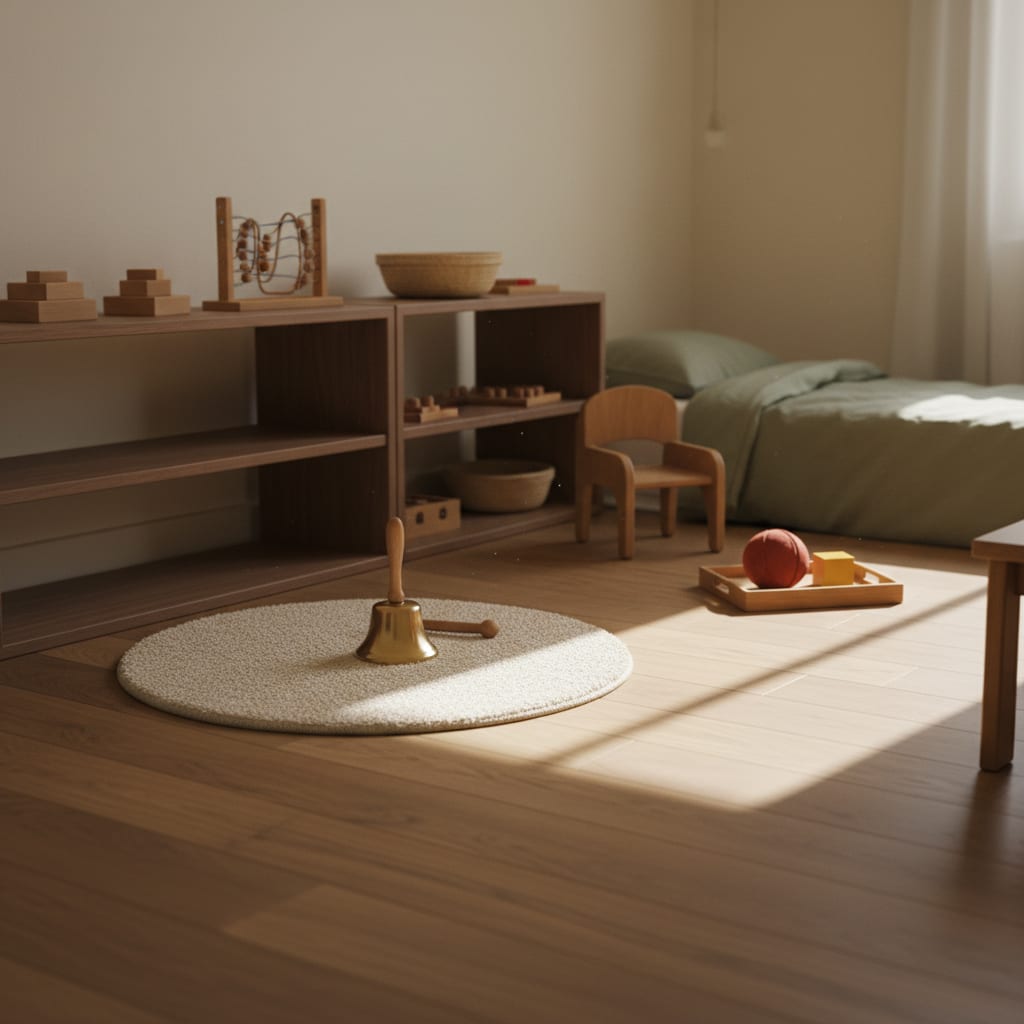
The core move is a small shelf — or a basket, or one cleared cubby — that only comes out at quiet time. Scarcity does real work here: materials available all day are wallpaper by Tuesday, while the quiet-time shelf stays interesting because it’s rationed.
What earns a place on it:
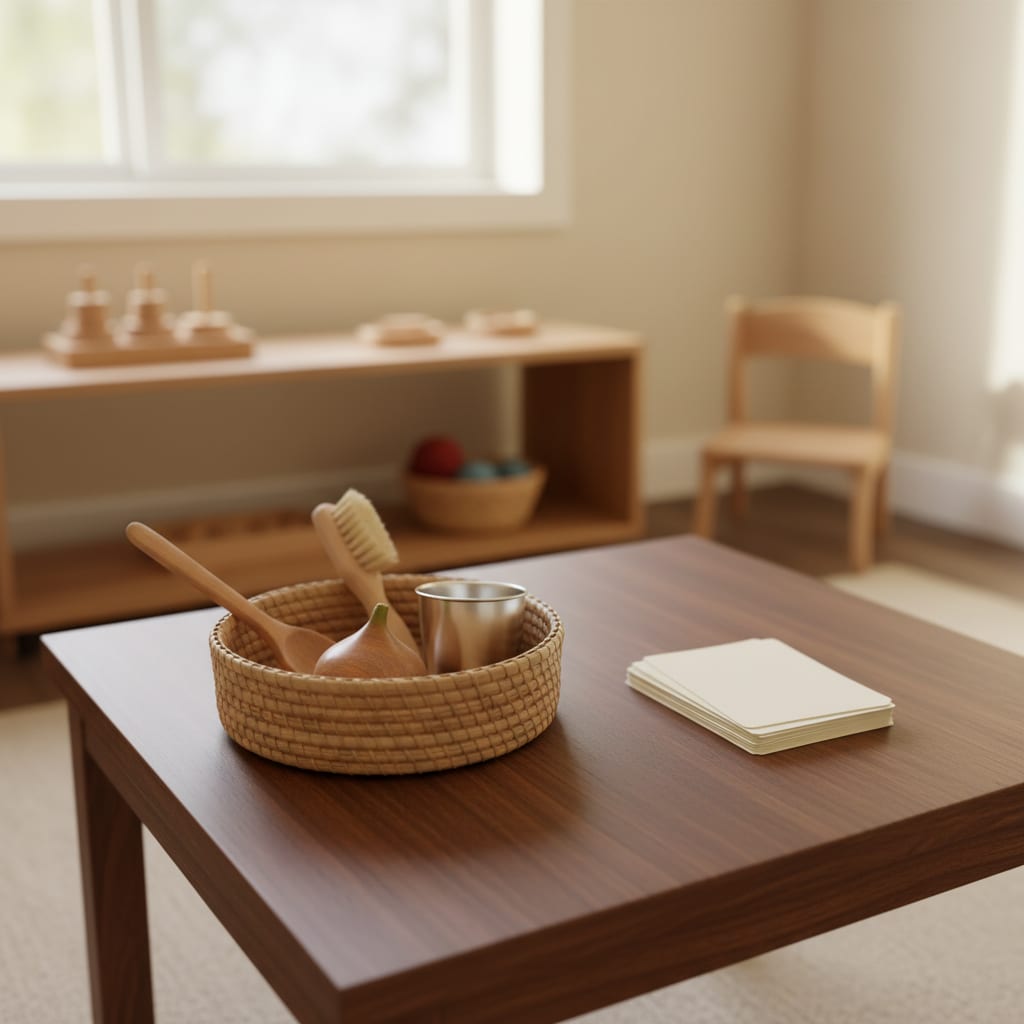
- Work with duration, not sparkle. Puzzles at the just-hard-enough level, magnetic tiles, a sticker book, lacing cards, a small animal set with a fold-out mat. You’re choosing for how long it holds, not how educational it looks.
- Books, always — a small rotating basket. Post-nap-drop quiet time is where “reading” alone to yourself before reading actually gets practiced.
- Nothing that needs you. No works with steps they haven’t mastered, nothing that jams, rips or spills its way to a rescue. The activities must run on the child’s own competence — the same self-containment test as any tray, and the same concentration-protecting logic covered in help your child concentrate.
- Three to five choices, rotated weekly. The usual math: fewer, deeper. A crate of options turns quiet time into browsing.
Audio is a legitimate addition — an audiobook or quiet music from a simple player the child operates — and it particularly helps kids who find a silent room unnerving at first. Screens aren’t, mostly because they end the independent-work project the shelf exists for; a tablet outcompetes every puzzle ever made.
The prepared corner, and the rhythm around it
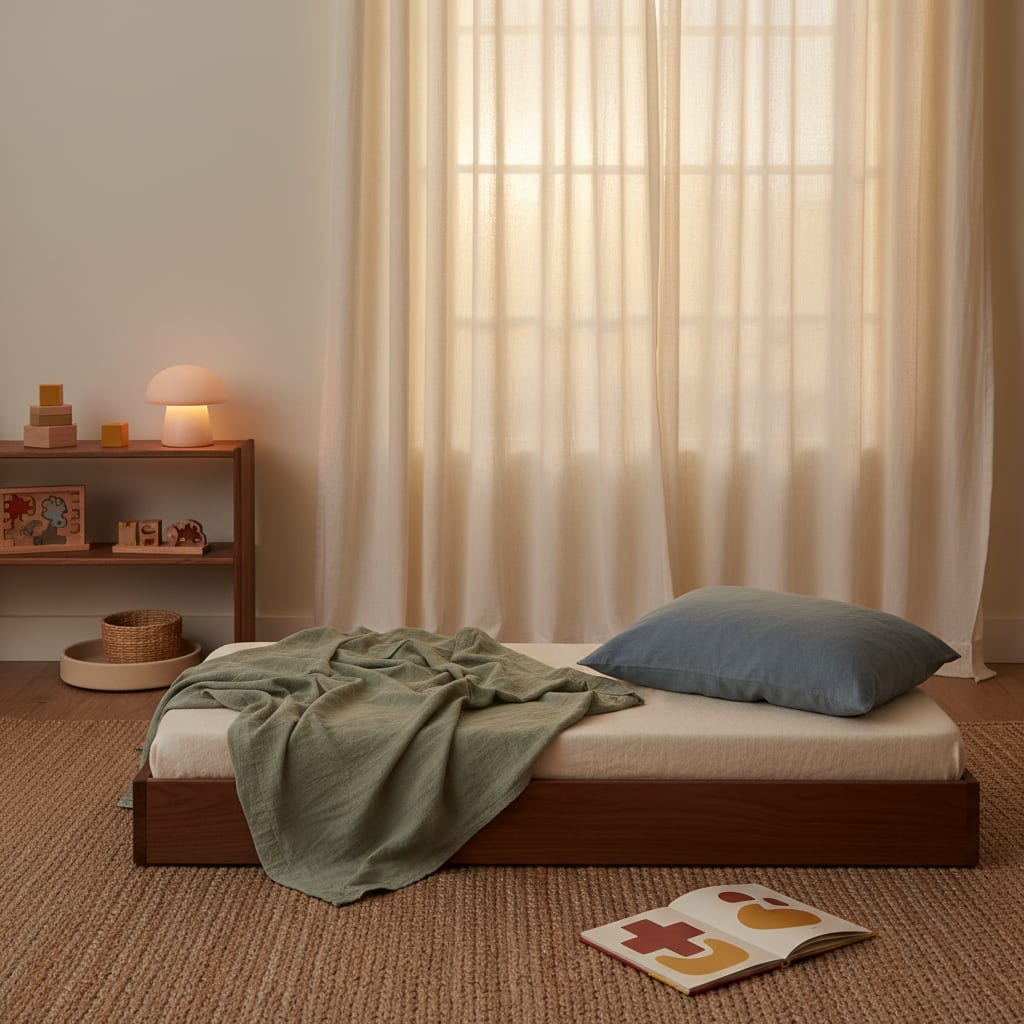
The space matters less than the shelf but still matters: usually the child’s own room, with a defined work spot — a rug or the floor bed itself, which is midday-accessible in a way a crib never was. Some children drift into books on the bed and doze twice a week; a floor-bed room handles that gracefully, since falling asleep over a book on a floor bed is a soft landing in every sense.
The rhythm is the part most families under-build. Quiet time holds when it’s anchored — same slot after lunch daily, a tiny entry ritual (close the curtains halfway, choose the first work together, “I’ll see you when the timer sings”), and a visual timer or an audio cue so the end is the room’s news, not yours. Start short — ten or fifteen minutes for a newly napless two-and-a-half-year-old — and grow it by small steps. Expect two or three weeks of door-testing while the novelty burns off; the boring-walk-back script from the floor-bed sleep playbook transfers here unchanged.
The messy truth about the nap drop itself is that it’s rarely clean: weeks of naps-some-days, wrecked bedtimes when a rogue nap runs long, a child who’s clearly done sleeping at noon but equally clearly not done needing rest. Quiet time is the stable container for all of it — on sleepy days it absorbs a doze, on wired days it’s still a reset. For the schedule side — whether the nap is actually done, how to move bedtime earlier through the transition, what to do with the 5 p.m. meltdown weeks — Betteroo is a personalized child-sleep app that builds a day-by-day plan from your child’s actual sleep data and adjusts it as the nap fades. Fair report from this shelf: it’s genuinely good at the timing math and gentle-method-friendly, but the shelf, the corner and the walk-backs are still yours to build — an app plans the rhythm, it doesn’t furnish the room.

For how real Montessori households run the hour — including the honest failure days — The Kavanaugh Report has written about quiet time and rest across several kids and many years, and it’s the reality-check I’d hand any parent staring down the nap drop.
FAQ: Montessori quiet time
What age does quiet time replace the nap?
Most children drop the last nap somewhere between two and a half and four, and quiet time phases in across that transition — often overlapping it, with quiet time on no-nap days. There’s no deadline; follow the sleep, not the age.
How long should Montessori quiet time be?
Start at ten to fifteen minutes and build gradually toward thirty to sixty. The sustainable length is whatever the child’s independent concentration currently supports — the shelf and the rhythm stretch it over months, not days.
Does my child have to stay in their room?
A defined space is what makes it restful — a bedroom, or any corner with a clear boundary. The aim isn’t confinement but protection: one child, one space, no interruptions, which is also why siblings get separate quiet-time spots.
What if my child just plays instead of resting?
Calm, self-directed play is the rest — quiet time restores through engaged solitude, not stillness. A child who spends forty minutes deep in magnetic tiles is doing exactly what the hour is for; genuinely sleepy days will end in a doze on their own.