Floor Bed for Toddlers: When to Switch (Montessori Guide)
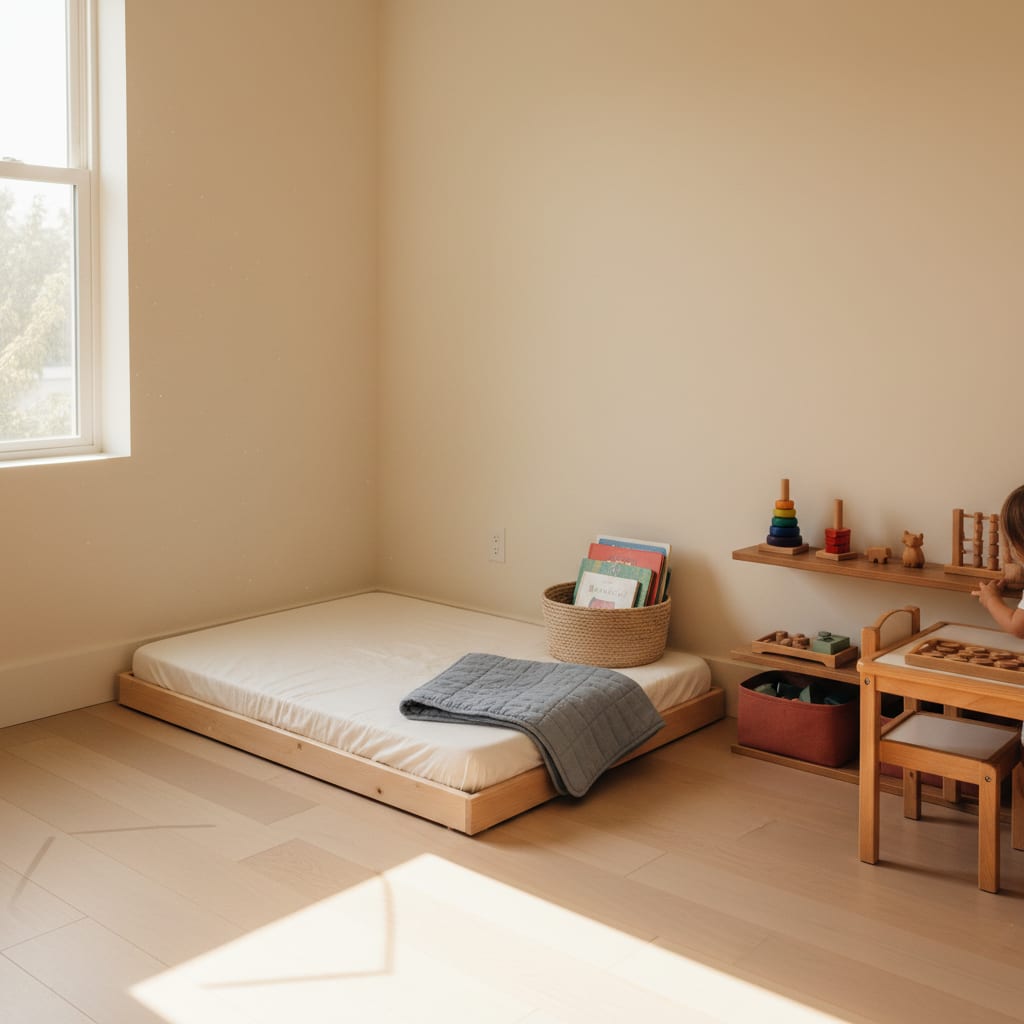
A floor bed for a toddler makes the most sense at one of three moments: when your child starts trying to climb out of the crib, when a sibling needs the crib, or when you were planning a toddler-bed transition anyway — usually somewhere between 15 months and 3 years. There’s no deadline and no “too late.” The readiness signs that matter are mobility (confident walking), a room you can fully childproof, and a family schedule stable enough to absorb two bumpy weeks. If you have those three, you can switch this weekend. Here’s how to tell, and how to do it without drama.
The readiness signs that actually matter
I spent three years setting up rooms in a Montessori toddler community — the shelves, not the diploma — and the pattern I saw at home visits was always the same: families waited for a sign from the child, when the real readiness checklist is mostly about the room and the adults.
- The child can walk confidently. A floor bed works for babies too (that’s a different on-ramp, covered in the complete floor bed guide), but for a toddler switch, steady walking means the freedom is usable — in and out of bed, over to the book basket, back again.
- The room can become the crib. This is the honest hinge. Anchored furniture, covered outlets, managed cords, a gated or childproofed doorway. If the room can’t be made fully safe for an unsupervised 5 a.m. wanderer, the child isn’t ready because the room isn’t ready. Run the full floor bed safety checklist before night one.
- Your next month is boring. Not a new sibling’s arrival week, not a house move, not the middle of a sleep regression. The transition costs a predictable toll of novelty-testing; pay it during a calm stretch.
Signs that do not matter as much as the internet says: age in months, whether the child “asks for a big bed,” and whether they currently sleep well. Good crib sleepers usually become good floor-bed sleepers after the novelty burns off.
The three easiest windows
1. The climbing window (usually 15–24 months). Once a toddler attempts the crib rail, the crib’s safety argument flips — a fall from the top rail is worse than anything a floor bed offers. This is the most common trigger and a perfectly good one. Don’t wait for a successful escape.
2. The “we need the crib” window. A sibling on the way is a legitimate reason, with one caveat: make the switch six to eight weeks before the baby arrives, or wait until a couple of months after. A toddler who loses the crib to the baby this week connects the dots and litigates them at bedtime.
3. The planned transition window (anywhere up to age 3). If nothing forces the issue, pick a calm season and treat it as the toddler-bed transition you’d be doing anyway — a floor bed is simply a gentler landing than a big-kid bed with a rail, and there’s no second transition later to un-do.
How to run the switch
Keep it undramatic. The Montessori framing helps here: this isn’t a reward, a promotion, or a test — it’s the room growing with the child.
- Involve them in the setup. Let the toddler help carry books to the basket and choose where the bed faces (from two options you pre-approved). Ownership buys cooperation.
- Keep everything else identical. Same bedtime, same routine, same words, same order. The bed is the only variable. If your routine is shaky, fix that first — the routine, not the furniture, is the actual sleep tool, as the floor beds and independent sleep post covers in full.
- Cold turkey beats hybrid. Naps and nights on the floor bed from day one. Splitting (crib nights, floor-bed naps) teaches that the arrangement is negotiable, and toddlers are excellent negotiators.
- Expect the party phase. The child who can leave the bed will leave the bed, grinning. Walk them back with the same boring words every time — “it’s sleeping time” — and no lecture, fourth time or fourteenth. Most children stop testing within one to two weeks once leaving the bed reliably produces nothing interesting.
If sleep is still worse after two full weeks of boring consistency, check the schedule (wake windows, nap length) before blaming the bed — and know that putting the crib back for a season is a legitimate move, not a failure. Respect for the child sometimes reads “not yet.”
FAQ: switching a toddler to a floor bed
What age should a toddler switch to a floor bed?
There’s no single right age. Common triggers are crib-climbing (often 15–24 months), a sibling needing the crib, or a planned toddler-bed transition anytime up to about 3. Later is fine — a floor bed costs nothing to start “late.”
Is 18 months too early for a floor bed?
No. By 18 months most toddlers walk well enough to use the bed’s freedom, which is the point. The real test is the room: if it’s fully childproofed — anchored furniture, covered outlets, a managed doorway — 18 months is a normal switch age.
How long does the floor bed transition take?
Most families see one to two weeks of novelty-testing — repeated cheerful exits at bedtime — before things settle. Boring, consistent walk-backs shorten it; lectures and new stakes lengthen it. Naps usually wobble before nights do.
Should I switch to a floor bed before the new baby arrives?
Yes, but not the same week. Make the change six to eight weeks before the due date so the toddler doesn’t experience the baby as the reason they lost their bed — or wait until a couple of months after, once the household has settled.