Montessori Toys for 0–6 Months
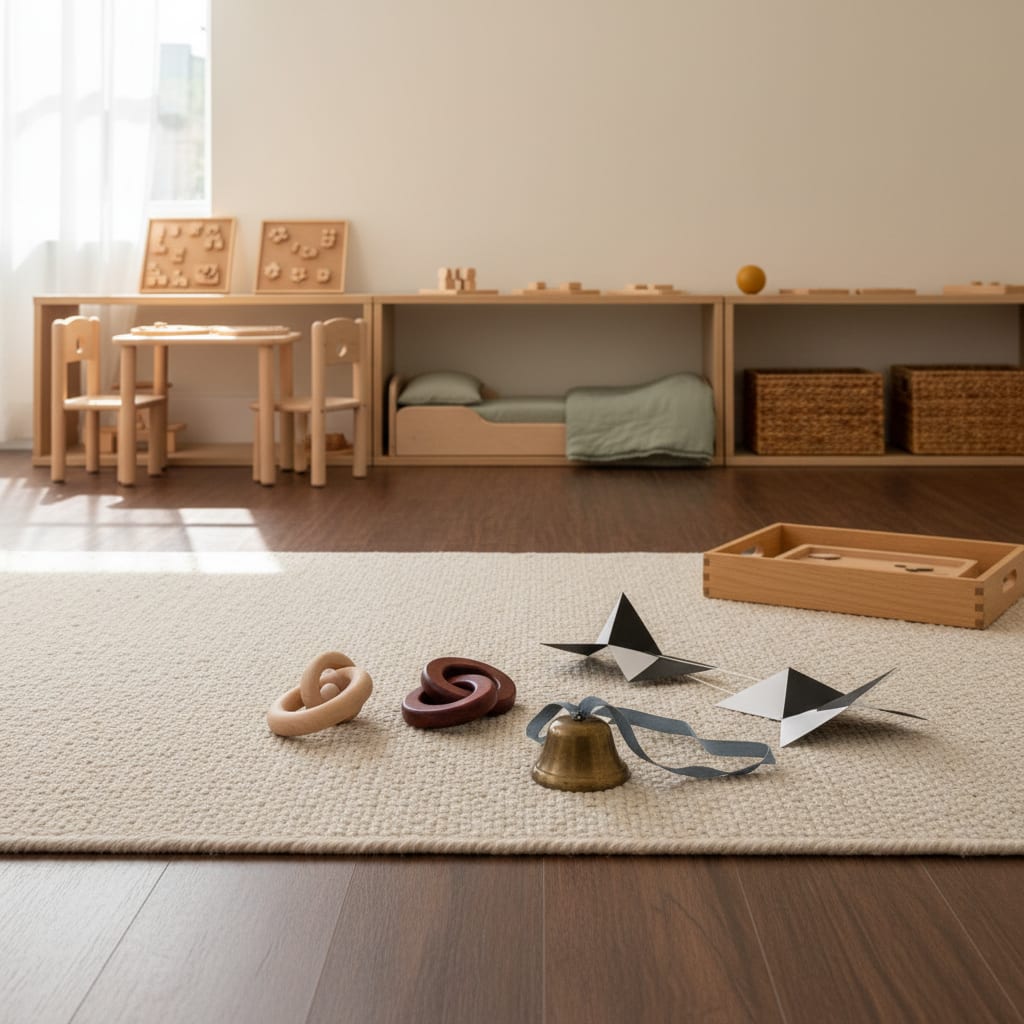
Montessori toys for 0–6 months come down to a genuinely short list: a sequence of simple visual mobiles for the early months, then graspable things — a wooden or silver-style rattle, an interlocking-discs toy, a bell on a ribbon, a grasping ring — offered one or two at a time on a floor mat, ideally near a mirror. A newborn’s real “materials” are your face, your voice, and time to move freely on a firm surface. Everything purchasable is a small supporting cast, and the whole kit can cost less than one branded activity gym. This site covered toys for 0–6 months in its first life; here’s the revived, hype-free version.
What a baby this age is actually working on
Zero to six months is the visual system coming online, then hands discovering they belong to their owner. That’s the entire shopping brief. Montessori’s contribution isn’t special products — it’s the discipline of offering one interesting thing at a time to a baby lying free on their back, rather than a canopy of eleven dangling entertainments. Watching a ceiling of blinking toys is stimulation; working to bat one felt ball is effort. Effort is the goal.
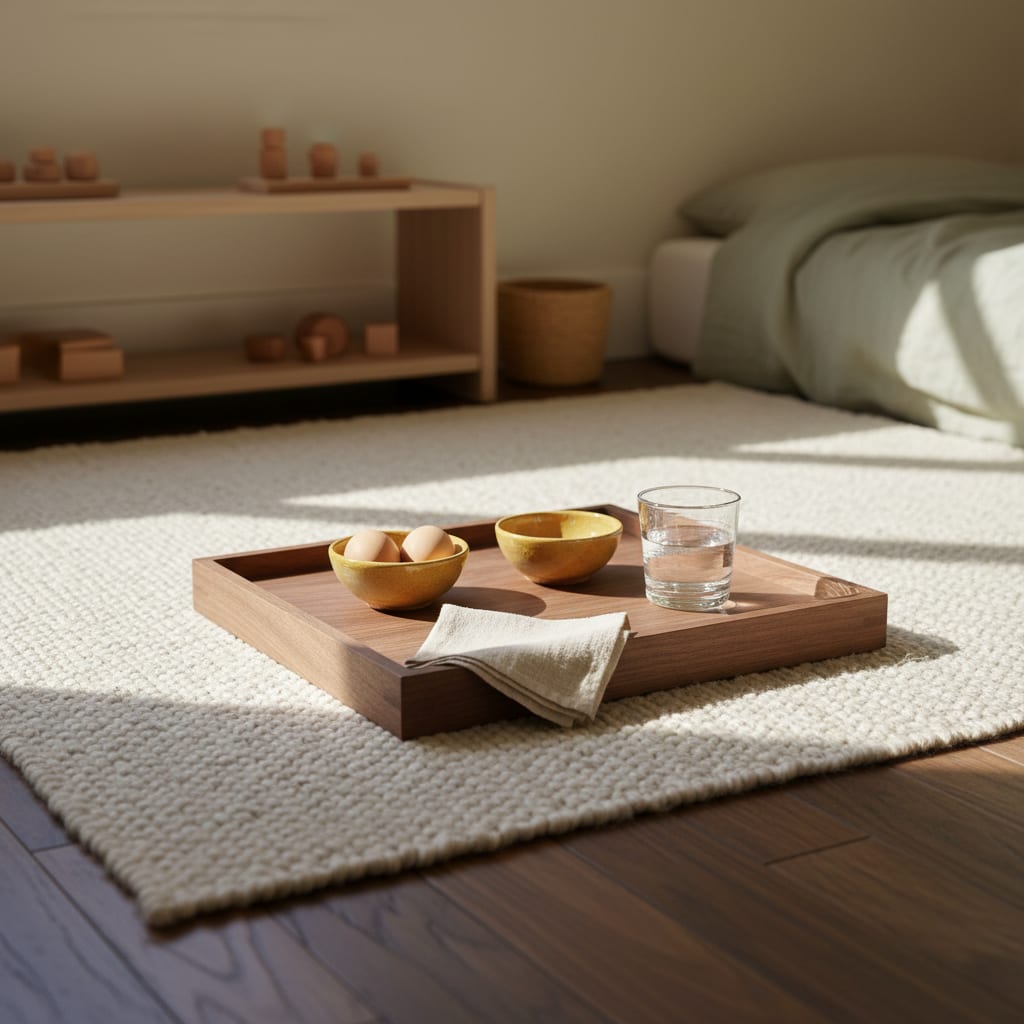
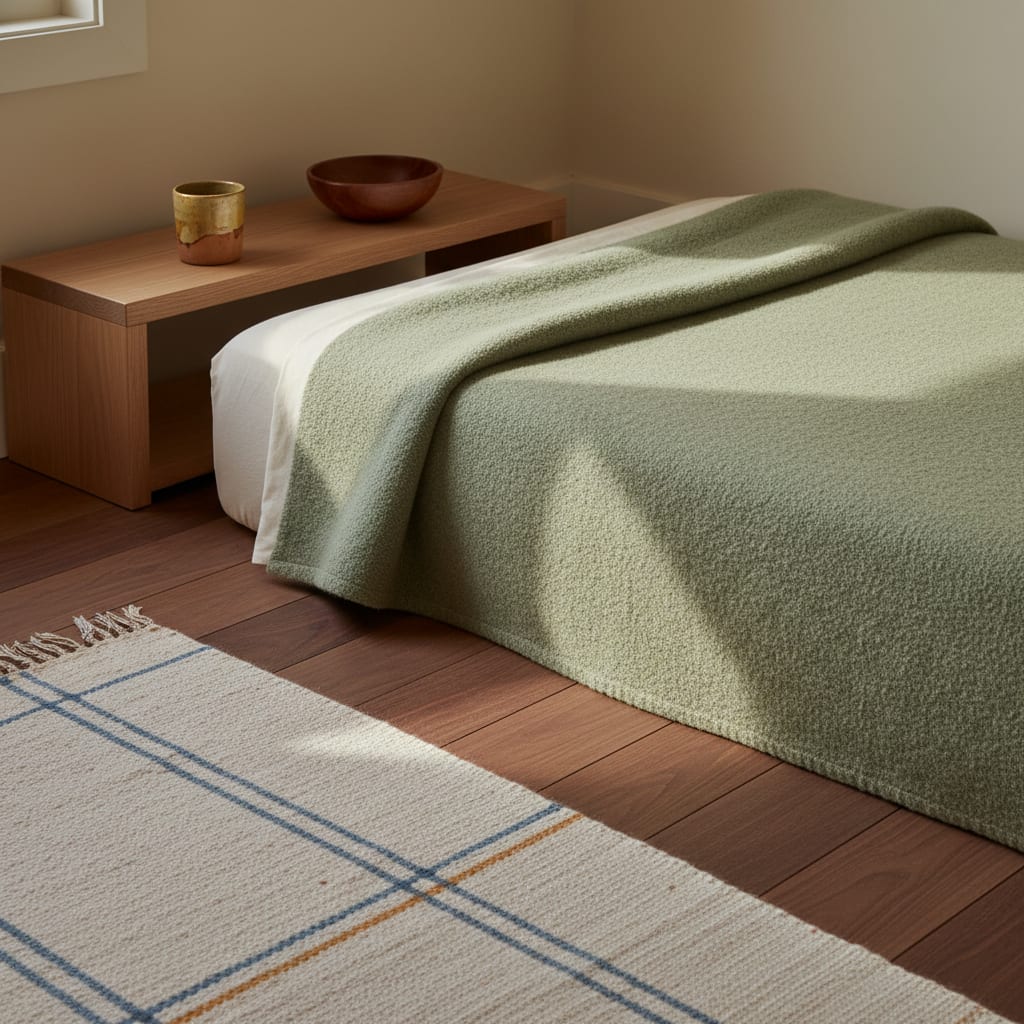
The other half of the setup is the environment: a firm mat, a low mirror, and light from the side rather than glaring overhead. I’ve put the whole room together, with costs, in a Montessori infant room on a normal budget.
The classic mobile sequence (months 0–3-ish)
The traditional Montessori visual mobiles, in rough order: the Munari (black-and-white geometric shapes), octahedron (three metallic solids), Gobbi (five spheres in graded shades of one color), and dancers (shimmering abstract figures). Each isolates something a developing visual system is chewing on — contrast, form, color gradation, movement.
Honest notes from the shelf: they’re lovely, they’re not magic, and they’re extremely make-able — paper, thread and an embroidery hoop cover the whole sequence, and Etsy makers sell handmade sets, usually around $15–40 each. Hang whichever you use at about 8–12 inches above the baby’s chest, one at a time, and swap when interest fades. A baby who ignores a mobile is not behind; a mobile is a suggestion, not a curriculum. If you skip the official sequence entirely and hang one high-contrast thing you made, you’ve captured most of the value.
Grasping toys (months 2–6)
When hands start swiping, move from watching to holding:
- A bell or ring on a ribbon, hung within batting range, converts accidental swipes into cause-and-effect lessons — the first “I did that.”
- Interlocking discs — two joined wooden discs — pass hand-to-hand beautifully and are the classic first “puzzle for the hands.”
- A simple rattle with honest weight and one sound. One. The seventeen-texture crinkle-mirror-teether combo toys are busy boards for babies.
- A grasping ring or bead ring for gumming and transferring.
- A wooden play gym to hang graspables from, if you like the furniture — around $40–80 — though a ceiling hook over the mat does the same job for a dollar.
Offer one or two on the mat, watch what the baby does, rotate. The watching is the Montessori part. For the sitting-and-crawling half-year that comes next, see Montessori toys for 6 month olds; for the glorious era of posting things into other things after that, the sequel is Montessori toys for a 1 year old, and the full early-materials picture is in materials by age 3.
What newborns truly don’t need
Skip-with-confidence list: electronic soothers and light-projector toys (the baby’s job is to process the actual room), play-mat arches with a dozen fixed danglers (choice paralysis, mounted), “developmental” subscription hype for the fourth trimester (months 0–3 need approximately three objects), and anything marketed as making a baby smarter. There is no such object. There’s a baby, a calm floor, and somebody who talks to them — that’s the enrichment program.
If you want deeper reading from people with training I don’t have, The Montessori Notebook (Simone Davies, AMI-trained, and this site’s alumna community) covers babyhood beautifully, and Nduoma is the definitive voice on Montessori from birth.
FAQ: Montessori toys for young babies
What are the four Montessori mobiles?
The classic visual sequence: Munari (high-contrast black and white), octahedron (metallic geometric solids), Gobbi (color-graded spheres), and dancers (light-catching abstract figures) — introduced roughly in that order over the first months, one at a time.
Do Montessori mobiles actually matter?
They’re a thoughtful match for early visual development, but they’re a nicety, not a necessity. One at a time, hung where the baby can study it, beats any specific product — including a homemade one. No mobile outranks floor time and faces.
How many toys does a 0–6 month old need?
A handful — mobile(s) for the early months, then three to five graspables in rotation. One or two offered at a time. The limiting factor is attention, not inventory.
Are black and white toys better for newborns?
High-contrast visuals are easiest for very young eyes to process, which is why the first mobile is black and white. It’s a starting point, not a rule — by a few months in, color is fair game.