Montessori Travel With Kids: The Method on the Road
Montessori travels better than most people expect, because almost nothing in it depends on the furniture. What travels is the habit: tell the child what’s coming, give them real jobs inside the journey, keep one small corner of wherever you land arranged so they can act without asking, and drop the rest without guilt. What doesn’t travel is the shelf, the schedule and your standards for tidiness. This is the method-side of travel only — where to go and how to book it is somebody else’s department.
Prepare the child, not just the bags
The single highest-return Montessori move before a trip is information. A young child’s resistance on travel days is usually disorientation, and disorientation is cheap to prevent.
- Tell them the sequence, repeatedly, in order. Car, then the big building, then the plane, then Grandma. Children under four hold sequences far better than durations.
- Show them the destination in photographs a week out — the actual house, the actual beach — so arrival is recognition rather than surprise.
- Let them help decide something real. Which two books come. Which cuddly toy. Not whether we go.
- Name what will be the same. The bedtime story, the specific blanket, the song. Continuity is the thing they’re actually asking about.
This is the same principle as any other transition in the method: announce it before it happens, and give the child a job inside it. The wider version of that logic is in what Montessori parenting actually is.
Pack for independence, not for entertainment
A Montessori packing list is short and skewed toward things the child operates themselves.
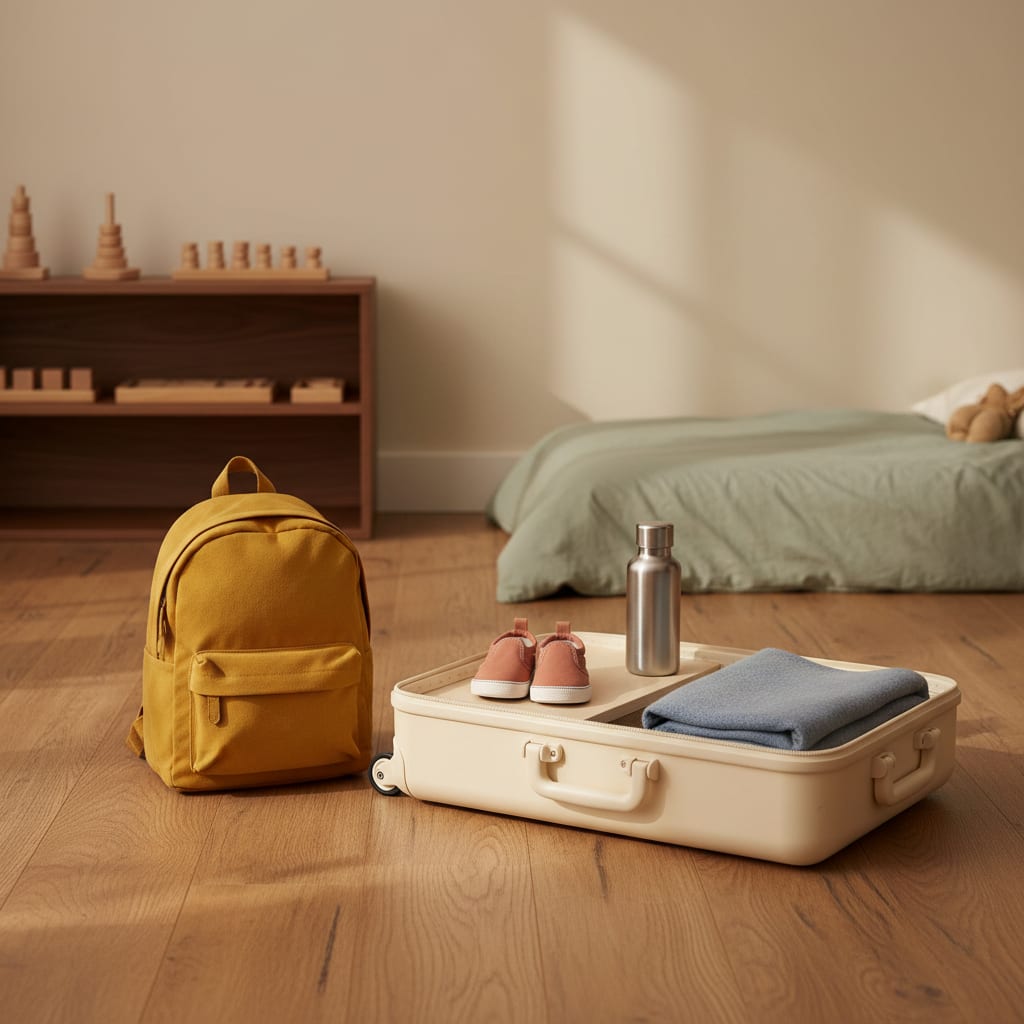
Their own bag. A small backpack they carry, containing only what they chose, and which nobody else is responsible for. A three-year-old who carries their own bag through an airport is a three-year-old with a job, which is worth more than any activity pack.
Clothes they can manage alone. Elastic waists, slip-on shoes, one layer they can remove without help. Travel is the worst possible time to be fighting a button.
Their own water bottle (a CamelBak Eddy+ Kids, say) and a snack they can open. The number of meltdowns this prevents is genuinely comic.
Four to six open-ended things, not twenty. A small tin of animal figures, a notebook and a couple of pencils, a length of string, one favourite book. The rule that a shelf of four toys beats a box of forty applies more strongly on the road, not less, because there is nowhere to put the forty.
One familiar sleep object. The same blanket, the same soft toy, the same white noise if you use it. This is the piece of home that does the most work.
What I’d leave out: novelty activity kits bought for the journey, anything with small parts that will end under a seat, and any material that requires a table.
The tiny prepared environment
When you arrive, spend twenty minutes making one corner work. Not the room — a corner.
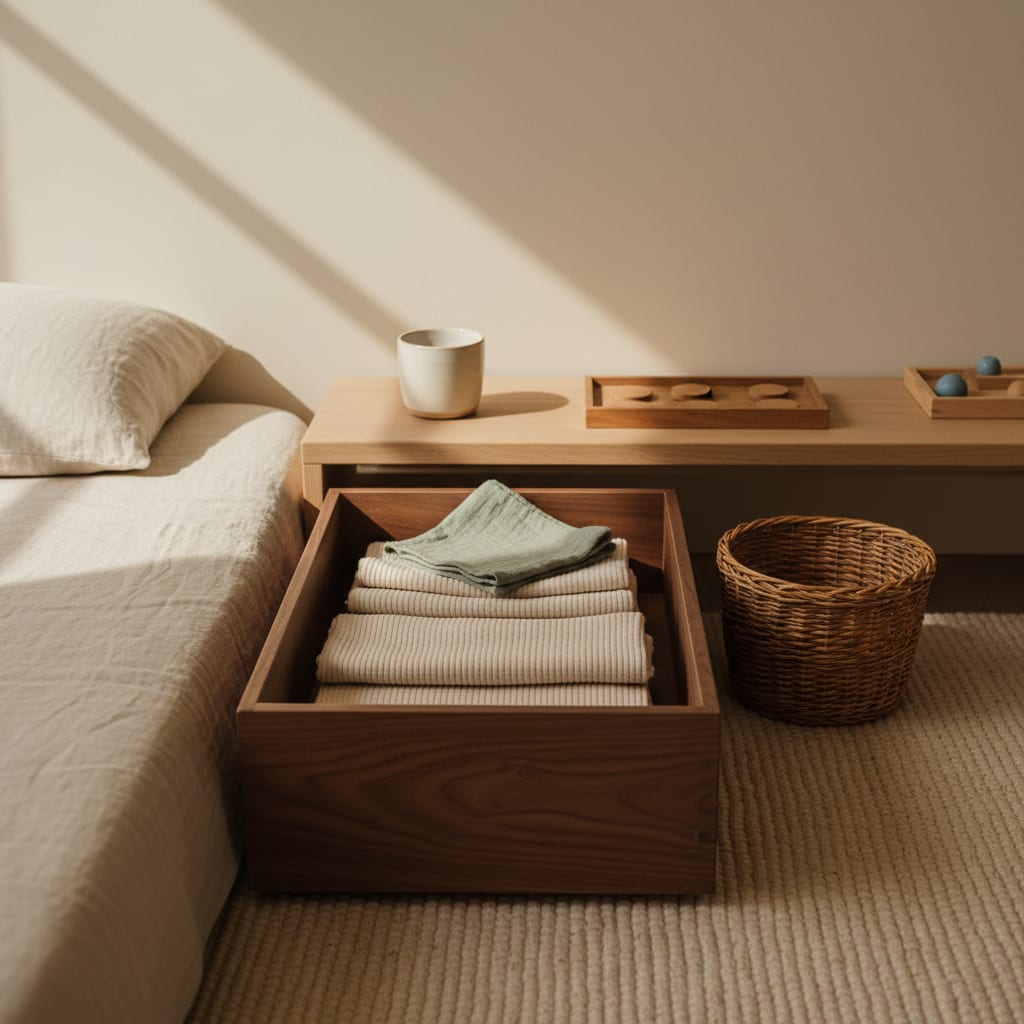
- A low, stable surface for their things: a suitcase laid flat, a bottom drawer, a windowsill.
- Water and a cup they can reach, if the kitchen allows it.
- Their bag unpacked into one visible place, so they can find their own things.
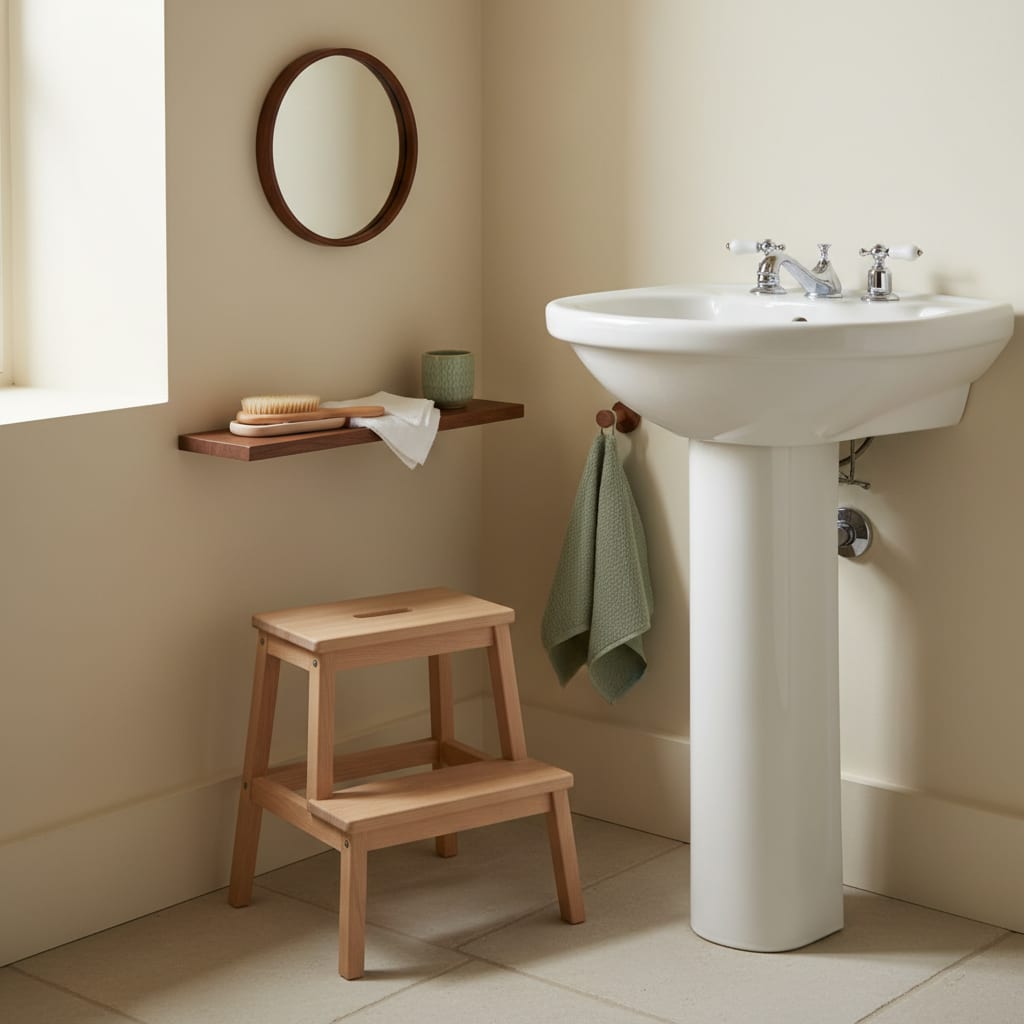
- A step, or something safe to stand on, at the sink they’ll use.
- Their sleep space set up first, before anything else, and shown to them in daylight.
That’s the whole method, compressed. A child who can get their own water and find their own shoes in an unfamiliar house behaves completely differently from one who has to ask for everything, and the difference shows up by day two.
Real jobs on the road
Travel is unusually rich in practical life, because everything is unfamiliar and therefore interesting:
- Handing over the boarding pass or the ticket.
- Carrying the room key.
- Pushing the lift button, having found the right one.
- Buying bread, ordering their own food, paying with a coin.
- Washing their own cup after breakfast.
- Repacking their bag each morning.
Each of these is slower than doing it yourself and each converts a passenger into a participant. On a fortnight’s trip, the repacking job alone can change a child’s mood about the whole thing.
What to let go of
The part most Montessori travel advice skips. On the road:
- The schedule will break. Naps happen in cars, bedtimes slide, and the first two nights are usually bad. Plan for it rather than defending against it.
- Screens on the plane are not a moral failure. A six-hour flight is not a prepared environment and pretending otherwise helps nobody.
- Food standards loosen. Everyone survives.
- The environment is often unsafe or unsuitable and you can’t fix it. A rental with a spiral staircase gets gates or vigilance, not a philosophy.
The method is not a purity test, and a family that arrives home exhausted and cross has lost more than a fortnight of dropped routine costs.
Sleep, briefly
The most common travel question, and the one where I’d be careful. A child sleeping in an unfamiliar room will usually take two or three nights to settle, and the two things that help most are keeping the pre-sleep sequence identical and getting the room as dark as home. For infants specifically, safe-sleep guidance travels with you: for the first year that means a flat, firm, empty sleep surface meeting federal safety standards — a travel crib (such as the Guava Lotus) or play yard, not a sofa, an adult bed or a hotel’s improvised arrangement. Our floor bed guide puts the same caveat where it belongs. When in doubt, ask your pediatrician before the trip rather than at 2am in a rental.
Where to read more
Trip planning, packing logistics and destination advice are not this site’s lane. For the method side, the 15 Days of Montessori hub has the outing-day version of all this at a smaller scale, and the blogs worth reading list includes several families who travel a great deal and document it honestly.
FAQ: Montessori travel with kids
How do you do Montessori while travelling?
Keep the habits, drop the furniture. Prepare the child with the sequence in advance, pack so they can dress, drink and carry their own things, set up one small accessible corner on arrival, and give them real jobs inside the journey.
What should a Montessori child pack?
Their own small backpack with two books, four to six open-ended objects such as figures or a notebook, clothes they can manage alone, a water bottle they can open, and one familiar sleep object.
Are screens allowed on a plane?
The method has nothing useful to say about a six-hour flight. Most Montessori-leaning families I know use screens in transit and don’t at home, and that’s a defensible line rather than a failure.
How do you handle sleep in a hotel or rental?
Keep the bedtime sequence identical, darken the room as much as you can, and expect two or three rough nights. For babies under one, use a travel crib or play yard meeting federal safety standards rather than improvising, and check with your pediatrician if anything about the arrangement is uncertain.
At what age is travelling with a Montessori toddler easiest?
Whenever the child can carry their own bag and manage their own shoes — somewhere around two and a half to three for most children. Before that, you’re travelling with a baby, and the method mostly reduces to keeping the sleep object and the routine intact.