What Is Montessori Parenting? A Plain-English Guide
Montessori parenting is raising a child on the assumption that they are trying to become capable, and arranging the house and your responses so that becoming capable is possible. In practice it comes down to three habits: prepare the environment so the child can do things without you, observe before you intervene, and offer freedom inside firm, few, consistent limits. It is not a curriculum, not a shopping list, and not a personality you have to adopt. Below is what’s actually underneath it, what it isn’t, and where to read people who know more than I do.
The six ideas underneath it
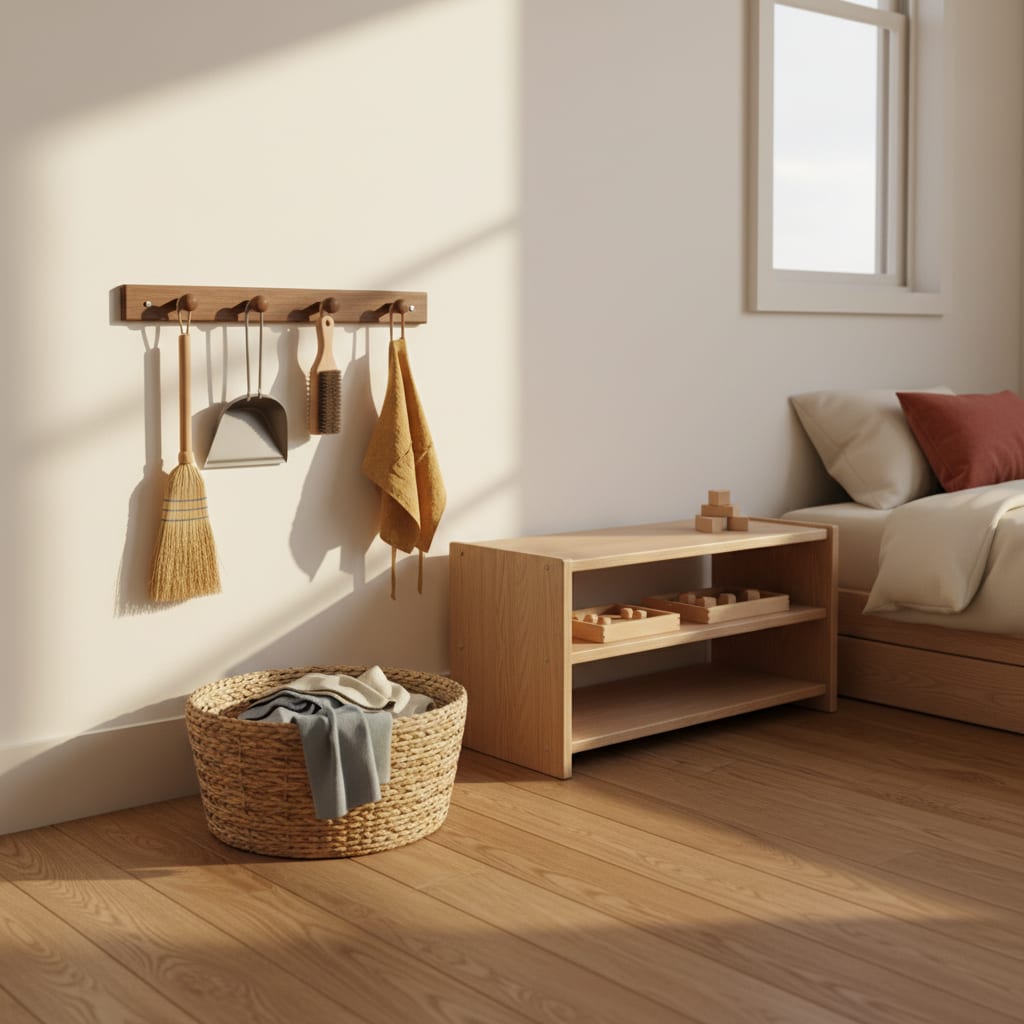
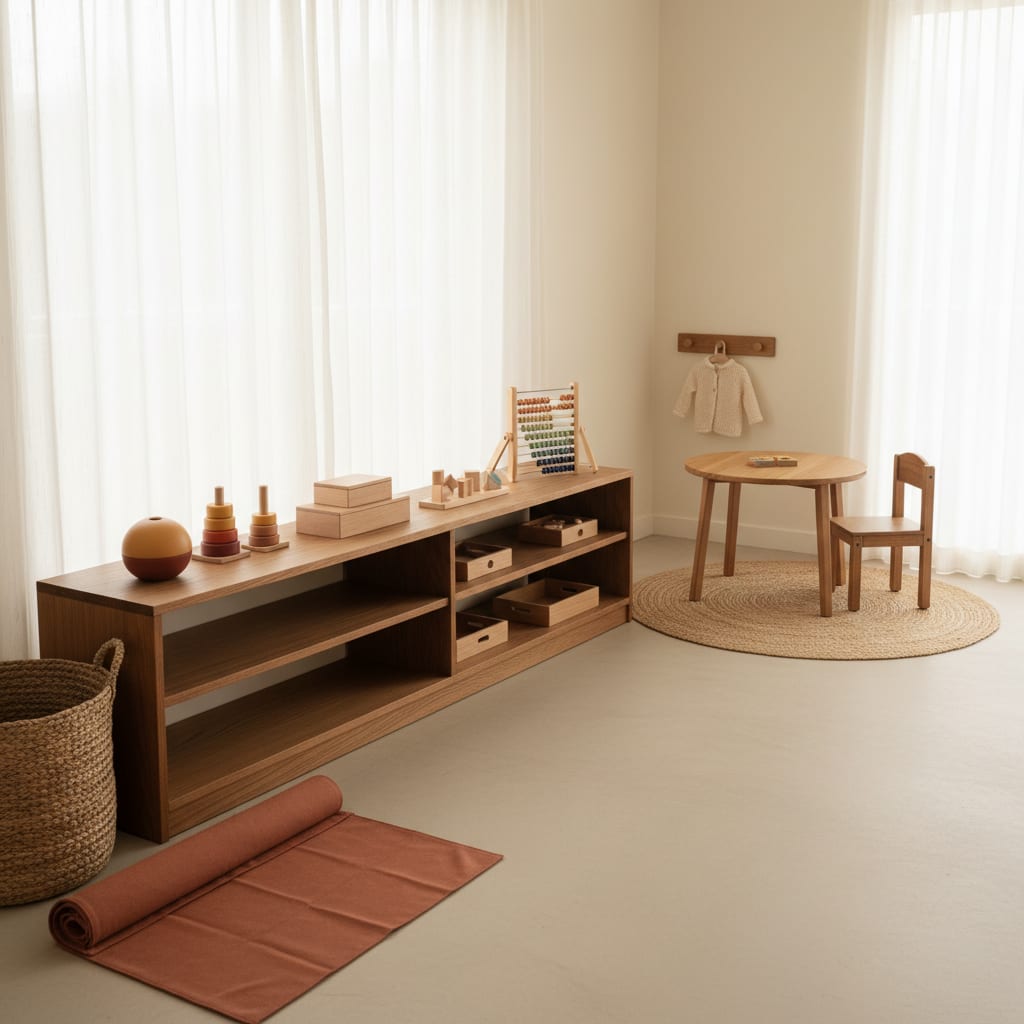
1. The prepared environment. The room does the teaching. A hook at child height, a step at the sink, water they can pour, a shelf they can reach and tidy — every one of those removes a request for help and replaces it with an action. This is the idea with the highest return on effort in an ordinary house, because you only have to do it once.
2. Independence as the goal, not compliance. The test of a Montessori response is “does this leave the child more able tomorrow?” — which sometimes means letting a slower, messier version happen now.
3. Follow the child. Observe what a child is actually drawn to and give them more of it, rather than running a plan. Montessori described sensitive periods — stretches where a child is unusually absorbed by one thing: order, small objects, language, movement, social manners. You’ll recognize them from the outside as obsessions.
4. Freedom within limits. The half that gets dropped in the internet version. Freedom to choose work, to move, to repeat, to make a mess that they help clear. Limits on anything unsafe, disrespectful of other people, or destructive of the environment. Few limits, but immovable ones.
5. Respect, expressed as manners you’d use with an adult. Telling a baby before you pick them up. Not correcting mid-effort. Not talking about a child over their head. Not interrupting concentration for a photo.
6. Intrinsic motivation over rewards and punishment. No sticker charts, no “good job” on a loop, no time-out chair. The consequence of spilled water is a cloth; the consequence of a finished job is that it’s finished.
What Montessori parenting is not
- It isn’t permissive. “Follow the child” is not “the child decides everything”. A house with clear limits, held calmly and every single time, is more Montessori than a house with none.
- It isn’t a set of products. No wooden toy, floor bed or subscription box makes a home Montessori, and no such thing as a “Montessori-certified” product exists. The method is in how the environment is used.
- It isn’t expensive. The highest-value changes — lowering things, reducing the number of things, waiting longer before helping — cost nothing.
- It isn’t silent, serene or beige. The aesthetic that dominates the hashtag is a photography style, not a pedagogy.
- It isn’t all-or-nothing. Almost every family I know runs a hybrid: Montessori shelves and a scooter, floor bed and a television, practical life and a birthday party full of plastic.
What it looks like at each stage
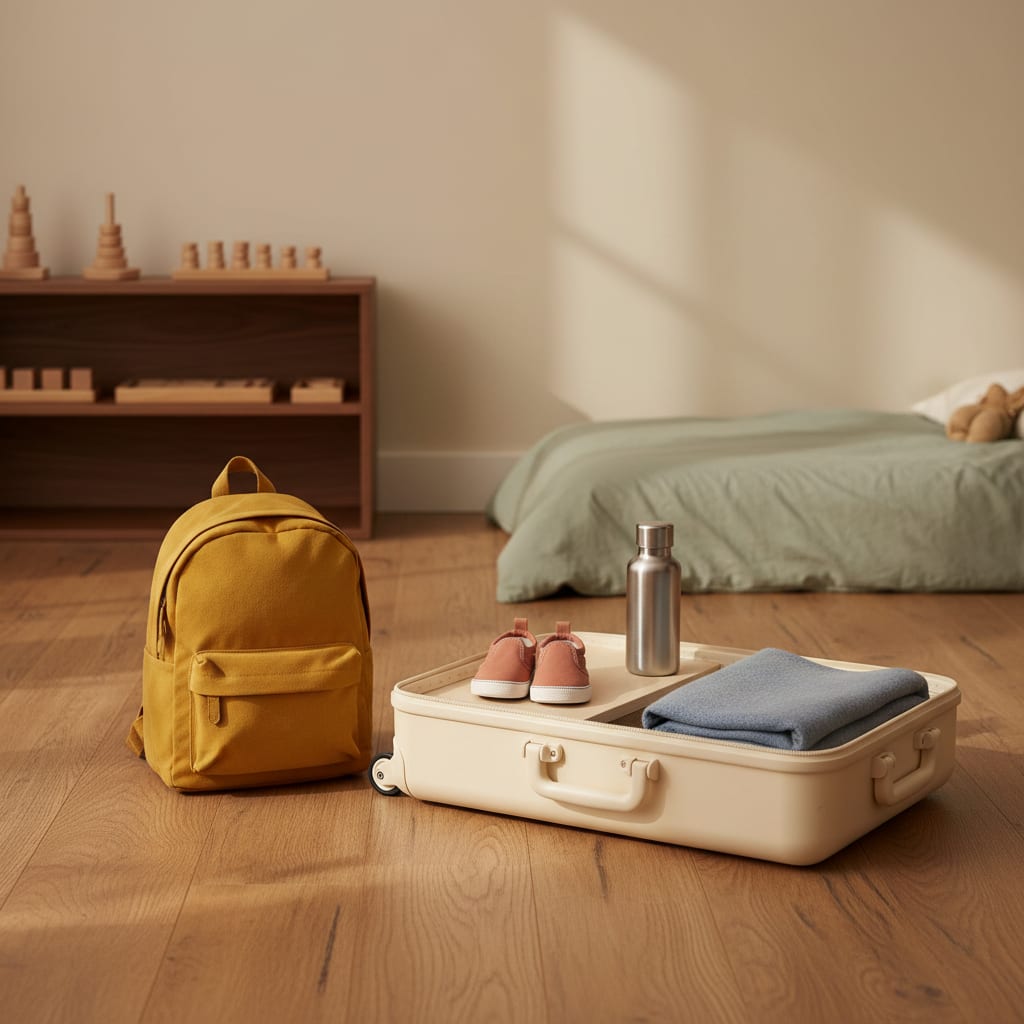
0–12 months. Movement freedom on a floor mat, a low mirror, few and simple objects within reach, being told what’s about to happen to you before it happens. The room does nearly all of it at this age, and almost none of it needs buying.
1–3 years. The practical-life years, and the loudest ones. Real jobs at child height, food they can reach, a small number of toys on an open shelf refreshed by rotation rather than added to, and a great deal of adult patience while a two-year-old insists on doing the zip. The ladder by month is in practical life activities by age.
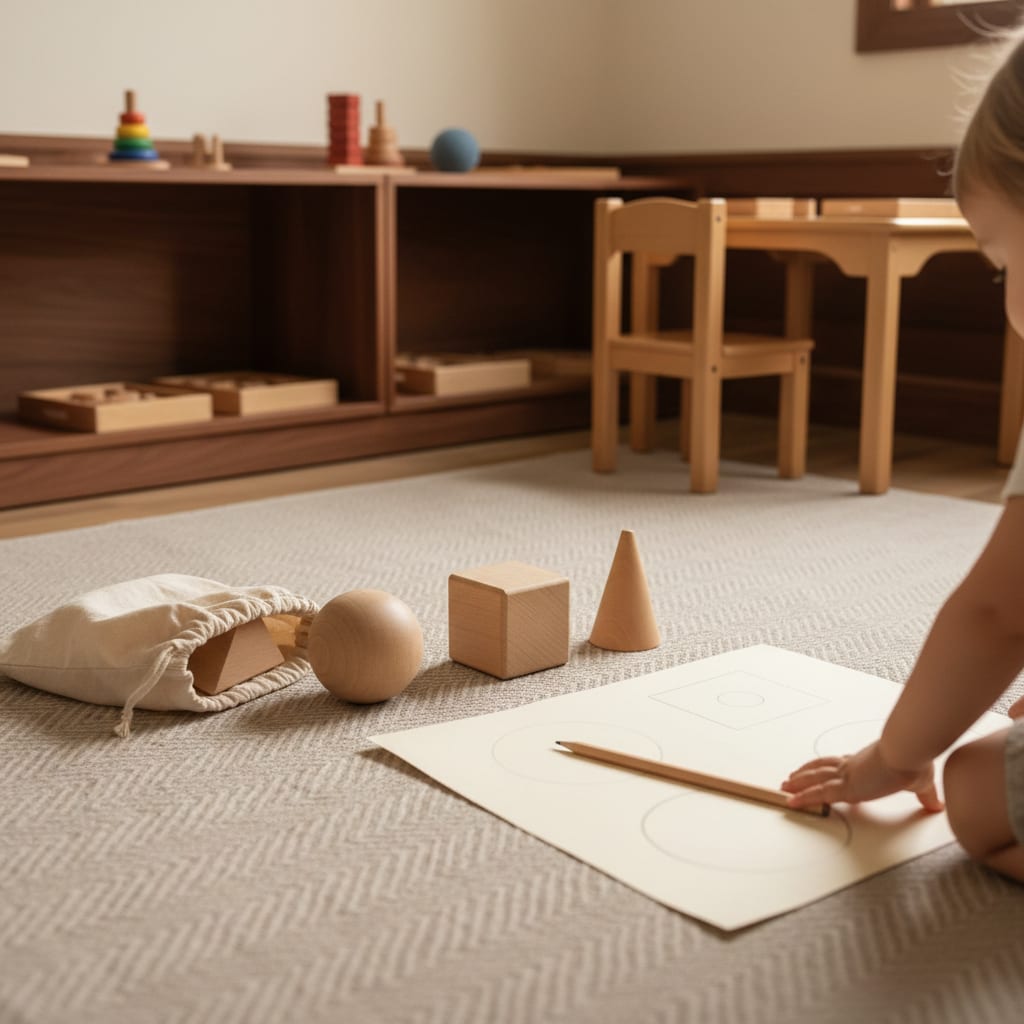
3–6 years. Long, absorbed work; the sensitive period for language and for order; sequences with a beginning, middle and end; genuine responsibility in the household. Protecting the concentration this age is capable of is most of the job — ten concrete ways to do it are in helping your child concentrate.
The honest limits
I set up shelves for three years in a toddler community; I don’t hold an AMI or AMS diploma, and I’d rather say that plainly than write as though I did. Three things I’d want a new reader to know:
It asks a lot of the adult. The method’s demands land almost entirely on your self-control — not correcting, not rescuing, not filling silence. That’s harder than buying the right shelf, and it’s the reason people bounce off it.
Some of it is genuinely contested. The strength of evidence for specific Montessori practices varies, and reasonable people argue about fantasy play, about mixed-age classrooms, and about how much of the original doctrine should survive a century. Treat confident claims — including confident claims by Montessori bloggers — with the skepticism you’d apply anywhere else.
Safety guidance outranks philosophy, always. The clearest example is sleep: a floor bed is a legitimate Montessori arrangement for a walking toddler, and it is not a route around infant safe-sleep rules, which point to a crib, bassinet or play yard meeting federal standards for the first year. Our Montessori floor bed guide puts that caveat where it belongs, at the top.
Where to read more
This site exists to point outward, so here is where I’d actually send you. For the training organizations’ own material, AMI and AMS. For a single book that converts the philosophy into daily practice better than anything else on the shelf, Simone Davies’ The Montessori Toddler.
And for the living version — people running this in their own houses, with photographs of actual rooms rather than styled ones:
- The Kavanaugh Report — years of Montessori-at-home with a large family, and the best writing anywhere on the un-photogenic parts.
- How We Montessori — an enormous archive of shelves, materials and room setups by age.
- The Montessori Notebook — Simone Davies’ own site, and the closest thing to a straight answer on most questions.
- Montessori in Real Life — practical, honest, and good on the small-apartment version.
- Nduoma — Junnifa Uzodike’s writing on Montessori from birth.
- Living Montessori Now — the long-running index of activities and printables; useful when you want ideas by theme.
None of these writers are involved with this site, and none of them endorse it — we link them because they’re the people doing the work. If you want the curated version, the 15 Days of Montessori hub is where this site’s outward-looking habit started.
FAQ: Montessori parenting
What are the main principles of Montessori parenting?
A prepared environment the child can use alone, independence as the goal, following the child’s observed interests, freedom within a small set of firm limits, respectful communication, and motivation from the work itself rather than from rewards or punishments.
Is Montessori parenting the same as gentle parenting?
They overlap on respect and on avoiding punishment, but Montessori adds a strong environmental component — the room is expected to do a share of the parenting — and is generally firmer about limits than the gentle-parenting label implies.
Do I need to buy Montessori toys and furniture?
No. Lowering a hook, emptying a drawer for the child, cutting the number of toys on display and waiting three seconds longer before helping cost nothing and change more than any purchase.
Can you do Montessori at home if your child goes to a regular school?
Yes, and most families here do. Practical life, a prepared bedroom, protected concentration and the way you speak to a child are all home-side and independent of the school.
At what age do you start?
From birth, in the sense that movement freedom and respectful handling apply immediately. The changes people notice most start somewhere around twelve to eighteen months, when a child can begin real work.