Museum Trips With Toddlers, the Montessori Way
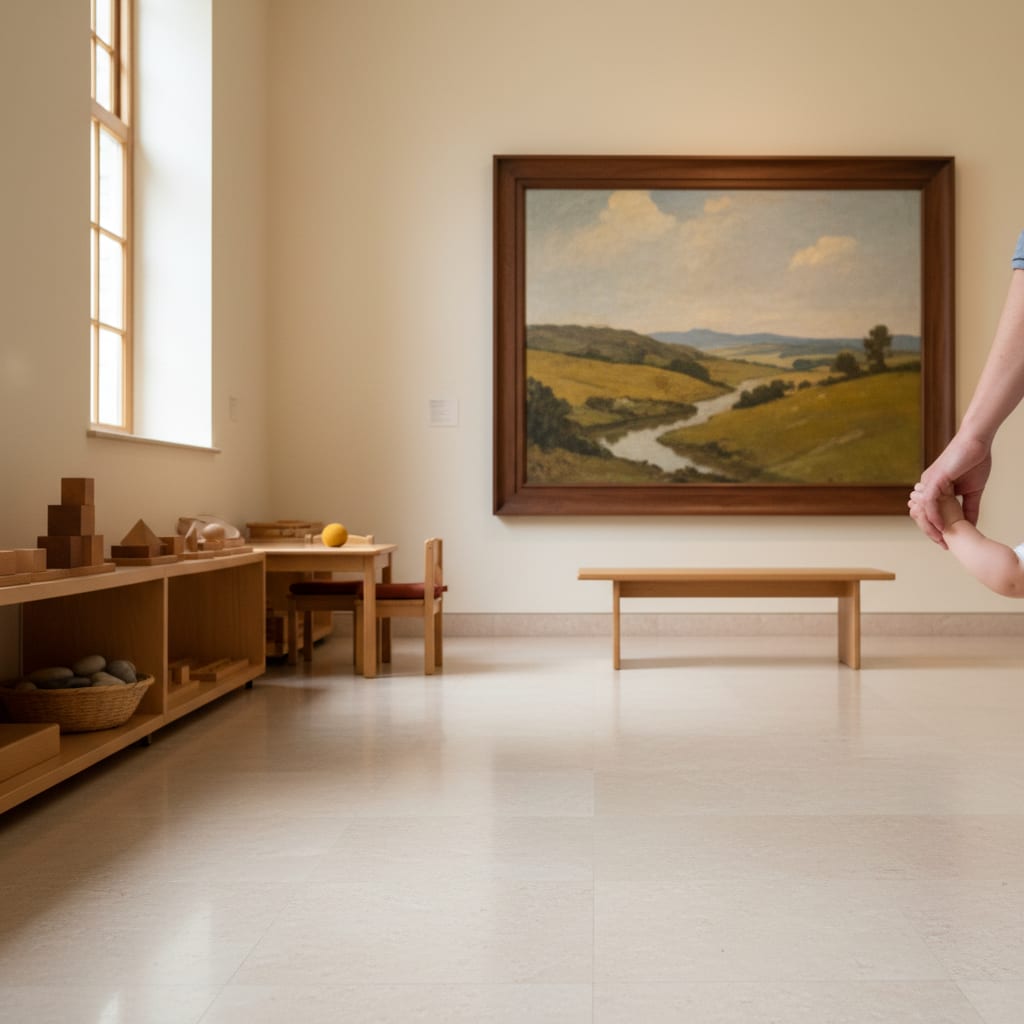
The Montessori way to take a toddler to a museum: go short, go small, and follow the child. Pick one wing or even one room, plan for 45–90 minutes total, let the toddler set the pace and the itinerary (yes, even if that means twenty minutes at the escalator), name what you see in real words, and leave while it’s still going well. A museum trip with a two-year-old isn’t a lecture course — it’s a naming walk in a beautiful building. This site ran a beloved post on making museum trips fun with young children back in its network days, with live links from real Montessori schools to prove it; this is that trip, rebooked for 2026.
Why museums are secretly perfect toddler territory
Strip away the gift shop anxiety and a museum is a prepared environment someone else maintains: orderly rooms, real objects of genuine quality, low noise, and an unspoken culture of walking slowly and looking closely. That’s a Montessori classroom with better lighting. Toddlers don’t need to “get” art or dinosaurs for the trip to work — the developmental cargo is observation, vocabulary, and practicing how we behave in shared quiet places. A toddler who leaves having really looked at three things had a better museum day than an adult who skimmed three hundred.
Before you go: shrink the plan
- Pick one target, not a tour. One gallery, one exhibit, one favorite animal in one hall. Everything else that happens is bonus.
- Time it like a nap-adjacent operation, because it is one: first thing after breakfast or straight after the nap, never during the collapse window.
- Check the logistics that actually sink trips: stroller policy, elevator locations, where food is allowed, and whether there’s a children’s or touch-friendly section to use as either opener or dessert.
- Prime lightly. A library book about fish before the aquarium wing, or your phone photos from a previous visit, gives the toddler hooks to hang the day on. Skip the syllabus; one thread is plenty.
- Membership math: if a museum is close, a family membership often pays for itself in a couple of visits — and, more importantly, it removes the pressure to “get your money’s worth,” which is the enemy of the short exit done well.
During: follow the child, name the world
The visit itself runs on two Montessori habits. First, follow. Let the toddler navigate; their itinerary will be strange and correct. The floor mosaic may outrank the Monet. Fine — attention is attention, and self-chosen attention runs deepest (the whole argument of help your child concentrate).
Second, name. Museums are vocabulary festivals: sarcophagus, propeller, tentacle, marble. Give real words generously, at eye level, without quizzing — the same three-period spirit as our toddler language activities. Add observation prompts that have no wrong answers: “I see three colors in this one — what do you see?” And carry-privileges help everywhere: a toddler holding the (paper) map is a stakeholder, not cargo.
What to skip: audio guides, reading every placard aloud, and any route that requires the phrase “we have to see” — a museum with a toddler contains no mandatory rooms.
The graceful exit (the actual skill)
Leave at the first signal of fraying — the whine, the floor-flop rehearsal, the thousand-yard stare — not the third. Ending on a good note is what builds the child who asks to go back; overtime is what builds the child who associates museums with being hauled. A snack outside on the steps makes a fine closing ceremony, and the car-ride recap (“we saw the whale, and the mop bucket you loved”) files the memory. If the meltdown wins anyway some days: that’s toddlerhood, not failure. Museums keep.
This post exists partly because the Montessori community kept its original version alive for a decade — Nduoma linked it in her own museum writing, as did Simone Davies’ school in Amsterdam — and the modern community still writes wonderfully about culture trips with small children; the Network Reader rounds those up as they appear.
FAQ: museums with toddlers
What age is worth taking a child to a museum?
Any age — the question is what “worth it” means. Babies come along for the ride; from roughly 18 months a child actively observes, names and remembers. Waiting until kids can “appreciate it” misses years of free vocabulary and looking practice.
How long should a museum visit with a toddler last?
Plan 45–90 minutes door to door inside the building, one gallery deep. Anything past the toddler’s fray-point is negative time — it un-earns the goodwill the first hour built.
What kind of museum is best for toddlers?
Whatever’s close and calm: natural history and aquariums for obvious reasons, but art museums work beautifully when treated as color-and-shape walks. Children’s museums are great play — just know they exercise different muscles (touch-everything) than the quiet-observation trip this post is about.
How do I handle museum rules with a grabby toddler?
Frame the rule positively before entering (“in this place, we look with our eyes; you can touch the railing and the map”), give their hands a job (the map, a small notebook), and stay physically close in fragile rooms. One calm removal-and-retry beats ten “don’t touch”es.