Floor Bed Safety Checklist: The Montessori Room Audit
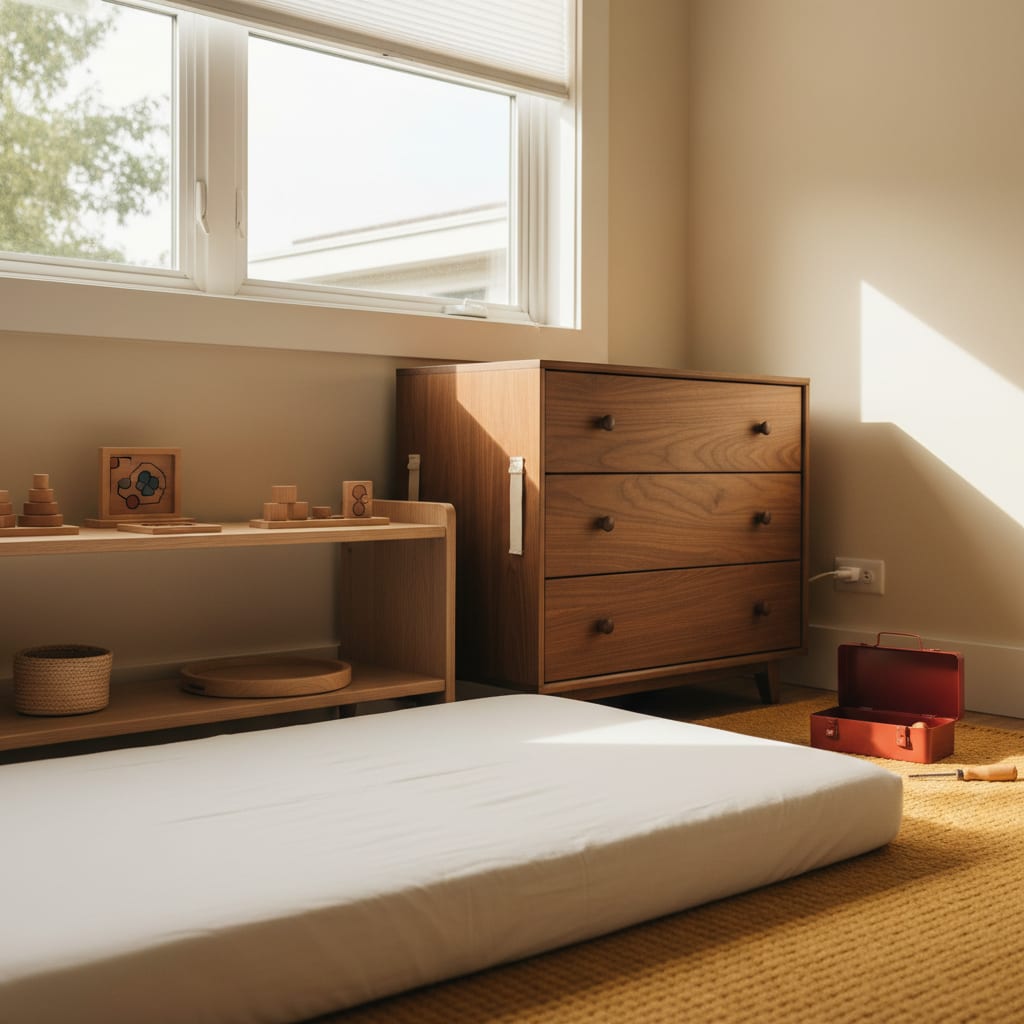
A floor bed safety checklist has to cover the whole room, because that’s the honest deal of a floor bed: the room becomes the crib. The bed itself needs almost nothing — a firm, flat mattress, a fitted sheet, and for babies absolutely nothing else in the sleep space. The room is where the real work is: everything anchored, every outlet covered, every cord managed, and a doorway plan for the 5 a.m. wanderer. Below is the full audit I run — on my knees, literally at child height — before any child’s first night, in the order I’d do it. Set aside an afternoon.
The bed itself
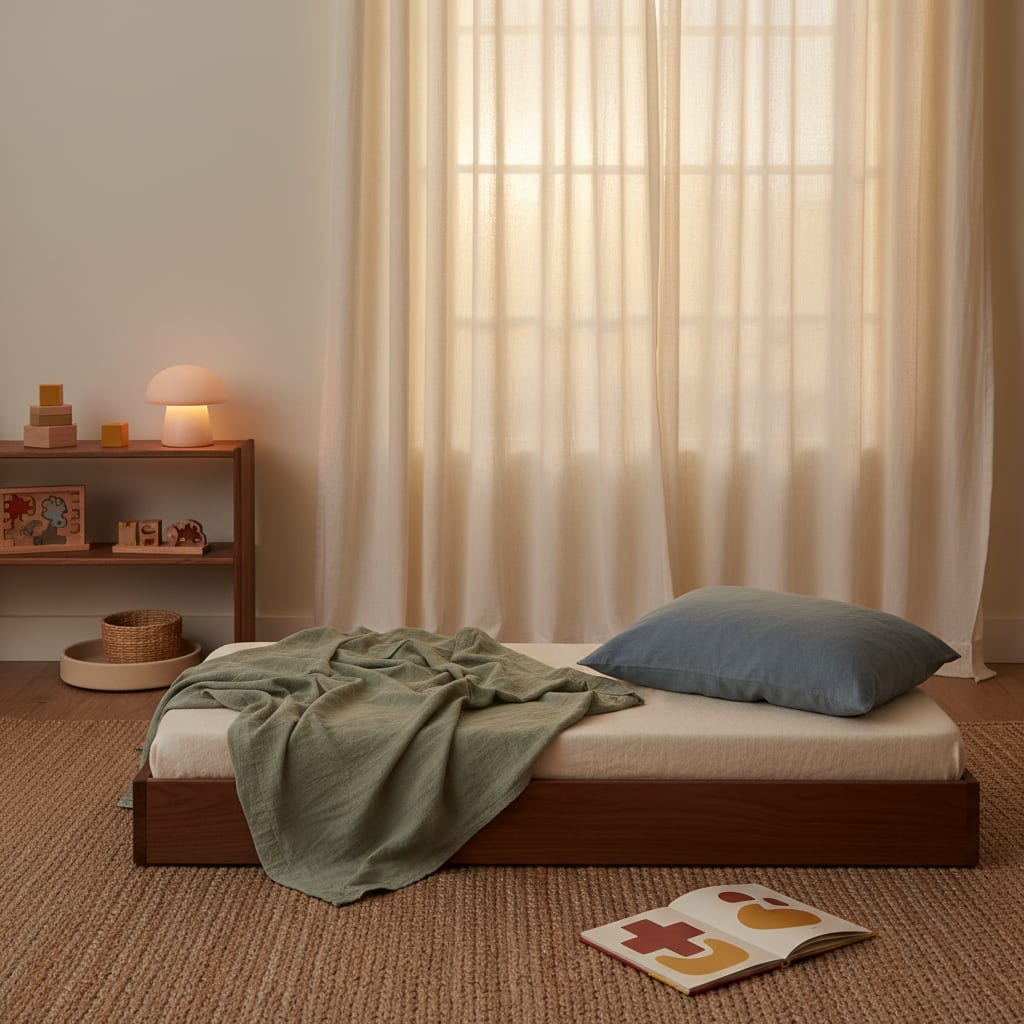
- Firm, flat mattress. Crib-size or twin, on the floor or a low frame. No memory foam softness for babies, no inclines, no gaps between mattress and frame a limb could wedge into.
- For babies: bare sleep space and back sleeping. Fitted sheet only — no pillow, blanket, bumper, or soft toys — and down on the back for every sleep, exactly as on any surface, consistent with AAP safe-sleep guidance. A floor bed changes the height, not the rules. Talk your setup through with your pediatrician, especially under twelve months.
- Airflow underneath. A mattress flat on the floor gets lifted weekly to air the underside; humid rooms can grow mildew under it. A low slatted frame solves this permanently.
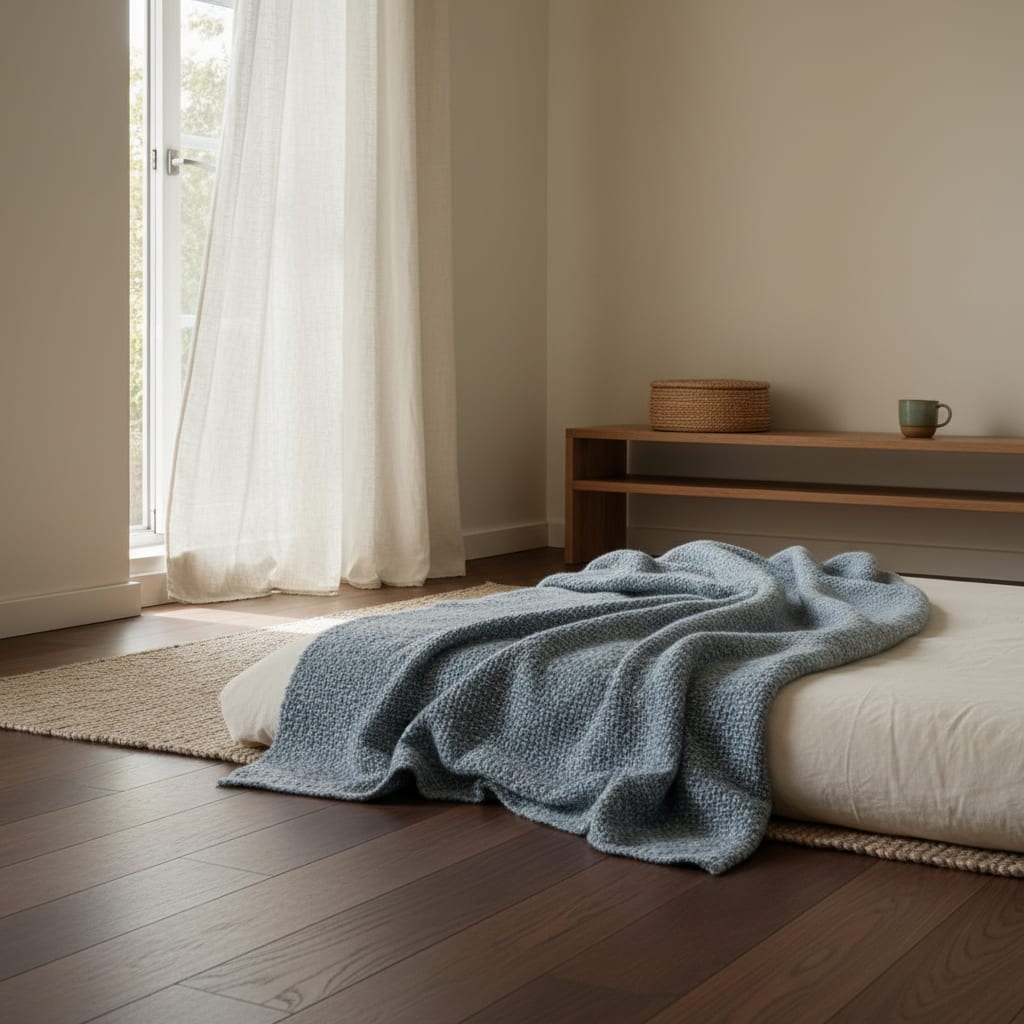
- The landing zone. A rug or firm mat beside the bed for the roll-off era. In my house that era lasted about two weeks per child, and a floor-level landing is a non-event — but a bare hardwood landing next to a metal heat register would not be.
Furniture and walls
- Anchor everything that could tip. Dressers, bookcases, shelves, the wardrobe — strapped to studs with anti-tip hardware (a QuakeHold strap kit, for instance), not drywall anchors. This is the single non-negotiable on the list. A room a child roams unsupervised must contain nothing that falls.
- Test drawers as ladders. Toddlers climb open drawers. Anchored means anchored against a climbing child’s full weight on the bottom drawer, not just a nudge.
- Wall decor above the bed. Nothing heavy or glass-framed hanging where it could come down on the mattress. Lightweight frames, canvas, or nothing.
- Sharp corners at head height. Their head height, not yours — hence the knees. Corner guards or furniture placement fixes what you find.
Cords, outlets, windows, heat
- Outlets covered — sliding-plate covers like these self-closing outlet covers outlast the little plug-in caps, which become a fine-motor activity.
- Cords gone or unreachable. Lamp cords, monitor cords, anything trailing. A cord at floor level in a floor-bed room is within reach by definition.
- Blind cords cleated high or replaced with cordless blinds — this one is a genuine strangulation hazard and worth doing properly.
- Windows locked or limited. If the room has a low window, fit a lock or restrictor. Move all furniture that could serve as a step away from windows.
- Heat sources guarded. Radiators, registers, and space heaters (ideally: no space heater at all) checked at crawling height.
The doorway and beyond
- Decide the boundary. A gate at the doorway, a childproof door handle cover, or a door that stays open to a fully childproofed hallway — any of these works, but pick one deliberately. The room’s edge is now the sleep boundary the crib rails used to be.
- Know where wandering leads. If the child can leave the room, audit whatever they can reach: stairs gated, bathroom door managed, nothing interesting between their door and yours.
- Small objects sweep. Anything that fits through a toilet-paper tube is a choking risk for the under-threes. Older siblings’ rooms are the usual source; do the sweep weekly, not once.
- Keep the room boring-safe, not empty. A small shelf, a book basket, low art — a calm room the child can safely explore is the goal, and the full layout logic lives in the Montessori bedroom setup guide.
Re-run the audit every few months: children grow into new reach, new climbs, and new ideas. And if the honest result of your audit is “this room can’t be made safe” — wrong rental, wrong layout, wrong season — that’s a legitimate answer. The floor bed vs crib comparison treats the crib as the respectable tool it is, and the complete floor bed guide will still be here when circumstances change.
FAQ: floor bed safety
Are floor beds safe for babies?
A floor bed can meet the same safe-sleep standard as a crib: firm flat mattress, fitted sheet only, nothing soft in the sleep space, back sleeping every sleep, and a fully childproofed room. The room audit is the real safety work — and ask your pediatrician about your specific setup.
What do you put around a floor bed?
A rug or firm mat on the open side for the roll-off era, and nothing hazardous within reach: no trailing cords, no heavy wall decor overhead, no furniture that could tip. Some families add a low rail or a rolled towel under the sheet for the first weeks.
Do I need a gate if my toddler has a floor bed?
You need a deliberate boundary — a doorway gate, a childproofed handle, or an open door onto a fully childproofed path. Which one matters less than choosing consciously: the room’s edge replaces the crib rails, so somewhere has to be the edge.
How often should I re-check a floor bed room?
Every few months, and after any furniture change. A child who couldn’t open drawers in March climbs them by June; new reach and new skills change what counts as safe. Re-run the audit at the child’s current height, not their old one.