Montessori Advent Calendar: A Countdown of Real Jobs
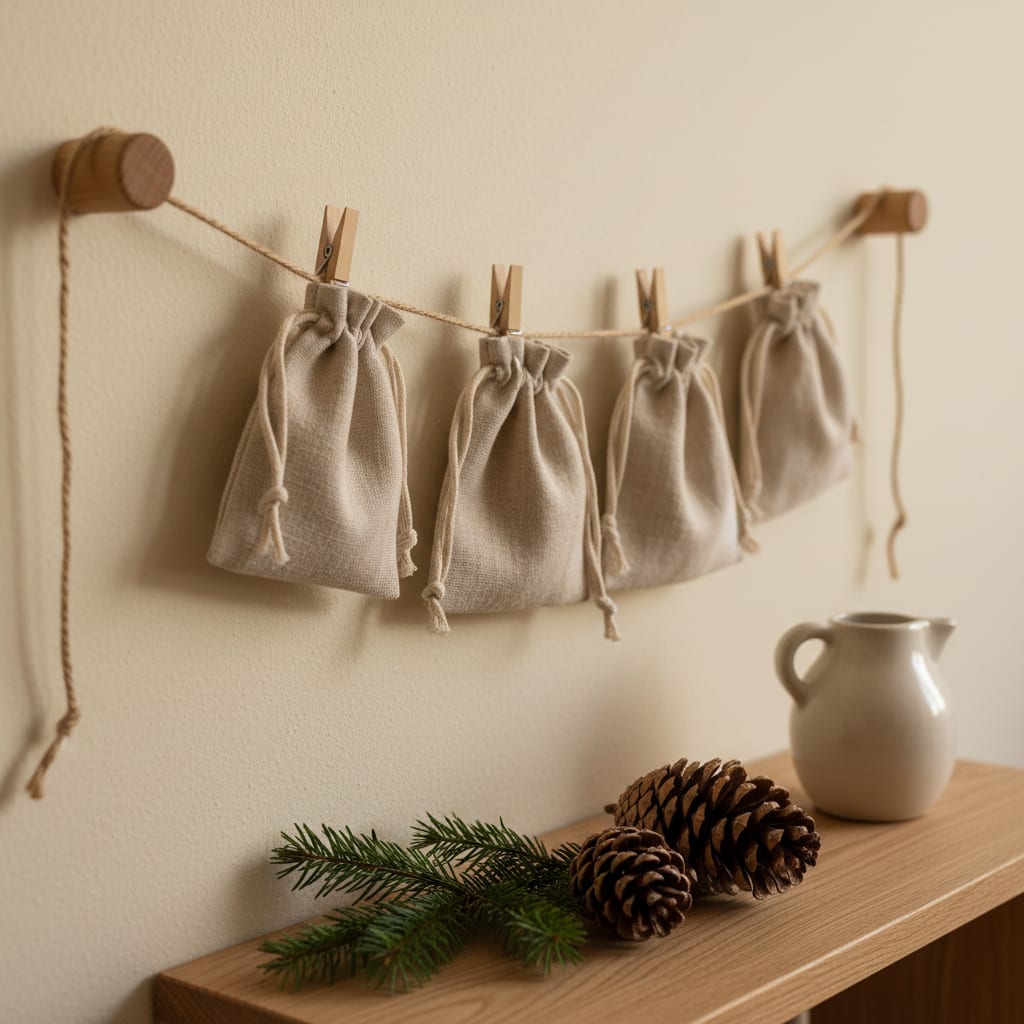
A Montessori advent calendar swaps 24 small toys or chocolates for 24 small things to do together: one real job, one outing or one shared ritual a day. Each pocket or drawer holds a picture card or a token from the house that stands for that day’s activity. You fill it from what you already own, so it costs almost nothing. One safety rule comes before anything else: if a child under about four can reach the calendar, nothing inside it should be small enough to fit in a mouth. That means no coins, marbles, button batteries, balloons or hard candy.
I was a classroom assistant in a Montessori toddler community, not a trained guide. The safety points below come from the American Academy of Pediatrics. The Montessori ideas lean on the American Montessori Society and on writers who have done this longer than I have.
Why a countdown of jobs suits a Montessori home
A Montessori home already treats ordinary work as the main event. The American Montessori Society defines practical life as “domestic” work to maintain the home, self-care, and “grace and courtesy,” and notes that these skills “are of great interest to young children.” December is full of that kind of work, and an advent calendar can hand some of it to the child, one piece at a time.
The countdown helps too. “Twenty-four days” means little to a three-year-old. A row of pockets that empties one at a time is a countdown they can see and touch.
The idea is not new. In 2015 Simone Davies of The Montessori Notebook made an advent calendar with a twist: “A 25-day countdown with some of my favourite tips to bring Montessori into your home.” Hers was written for parents. One of its days is a good test for a child’s version too: “A feather on the ground, a smile from someone in the store and a shoot of grass coming up through the cracks in the pavement.”
The safety floor, before you fill a single pocket
A calendar of small surprises can easily become a box of choking hazards. The AAP’s choking prevention page says “balloons, balls, marbles, pieces of toys and foods (small round objects) cause the most choking deaths.” Its list of household items to keep away from young children includes coins, marbles, small balls, toys with small parts, and “small button-type batteries or lithium coin batteries.”
Three rules follow from that page:
- Keep high-risk foods out until four or older. The AAP says to keep them from children “until 4 years of age or older, depending on each child’s development and maturity level.” Its list includes “hard, gooey, or sticky candy,” whole nuts, popcorn and marshmallows.
- No balloons. The same page warns that “balloons pose a choking risk to children up to 8 years of age.”
- Watch the siblings. “Many choking incidents happen when older brothers or sisters give dangerous foods, toys or small objects to a younger child.” If an older child’s calendar holds small things, hang it where the baby cannot reach it.
A calendar of picture cards and large household tokens avoids all of this.
How to make one from the house
You need 24 containers and something to put in each. Any of these work:
- A fabric or wooden calendar you already own, with a card in each pocket.
- 24 small paper bags or envelopes pegged along a low ribbon at the child’s height, so they can open the day’s bag themselves.
- A basket of 24 wrapped books from your own shelves and the library. Unwrapping a book they already love is still a treat at two.
For a child who cannot read, draw the day’s job on the card, or use a large object as a token. A wooden spoon means “bake today.” A mitten means “walk to see the lights.” A clean cloth means “wash the front door before the visitors come.” The child opens the pocket, finds the token and goes to fetch the real thing. That is a small sorting job before the real one even starts.
Keep it low and in the same spot, so opening it becomes the first job of the morning.
24 days: jobs, outings and people
Mix the categories so no week is all baking. Swap any day for something your family already does.
Jobs (practical life)
- Polish the shoes for a December outing.
- Wash the vegetables for dinner.
- Fold the napkins for a special meal.
- Water the tree, or the house plants, with a small jug.
- Help wrap a present (tape and paper for them, scissors for you).
- Bake something simple, and wash the bowls after.
- Sweep the front step before guests arrive.
- Lay the table for everyone.
Outings and nature
- Walk to see the lights after dark.
- Collect pinecones or seed heads for a winter tray.
- Feed the birds.
- Visit the library and choose one winter book.
- Take a winter walk and look for one beautiful thing, Simone Davies’ feather test.
- Visit a market or a tree farm.
People (grace and courtesy)
- Draw a card for a neighbour and deliver it.
- Call a grandparent and tell them one thing from today.
- Carry a plate of biscuits next door.
- Practise saying thank you for a gift, before the gifts arrive.
- Choose a toy or book to give away.
- Help make breakfast for someone in the house.
Rituals
- Turn on the tree lights together at dusk, and turn them off together at bedtime.
- Read a winter story by the tree.
- Put out a picnic dinner on the floor.
- Lay out clean pyjamas and read one last story.
Day 18 is a grace and courtesy lesson in miniature. Practising how to thank someone for an unwanted gift, at a calm moment, is much easier than correcting it in front of a grandparent. For job ideas that fit a particular age, practical life activities by age shows what a two-year-old can do and what a four-year-old can do.
If you buy one
Buy one only if you want it to last for years. Fabric pockets and wooden drawers both work, refilled with cards each December.
- Fabric pockets. A plain hanging calendar such as the Remerry velvet advent calendar with 24 pockets holds a card or a flat token in each pocket and is soft enough to hang low.
- Wooden drawers. A drawer calendar such as the FOIMAS wooden advent calendar with 25 drawers gives a child the satisfying job of opening a drawer. Put cards in the drawers, not small objects, if a toddler can reach it.
Skip calendars with 24 small plastic figures, however sweet. They become a choking question and a tidy-up problem on the same day.
When it goes wrong
Some days you will miss. Betteroo’s longer list of fillers sorted by age has the right attitude: “Starting late or missing days is fine. Double up or skip ahead.” It also notes that “activity slips and coupons make the cheapest calendar, and often the best loved,” which is the whole idea here.
If a day’s job turns into a battle, put the token back and try tomorrow.
If chocolate is part of your family’s December, it can still be one of the days. Choose a kind that suits your child’s age, using the AAP list above.
For more December ideas from the wider Montessori blogosphere, the revived 15 Days of Montessori for the Holidays collects fifteen of them.
 Late lights walks, later bedtimes?
December moves bedtime around. Betteroo builds a gentle, personalized sleep plan around your child's age and routine, starting with a free quiz.
Take the free sleep quiz →
FAQ: Montessori advent calendars
What goes in a Montessori advent calendar?
One small real activity per day: a household job, an outing, something for another person, or a family ritual. For non-readers, use a drawn card or a large token from the house that stands for the day’s activity.
Is an advent calendar safe for a toddler?
It can be, if nothing inside is small enough to fit in a child’s mouth. The AAP lists coins, marbles, small toys, button batteries and balloons among household choking hazards, and advises keeping hard, sticky candy and nuts from children until about four or older.
When should we start the advent calendar?
Most calendars run from December 1 to December 24. In 2026 the first Sunday of Advent falls on November 29, so a family that follows the church calendar can start then.