Practical Life Activities by Age: A Home Guide
Practical life is the everyday work of running a house, handed to the child at the size they can manage: carrying, pouring, wiping, dressing, sweeping, preparing food, caring for plants and for each other. A twelve-month-old carries a cloth to the table; a four-year-old makes their own snack and washes the plate. It’s the least photogenic corner of Montessori and the one that changes a house fastest, because it converts a hundred daily moments of being done-to into being able. Here’s the ladder by age, and how to set a work up so it runs without you.
What counts as practical life
Four strands, and it helps to know which one you’re building:
- Care of self — dressing, hand-washing, hair, shoes, toileting, feeding yourself.
- Care of the environment — sweeping, wiping, watering plants, tidying, laying the table, washing up.
- Grace and courtesy — greeting people, waiting, passing something, saying the awkward thing kindly.
- Control of movement — carrying carefully, walking around a mat, closing a door quietly, pouring without spilling.
Everything below is one of those four, at a size that fits the hands available.
12–18 months: carrying, dropping, wiping
The first practical life is mostly transport and imitation. Expect ten seconds of participation and a great deal of watching.
- Carrying one object across a room and putting it somewhere — the tray of two spoons, the single cloth.
- Dropping laundry into a basket; putting a diaper in the bin.
- Wiping a spill with a small dry cloth. The wipe will be symbolic. Let it be.
- Dry transfer with hands — wooden eggs or large wooden blocks, nothing small or squashy enough to fit in a mouth — from one small bowl to another.
- Putting shoes into a basket by the door, and beginning to push arms into sleeves.
Keep everything to one step. Two-step works arrive later than you think.
18 months–2 years: pouring, and the first real jobs
Now the child wants the actual job, not a version of it. This is when the household equipment starts to matter more than the activities.
- Pouring water. Start dry (beans, rice) in a small pitcher, then wet with an inch of water. A small heavy-bottomed glass — the Duralex Picardie in the small size is the classic, cheap and improbably tough — teaches care faster than any plastic cup, because glass tells the truth about how it’s being handled.
- Spooning and tonging between bowls, then into a muffin tin.
- Washing hands at a stool, with a real bar of soap and a hand towel on a low hook.
- Table-laying, one item at a time: their placemat, then their spoon.
- Watering a plant with a small watering can filled to a marked level (about an inch of water).
- Dressing steps in reverse order — you do all of it but the last pull, and hand that last pull over.
2–3 years: the kitchen year
Two is when the counter becomes the center of the world, which is why so many families end up buying or building a learning tower at this age. Real food work is the highest-value practical life there is: it’s genuinely useful, endlessly repeatable, and the result gets eaten.
- Washing vegetables in a bowl of water with a small brush.
- Spreading — butter, hummus, cream cheese — with a blunt child’s spreader.
- Slicing soft food (banana, mushroom, boiled egg) with a crinkle cutter or a small serrated child’s knife, always seated or at a stable tower, always with you present.
- Peeling a mandarin, shelling peas, tearing lettuce.
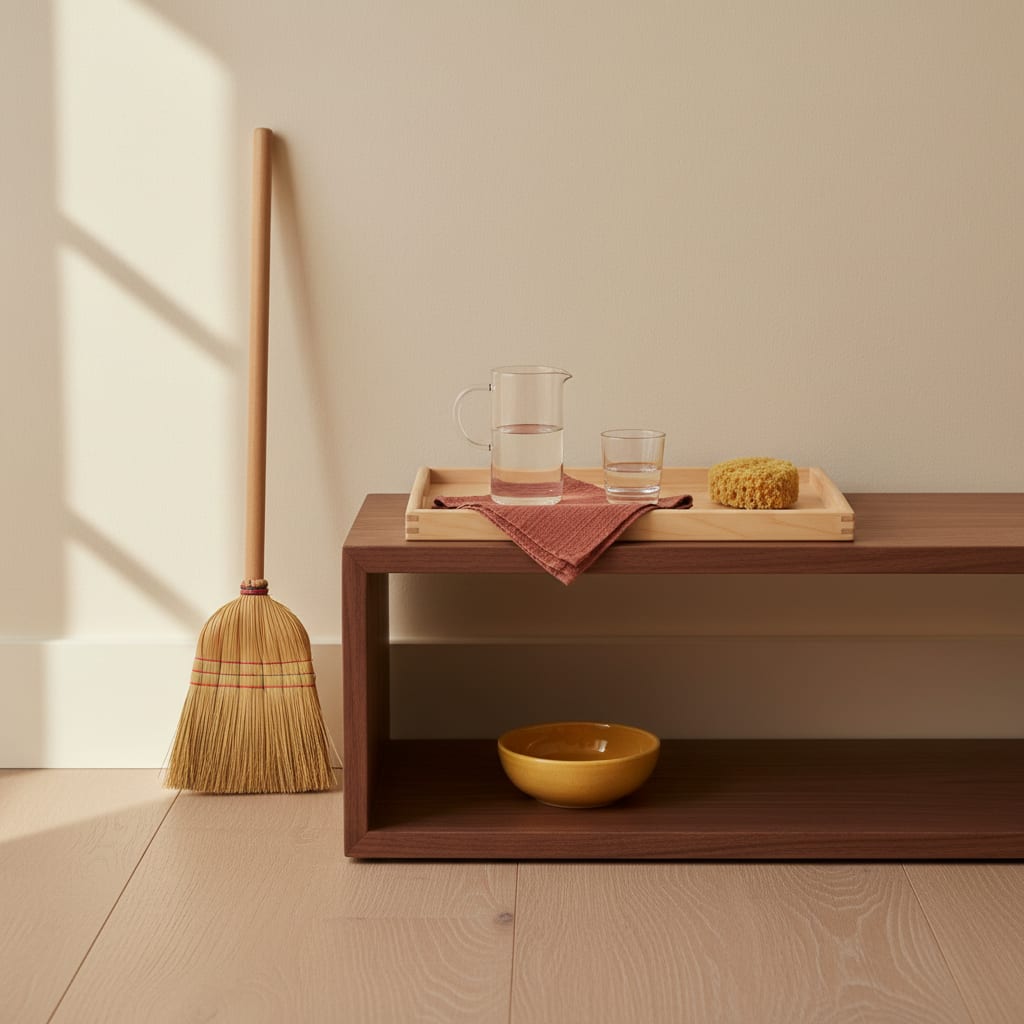
- Sweeping with a child-size broom and dustpan; wiping the table after meals.
- Pouring their own water from a small pitcher kept on a low shelf in the fridge or on the counter.
- Carrying their plate to the sink and, at the top of this range, washing it.
The equipment that makes this work — child-size brooms, small pitchers, aprons, real brushes — is available cheaply from restaurant-supply and school-supply shops, and specialists like Montessori Services sell the classroom versions if you’d rather not hunt. Store it where the child can reach it, on the principle laid out in organizing practical life supplies.
3–4 years: sequences, and care of other things
Three-year-olds can hold a sequence in their heads, which unlocks longer work with several steps and a proper beginning, middle and end.
- Making a simple snack start to finish: get the board, slice, plate, eat, wash the dishes, put away.
- Setting the whole table, including a pitcher for everyone.
- Flower arranging — a genuinely absorbing multi-step work with water, scissors and vases, walked through in Montessori flower arranging.
- Polishing: shoes, a small mirror, a wooden object, with a tray of cloth, tiny dish of polish and a brush.
- Sorting and matching socks from the laundry; folding washcloths and tea towels.
- Independent dressing, including buttons and large zippers, plus hanging a coat on a low hook.
- Feeding a pet with a measured scoop.
4–5 years: long work and real responsibility
The five-year-old’s practical life is nearly indistinguishable from the household’s — which is exactly the point, and also when children start noticing whether the job is real.
- A standing daily responsibility: the compost, the plants, the table, feeding the cat.
- Cooking with heat under close supervision — stirring at the stove, using the toaster, cracking and beating eggs.
- Washing dishes properly, including drying and putting away.
- Sewing on a button, threading a needle, mending a seam.
- Writing a shopping list in whatever spelling arrives, and finding those items in the store.
- Grace and courtesy that sticks: answering the door, offering a guest a drink, apologizing specifically.
Setting a work up so it runs without you
The activity matters far less than the preparation. Five things decide whether a practical-life work gets chosen twice:
- One tray, complete. Everything the job needs, nothing it doesn’t, in one carryable container.
- Child-size and real. A real pitcher that’s small, not a toy pitcher. Real glass, real bristles, real water.
- A visible endpoint. The child should be able to see when the work is done — the bowl is empty, the table is clear.
- Cleanup inside the work. A sponge on the tray, a cloth under the pitcher. The spill is part of the activity, not an interruption to it.
- Reachable storage. If you have to hand it down, it isn’t theirs.
Two rules that decide whether it lands
Show it slowly, and mostly silently. Present the work once, at half speed, with your hands doing the talking — a running commentary splits the child’s attention between watching and listening. Then step back.
Let them finish it badly. The single hardest rule. A wiped table with a wet patch, a plant watered twice, a crooked placemat — corrections in the moment tell a child the point was your approval, not the work. Re-present another day if it matters. Concentration is fragile early on, which is the whole argument of helping a child concentrate, and interruption is what breaks it.
FAQ: practical life at home
What age does Montessori practical life start?
Around twelve months, with one-step work: carrying an object, dropping laundry into a basket, wiping with a cloth. It becomes recognizable work — pouring, spooning, table-laying — between eighteen months and two.
What are the four areas of practical life?
Care of self, care of the environment, grace and courtesy, and control of movement. Almost every home activity fits one of them, which makes the framework a useful check on whether you’re covering the whole picture.
Do I need special Montessori materials for practical life?
No. The kitchen you already own supplies most of it; what you need is child-size rather than child-branded — a small pitcher, a short broom, a real sponge cut down. Specialist suppliers are convenient, not necessary.
How long should a practical life activity take?
As long as the child stays with it, which at two might be ninety seconds and at four might be twenty minutes. The measure of a good work isn’t duration but repetition — the ones they come back to tomorrow are the ones that fitted.