Montessori Toothbrushing: End the Bedtime Teeth Battle
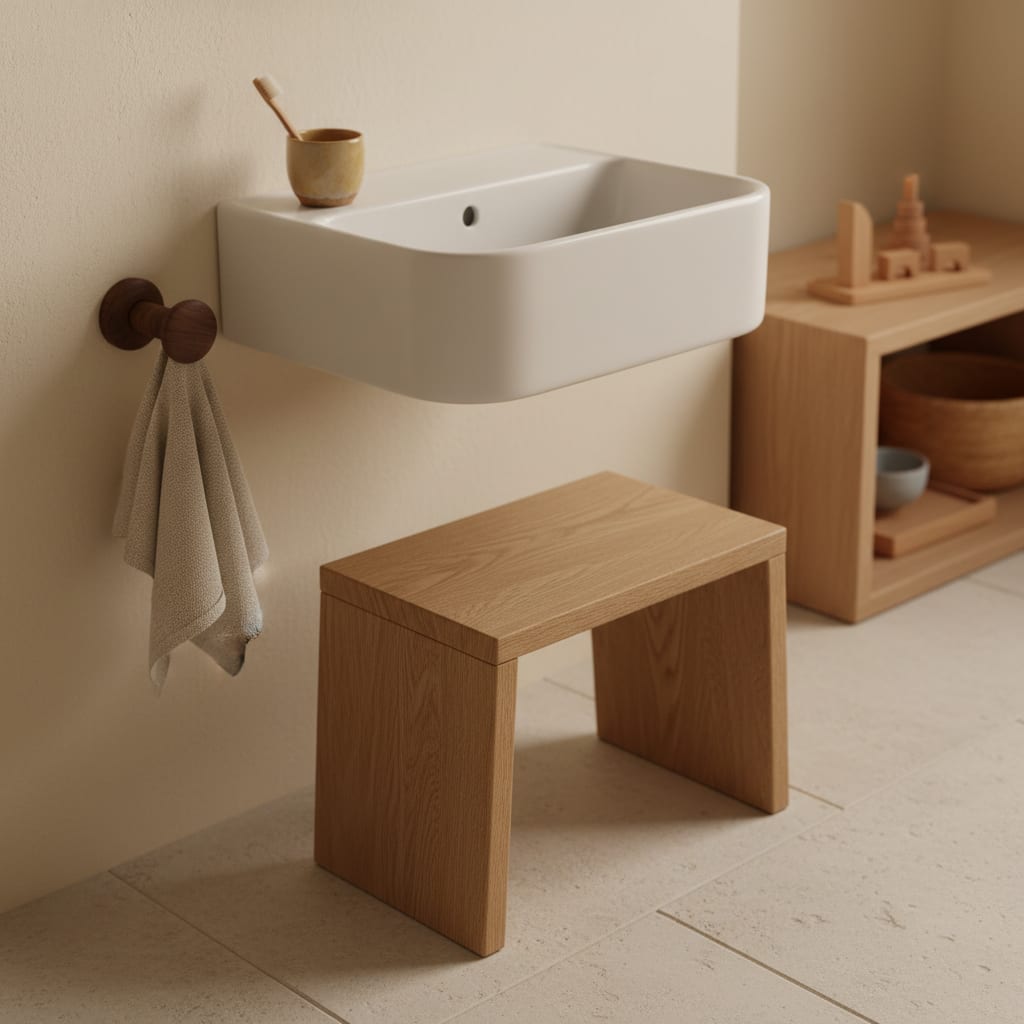
The bedtime teeth battle usually ends when brushing stops being something done to a tired child at the last minute and becomes a practical-life job with a place, a sequence and a clear handover. Set up a brushing spot at child height, let the child brush first and then finish it yourself, show the steps on a small photo card, and move brushing earlier in the evening, before books rather than after them. The adult’s turn is not optional: the AAP says children need help with brushing for years.
I was a Montessori classroom assistant, not a trained guide, so read this as practical-life work applied to one stubborn job, not as dental advice. The dental facts come from the American Academy of Pediatrics and the American Dental Association, and your child’s dentist outranks all of us.
Why the teeth step is the one that blows up
In a Montessori bedtime routine the child runs most of the steps. Teeth are the exception, because a toddler cannot do the whole job, so it is the one step where an adult takes something back. If that is a sudden grab with a loaded brush, no wonder the child clamps shut. Usually brushing also comes last, when everyone is most tired, it has no visible end, and nothing in it belongs to the child. Those are faults in how the job is set up, not in the child, so that is what to fix.
Step one: a brushing spot at child height
The American Montessori Society’s core components page defines practical life as including “self-care and personal hygiene”, and the method’s answer to any self-care job is the same: prepare the place so the child can reach it.
What goes low, where the child can reach it without asking:
- Their own brush in their own cup. The HealthyChildren toothbrushing tips page describes the right toddler brush as having “soft bristles, a small head and a thick handle that is easy to grip with little hands”. A small soft brush like the Radius Tiny Totz fits that description.
- A stable step at the sink, such as the Dreambaby step stool, which lives there so the child never has to ask for it.
What stays high is the toothpaste. The same AAP page is plain: “An adult should always place toothpaste on the toothbrush and then keep it out of reach.” That fits the method, which makes reachable whatever the child is meant to handle, and dosing toothpaste is not the child’s job yet.
I’ve written up the rest of a self-care sink, the hand towel, mirror and hairbrush, in the Montessori bathroom setup.
Step two: the child brushes first, you finish
This is the handover that runs through all practical life, and here the adult’s part is backed by the AAP. The HealthyChildren oral health page says to “Assist or supervise kids during toothbrushing until they master the task, usually at around 10 years of age.” The toothbrushing tips page says children “usually need help with brushing until they are 8 years old” and gives a handy test: “When they can tie their own shoelaces, they can usually brush on their own.”
The AAP’s Brush, Book, Bed program says it in one line: “It is OK to let them practice with the brush, but you get your turn too.” So name the two turns out loud, every night: “Your turn. Now my turn.” A child who knows a turn is coming resists it far less than one who has the brush taken away.
A few details make your turn smoother:
- Toothpaste amount by age, as the AAP states it: “a tiny smear—the size of a grain of rice—until age 3”, then “a pea-sized amount of fluoride toothpaste when your child is 3 years old.” Your dentist may advise differently for your child.
- Lying down is allowed. The tips page notes it is “usually easiest for infants and toddlers to lie down for brushing”, with their head on your lap. For a young toddler, your turn can happen on a rug rather than at the sink.
- Spit, don’t rinse. The AAP advises teaching children to spit out the extra toothpaste without rinsing, because rinsing washes the fluoride away.
- Brush beside them. The ADA’s MouthHealthy page on encouraging kids to brush suggests brushing side by side, because “Children learn from you.”
Step three: a routine card the child can read
A toddler cannot read words, but they can read a photograph of their own things. Take four photos of the real steps in your bathroom: the stool at the sink, their brush in the cup, the child brushing, and you finishing. Print them small, put them in order on a strip of card, and stick it at the child’s eye level by the sink.
The card shows the child where the job ends, and it moves the instructions from your voice to the wall. “What comes next on your card?” invites the child to check. “Open your mouth” starts a standoff.
For the length of brushing, MouthHealthy’s guide talks about brushing “twice daily for at least two minutes each time”. Two minutes is abstract to a two-year-old, but sand falling through a glass is not. A small two-minute toothbrush timer gives the job a visible end.
Step four: move brushing earlier
The AAP’s Brush, Book, Bed order puts brushing first: “Each night, help your children to brush their teeth. Read a favorite book (or two)! Get to bed at a regular time each night.” Many families do it the other way round, which puts the hardest step at the lowest point of the evening.
Brush straight after pajamas, while there is still some cooperation left, then read in bed. One rule comes with the earlier slot. The AAP says the toothbrush should be “the last thing to touch your child’s teeth every night”, so any bedtime milk or snack moves before brushing, not after.
If brushing is still a nightly fight after you have moved it, look at the clock as well as the child. A child who is overtired by seven fights every step. Betteroo’s guide to how much sleep a two-year-old needs puts it at about 11 to 14 hours in 24, with one nap. When the last nap goes, bedtime after the last nap drops covers how far to bring the evening forward.

What to do on the nights it still falls apart
Some nights a child with a cold, a new tooth or a long day will refuse anyway. Two things keep those nights from becoming a habit.
Keep your turn calm, short and certain. The child’s turn can be skipped on a bad night, but yours cannot. Say what is happening (“My turn now, then your book”), do it briefly, and move on.
Hand control back where you can. Offer a choice the child can finish: which of two brushes, or brushing on the rug or at the sink. MouthHealthy suggests letting children choose their own toothbrush and toothpaste, and the AAP tips page suggests letting the child pick a favourite flavour of fluoride toothpaste.
If the refusal is sudden, or brushing seems to hurt, ask the dentist or pediatrician.
FAQ: Montessori toothbrushing
At what age can a child brush their own teeth?
A toddler can practise from the start, but not alone. The AAP advises helping or supervising until a child has mastered brushing, usually around age 8 to 10 depending on the AAP page. Until then, the child brushes first and you finish.
How much toothpaste should a toddler use?
The AAP says a smear the size of a grain of rice until age 3, then a pea-sized amount from age 3, put on the brush by an adult. Ask your dentist if your child’s needs differ.
Should we brush before or after bedtime stories?
Before. The AAP’s Brush, Book, Bed program puts brushing first, then books, then bed.
Is a toothbrushing routine card Montessori?
It is in the spirit of the method: it prepares the environment so the child can see what comes next without being told. Photos of your child’s own things work best.