Montessori Bedtime Routine: Let Your Toddler Run the Steps
A Montessori bedtime routine hands the toddler every step their hands can genuinely do: day clothes into the basket, pajamas chosen from two, face washed at a sink they can reach, water poured, a book chosen, the lamp switched off. The adult keeps a short list: when it starts, the order it runs in, finishing the teeth, and the last word. Independence does not cause stalling. Stalling grows in the gaps: steps with no clear finish, choices with no edges, and a child who is not tired enough to want the bed at the end.
I spent three years as the assistant in a Montessori toddler community and hold no guide’s diploma, so read this as practical-life work carried into the evening, not doctrine. The principle is one any toddler room runs on: prepare the environment so the child can do the job, then step back.
Slow is not the same as stalling
The first thing that goes wrong when a toddler takes over bedtime is that it gets slower. A two-year-old pouring a glass of water for the bedside can take three minutes, and every one of them looks like delay to a tired parent. It is not. A child who is pouring is moving toward bed. A child asking for a fourth book is moving away from it.
That is the whole test. Working means the step has an end and the next one follows it. Stalling means the step never ends (the tap stays on, the books keep coming) or new steps appear that are not in the sequence. The answer to slowness is time: start the routine earlier by the minutes independence costs. The answer to stalling is structure: a fixed sequence, and a room in which every step has a visible finish.
The steps a toddler can own
Most of a bedtime routine is ordinary practical life: care of self and care of the environment, the same work a toddler does in the day. The American Montessori Society’s core components page describes practical life as encompassing “self-care and personal hygiene” alongside domestic work, and says these activities help young children “learn to work independently, develop concentration”. Evening is simply the part of the day where that work ends in sleep.
| Step | What the child does | What the room provides | What stays with you |
|---|---|---|---|
| Day clothes off | Drops them in a basket | A low open basket by the door | Checking pockets |
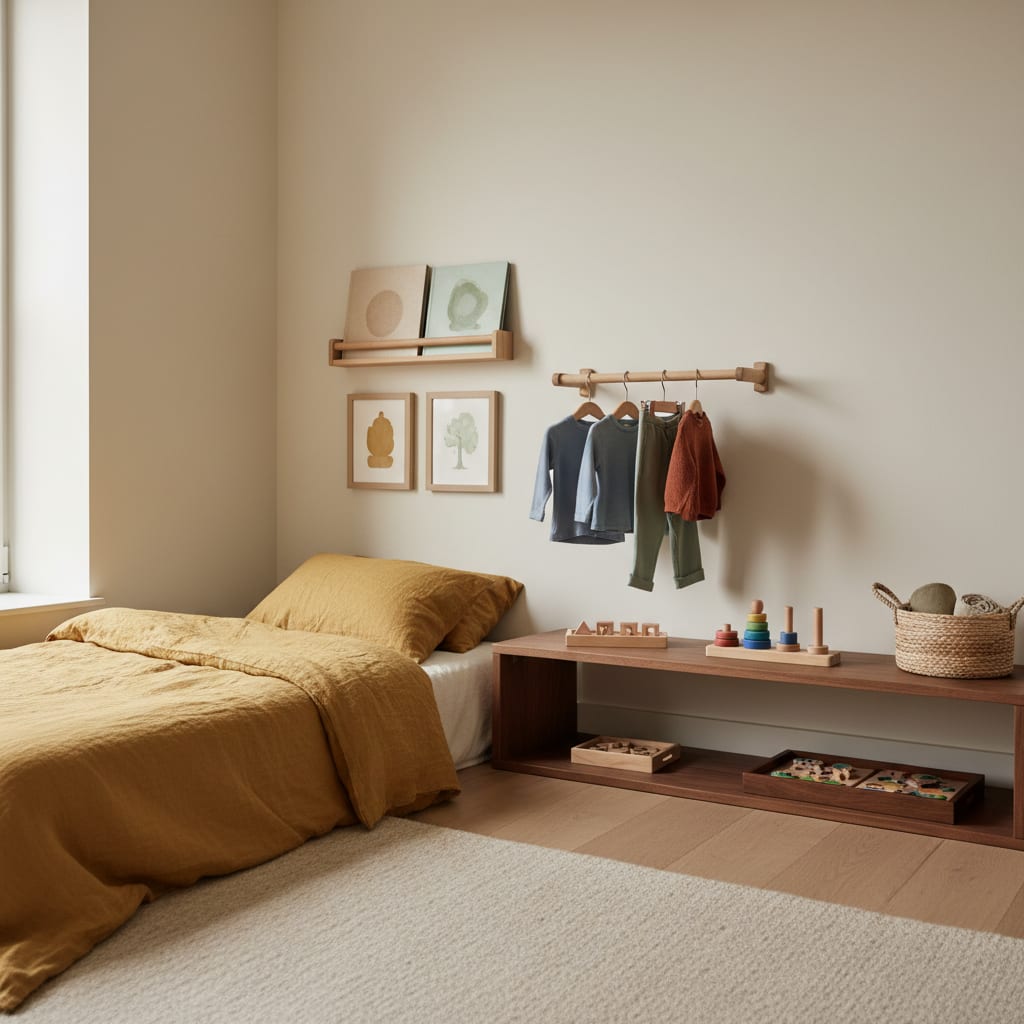
| Pajamas on | Chooses one of two, dresses as far as they can | Two sets set out on a low hook or shelf | The last button or zip |
| Wash up | Washes hands and face | A sturdy step stool, a small towel on a low hook | Water temperature |
| Teeth | Brushes first | A cup and brush at child height | Finishing the brushing |
| Water | Pours a small glass for the bedside | A small jug with a little water, a set spot for the glass | Nothing, once they can |
| Book | Chooses one of two from a low shelf | Two books out, the rest put away | Reading it |
| Lights | Switches off the lamp | A lamp with a switch the child can reach | Saying goodnight and leaving |
On pajamas, remember what is actually yours to decide. The day-clothes-at-bedtime post covers the four physical checks that belong to the adult and why the rest is the child’s choice. On teeth, the adult’s part is not optional. The American Academy of Pediatrics’ HealthyChildren oral health page says to “Assist or supervise kids during toothbrushing until they master the task, usually at around 10 years of age”, with a tiny smear of fluoride toothpaste “the size of a grain of rice” until age 3. So the child brushes first and you finish. That is how any job gets handed over: the child does what they can, and the adult quietly completes the rest.
If teeth are the step that keeps turning into a fight, Montessori toothbrushing at bedtime covers the brushing spot, the routine card and why brushing goes better earlier in the evening.
Give every step a finish line
A classroom work cycle has a shape the AMS spells out: choosing an activity, completing it, “cleaning up and returning the materials to the proper place”, and then the satisfaction of a finished task. Bedtime works best with that same shape, repeated six or seven times in a row. A step that ends clearly makes it easy to start the next. A step that trails off is where stalling moves in.
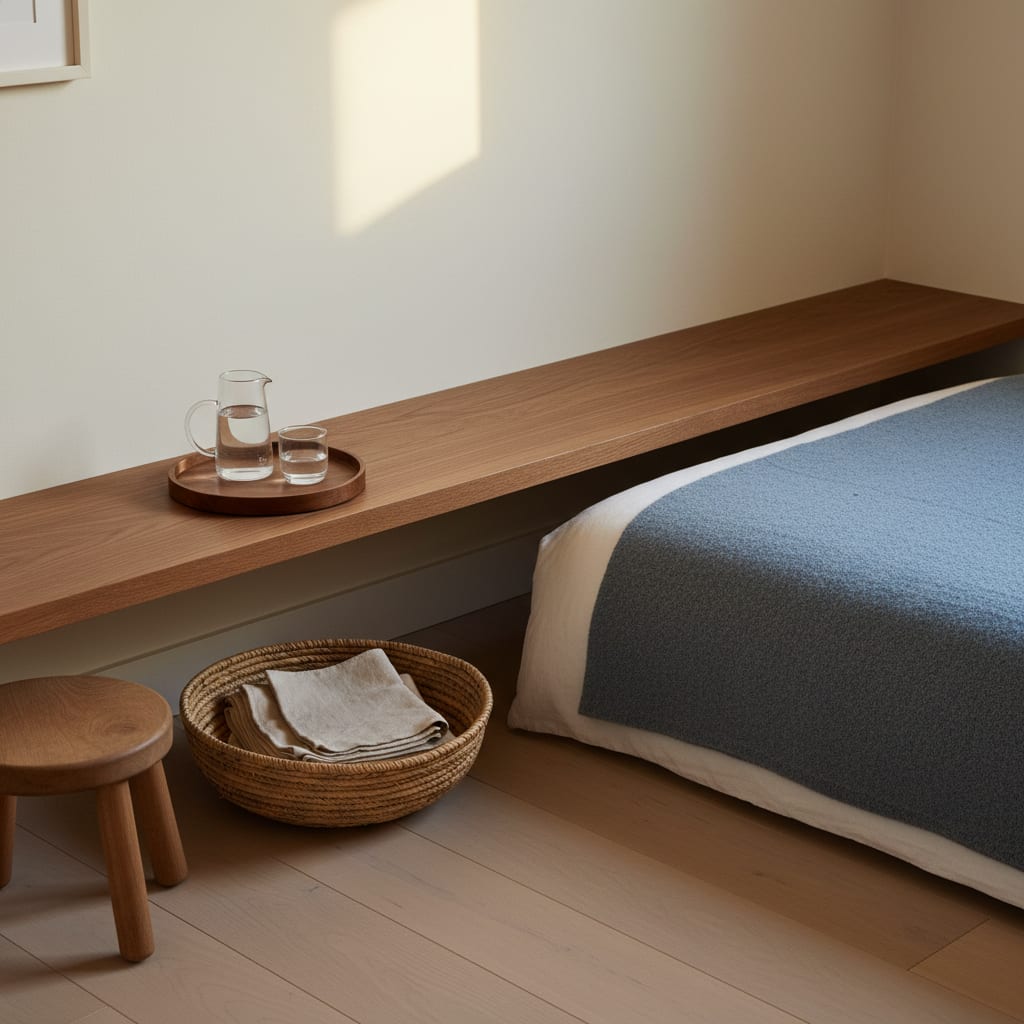
So every step needs a place where it visibly ends: clothes in the basket, the towel back on a hook the child can reach, the glass set down in its spot on the bedside shelf. Two books means two choices, not two readings.
The sink is the hard one in most houses, because a toddler cannot reach it. A stable, wide step is the whole fix. Something like the Dreambaby step stool gives a small child a step up to the basin with a non-slip base, and it lives at the sink so the child never has to ask for it.
Where the adult keeps the reins
A child-run routine is not an adult-free one. What you hold is structural, and holding it firmly is what makes the independence safe to give.
When it starts. The routine starts at a fixed time, and you decide it. Betteroo’s two-year-old guide recommends a short warning before the switch: “A five minute heads-up before the routine starts reduces protest at the transition.” Give the heads-up once, then begin.
The order. Same steps, same order, every night, so there is nothing to negotiate.
The size of each choice. Two pajama sets, two books. The same guide puts it plainly: “Offer two choices, not open questions.” “Which of these two?” is a choice a toddler can finish. “What do you want to wear?” is an open door.
The last word. Once the lamp is off, the routine is over. A drink request after the lamp goes off gets the same calm answer every time: the water is in its glass on the shelf. If the child gets up, the walk back to bed works the way it does with any floor bed, and I have written up the calm, boring script for that in floor beds and independent sleep.

When it keeps turning into a stall
If you have a clear sequence, a prepared room and a fixed start time, and bedtime still stretches past an hour, look at the clock before you look at the child. Betteroo’s write-up of how nap timing and length shape a two-year-old’s bedtime makes the point bluntly: “If the battles started suddenly, check the schedule first; an undertired toddler fights hardest.” An awake child turns every step into play. When the last nap disappears altogether, the problem flips toward an overtired child, and bedtime after the last nap drops covers how far to move bedtime.
Two other adjustments help. Hand over one step at a time, starting with one your child already does well in the day, such as pouring, and add the next only once it runs smoothly. And keep your own part short: a long adult part (three songs, a back rub, a chat) is where the “one more” requests come from.
FAQ: Montessori bedtime routines
What is a Montessori bedtime routine?
It is an ordinary bedtime routine in which the child does every step they physically can, in a room prepared so they can reach what they need. The adult decides when it starts and the order it runs in, finishes jobs like brushing teeth, and says goodnight.
At what age can a toddler do their own bedtime routine?
There is no single age, because the routine is made of separate skills that arrive at different times. Simple carrying jobs, like clothes into a basket, tend to come well before dressing or pouring, and every child’s order differs. Hand over whichever step your child already manages in the daytime.
How long should a toddler bedtime routine take?
Betteroo’s two-year-old guide suggests about 20 to 30 minutes. A child-run routine can take longer, so start it earlier rather than rushing the steps.
Should my toddler brush their own teeth?
Yes, first. Then you finish. The AAP advises parents to assist or supervise brushing until a child has mastered it, usually around age 10.