Toddler Wants to Sleep in Day Clothes: A Montessori View
If your toddler insists on sleeping in the clothes they wore all day, the honest answer is that this is mostly theirs to decide. The adult’s authority here is real but narrow: overheating, cords and ties, anything wet or soiled, and anything tight enough to leave marks. Fabric preference, matching, and whether an outfit “counts” as pajamas are not on that list. Run the four physical checks, fix anything that fails, and then let the choice stand. What you are looking at is care of self, not a rule being broken.
Why this is a practical life question first
It arrives at 7pm and feels like a sleep problem, which is why most advice treats it as one. But nothing about sleep is in dispute. The child is not refusing bed, or the room, or you. They are refusing a costume change — an adult-run procedure that produces no outcome they can perceive.
In Montessori terms, dressing sits inside practical life. I am not a certified guide, so take the doctrine from someone who is: the American Montessori Society defines the area as covering “‘domestic’ work to maintain the home and classroom environment; self-care and personal hygiene; and grace and courtesy.” Dressing is not a chore attached to bedtime — it is one of the first long, genuinely useful jobs a small child gets to own, and it belongs beside the ones in practical life activities by age and Montessori chores by age.
AMS also describes classrooms designed “to encourage children to move about freely and choose their own work, within reasonable limits of appropriate behavior.” That phrase is the whole question. Nobody argues the limits do not exist; the argument is where they sit, and here they sit further out than most bedtime routines assume.
What is genuinely the adult’s call
Four things, and they are physical rather than aesthetic.
Temperature. This is the real one. Day clothes are chosen for a house at 3pm — often a layer more than a sleeping child needs, sometimes fleece. The AAP’s safe-sleep guidance puts the heuristic simply: a baby “only needs one more layer than you would wear in the same environment to be comfortable,” and parents should “check your baby for signs of overheating such as sweating, a hot chest or flushed skin.” That is written for the first year — the AAP states its sleep recommendations are “for babies up to 1 year of age” — and a toddler does not carry the same risk profile, but the layer arithmetic and the back-of-the-neck check remain the most useful things in the room. Betteroo’s guide on how to dress a child for the temperature of the room works through it by layer rather than by garment name.
Half this argument disappears if you stop guessing the room. A small room thermometer like the TempPro TP49 settles it at a glance, and it will often show that the problem is what the room temperature is actually doing overnight, not the sweatshirt.
Cords, ties and drawstrings. Hoods with cords, waist drawstrings, sashes and toggles come off. The CPSC’s drawstring guidance for children’s upper outerwear — hood and neck drawstrings in sizes 2T to 12, waist and bottom in sizes 2T to 16 — records 26 deaths and 73 nonfatal incidents between 1985 and 2019. To be accurate about what those were: the documented scenarios are playground equipment and vehicle doors, not beds. Pulling a cord before sleep is a common-sense extension of that hazard, not a finding I can cite. It also costs nothing.
Wet, damp or soiled. Juice down the front, a wet cuff, a diaper leak. Not negotiable, and children rarely fight it — the discomfort is theirs.
Anything tight. Stiff waistbands, jeans buttons, elastic that leaves a red line, a collar that does not stretch. A child who can tell you a seam bothers them at 7pm cannot tell you at 2am; they will just wake up.
That is the list. Notice what is not on it.
Everything else is a preference you can concede
Cotton leggings and a soft t-shirt are pajamas. So is the dinosaur outfit worn since breakfast, if it is dry, loose and the right weight. There is no material difference between a sleep-labelled top and a play-labelled top of the same fabric and cut, and the child worked that out before the rest of us.
Conceding costs nothing: you lose a nightly struggle at the hour everyone is least able to have one, and the child gains a decision genuinely theirs at an age where the supply is short. What you keep is a sequence, not a costume — if teeth, story and lights happen in the same order every night, bedtime still signals bedtime whether or not the clothes change.
Make the decision smaller before bedtime
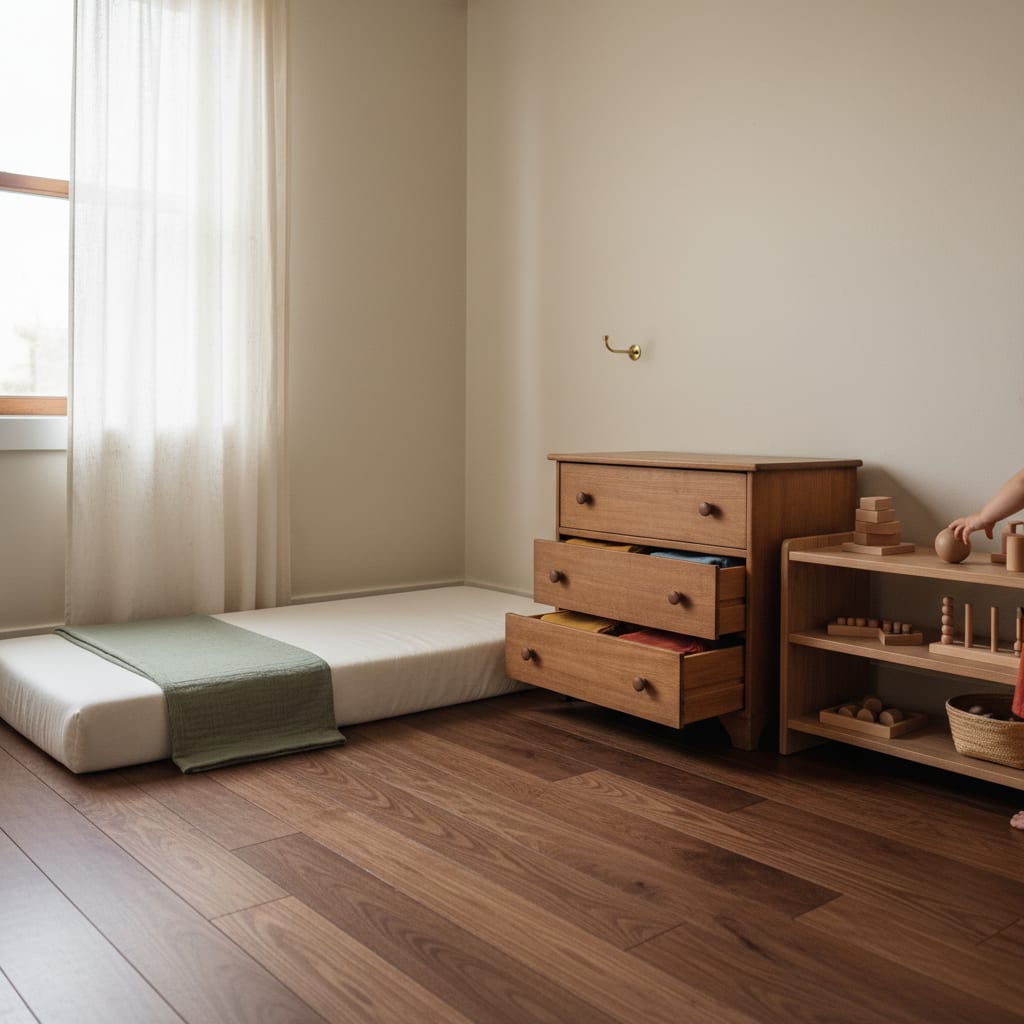
The properly Montessori move happens at 8am, not 7pm: change the wardrobe so every reachable option already passes the four checks.
- Cut the choice down. Montessori by Mom’s write-up on independent dressing puts it directly: “Offer your child a limited selection of appropriate tops, bottoms, and shoes to choose from.” Three or four outfits in a low drawer, not twenty.
- Stock sleep-compatible clothes only. Soft knits, elastic waists, no cords or stiff fasteners. Montessori in Real Life’s self-dressing tips recommend roomy fits and elastic waistbands for the independence reason; those are the same clothes that are fine to sleep in.
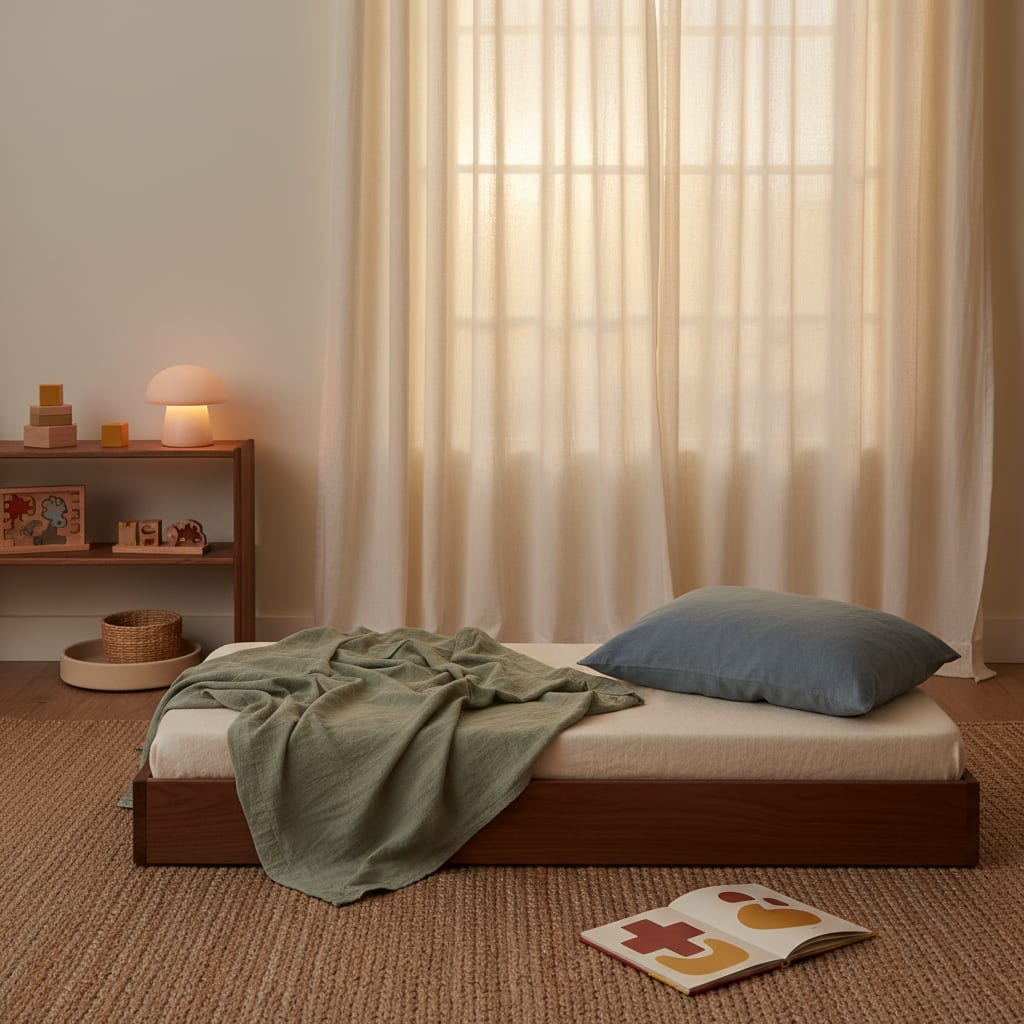
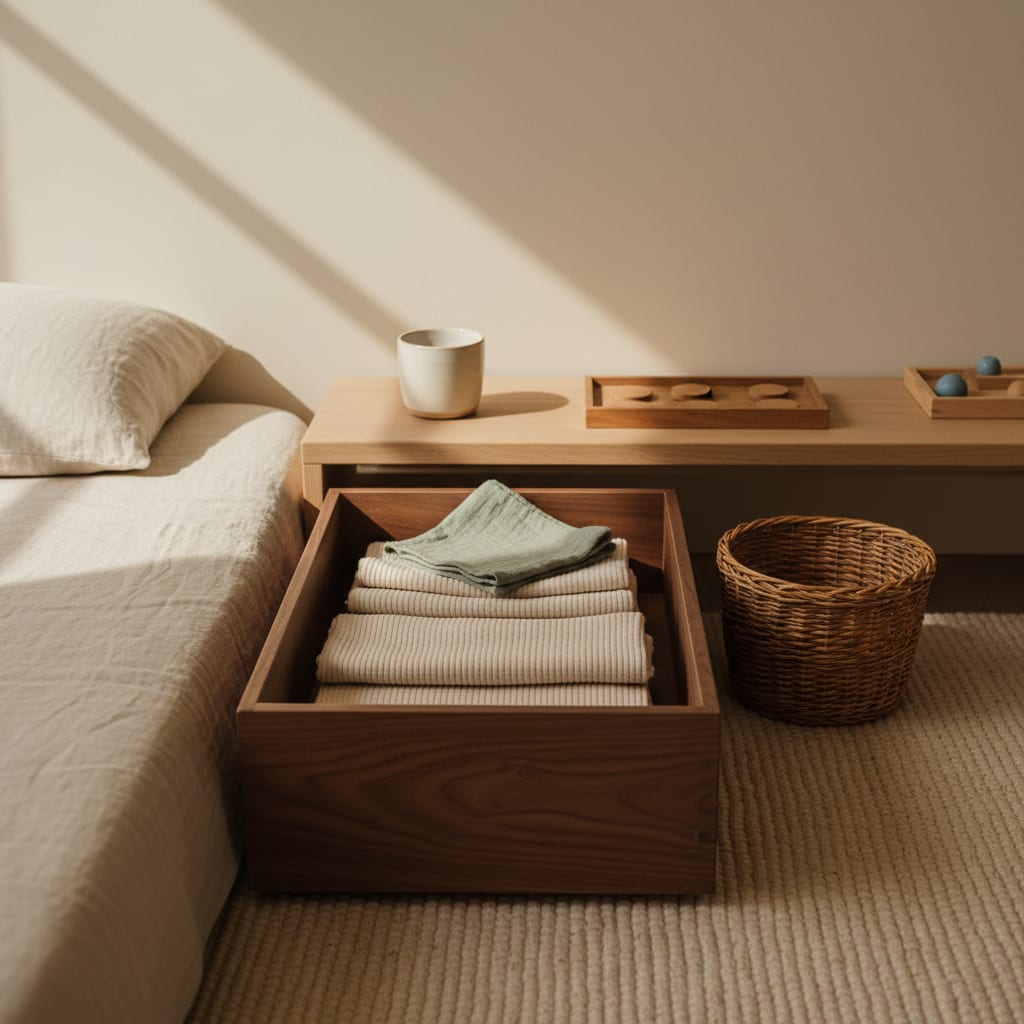
- Put it at their height. A bottom drawer or a low basket, on the same logic as the rest of the Montessori bedroom setup.
- Keep the seasonal layer out of reach. Fleece lives in the adult’s cupboard — the temperature limit enforced by furniture instead of by argument.
- Let mistakes stand. Montessori in Real Life’s advice to skip correcting a mistake that does not bother the child applies here more than anywhere: inside out is not a problem.
Done this way, “can I sleep in what I’m wearing?” stops being a request to adjudicate and becomes a fact about the drawer.
When the clothes are not the point
Sometimes the outfit is carrying something else, and you can usually tell within a week. If a child who never cared suddenly cannot bear to change, look at what else moved — a new sibling, a house move, starting daycare, a parent travelling. Refusing a costume change is a cheap way to hold onto continuity, and it tends to relax once the bigger thing settles.
If the refusal comes with escalating conditions — the clothes, then one more story, then water — that is stalling rather than autonomy, and it is answered with a boundary held kindly, not a longer negotiation.
If a child is rigid about everything at bedtime, suspect the schedule before the wardrobe. An overtired child argues about more things; post-nap-drop timing lives in bedtime after the last nap drops.
And if the objection is specifically to seams, tags or textures in daytime clothes as well as sleepwear, mention it to your pediatrician rather than solving it with a firmer bedtime rule.

FAQ: the toddler who won’t change for bed
Is it actually fine for a toddler to sleep in day clothes?
For a healthy toddler, yes — provided the clothes are dry, loose, free of cords and ties, and not too warm for the room. Those are the same conditions you would apply to pajamas.
Doesn’t skipping the change break the bedtime routine?
Only if the change was the signal. Most routines are carried by sequence and by the room, and both survive intact. If you want a marker, make it the story.
What if the clothes are too warm?
That one is yours. Swap the top layer, not the whole outfit — the sweatshirt comes off, the t-shirt underneath stays. Check the back of the neck rather than the hands, which run cool in most children.
How do I stop the argument happening every night?
Change the drawer, not the rule. If everything a child can reach is soft, loose and cord-free, whatever they wear at 7pm is already acceptable and there is nothing to argue about.
Is any of this actually Montessori?
The specific answer is not doctrine — Montessori did not write about pajamas. It sits inside two ideas the certifying bodies do state plainly: self-care belongs to practical life, and children get real choice within adult-set limits. This post argues about where that limit sits, and puts it at temperature and safety, not at the wardrobe.