Montessori vs Waldorf: An Honest Home Comparison
The shortest honest answer: Montessori is built around reality, self-correcting materials and the child’s own choice of work; Waldorf is built around imagination, rhythm and a teacher-led unfolding tied to the child’s age. Montessori hands a two-year-old a real glass and a real job. Waldorf hands them a simple, deliberately unfinished doll and protects fantasy play as the work of early childhood. Both are century-old European methods, both are anti-screen and pro-natural-materials, and at home the two look far more similar than their partisans admit.
The four differences that actually matter at home
1. Fantasy. This is the real fault line. Waldorf treats imaginative play as the central activity of the first seven years — fairy tales, gnomes, seasonal festivals, a doll with barely a face so the child supplies the rest. Classical Montessori steers the under-sixes toward reality on the grounds that a child still building a model of the world is best served by an accurate one, and introduces the fantastical later, once fact and fiction are reliably distinguishable. In practice most Montessori homes I know keep the dress-up box.
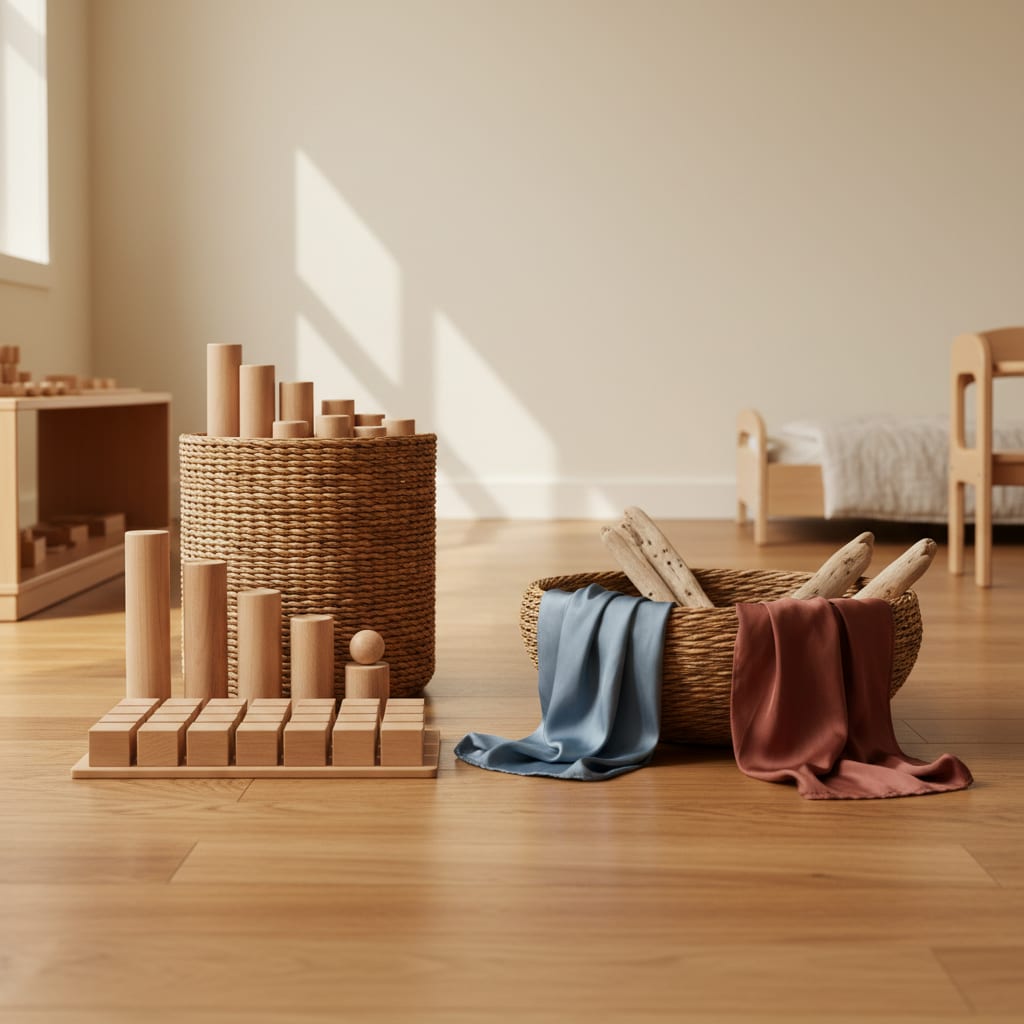
2. The materials. Montessori materials are specific, sequenced and self-correcting: the pink tower only stacks one way, the knobbed cylinders only fit one hole, and the child discovers the error without an adult saying anything. Waldorf materials are deliberately open — silks, blocks of unshaped wood, wool — so that the same object can be a boat, a cave or a sheep. One method builds precision; the other builds invention.
3. Reading and formal work. Montessori follows the child, and a Montessori four-year-old in a sensitive period for language may well be reading. Waldorf holds formal academics back, generally to around age seven, on the view that early childhood belongs to the body and the imagination. If you have an early reader, this difference will decide the question for you.
4. Who directs. Montessori children choose their own work from a prepared shelf within firm limits. Waldorf days run on a strong teacher-led rhythm — the same songs, the same weekly pattern, the same seasonal arc — with the adult carrying the structure. Both are highly ordered; the order lives in different places.
Where they agree
More than the comparison posts suggest. Both are wary of screens for young children. Both prefer natural materials over plastic and few toys over many. Both respect long uninterrupted stretches of a child’s attention. Both are suspicious of rewards, grades and competition in early childhood. Both expect the adult to prepare the environment thoughtfully and then get out of the way. If you’re choosing between them because you want a calmer, less commercial childhood, either will get you there.
What each looks like in a normal house
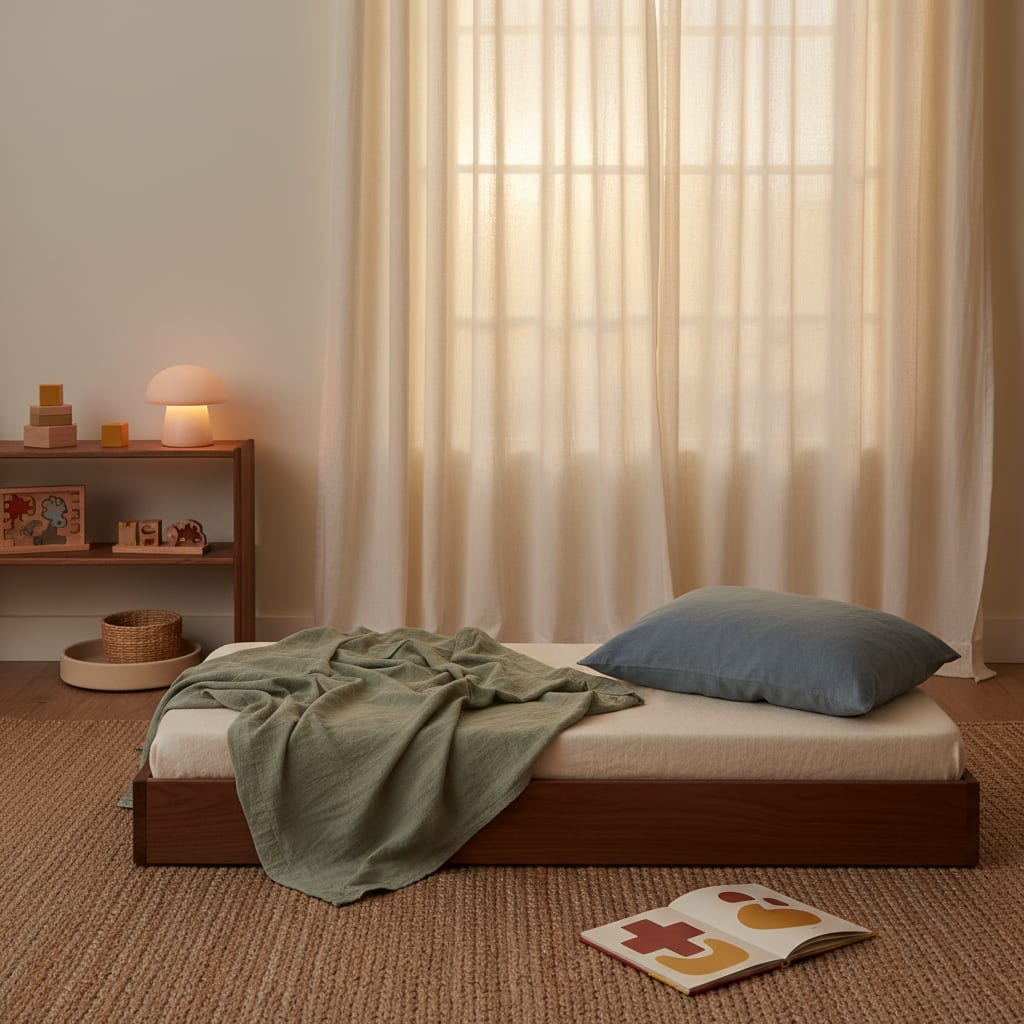
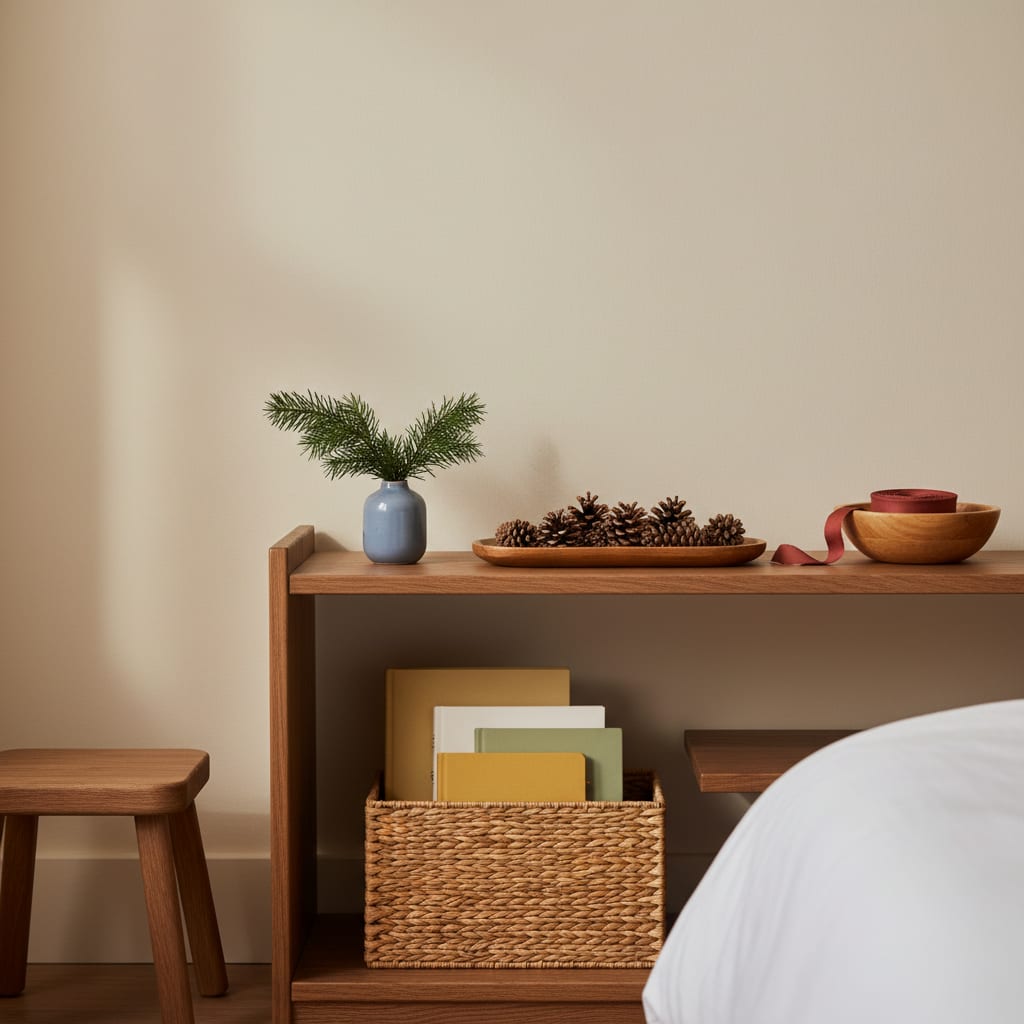
A Montessori-leaning home: a low shelf with four to eight works on trays, refreshed by toy rotation rather than added to; a step at the sink; real tools in child sizes; food the child can reach; a bedroom arranged for independence rather than display. Purchases skew toward one good version of a thing.
A Waldorf-leaning home: a play corner heavy on silks, wooden blocks and simple dolls; a strong daily and weekly rhythm — baking day, soup day, painting day; a seasonal nature table; handwork as the child gets older; and a real emphasis on the adult modelling the work rather than instructing it.
The overlap in a real family is enormous, and hybrids are the norm rather than the compromise. A shelf of Montessori practical life next to a basket of silks is not incoherent — it’s a house with two children in it.
Which suits which child
I’d hesitate to write this as a rule, because the honest version is “watch your child for a month”. But the patterns I’ve seen from the classroom-assistant side:
- A child who takes things apart, lines things up, wants to know how it really works and is annoyed by being told a story instead of an answer tends to thrive on Montessori materials.
- A child who lives inside long imaginary narratives and resists being redirected into a task tends to be happier in a Waldorf setting, at least for the early years.
- A child who needs a great deal of predictable structure often does well in Waldorf’s rhythm, while a child who chafes at group timing often does better with Montessori’s freedom of choice.
None of this is destiny, and children move between these descriptions in a single season.
Cost, availability and the honest catch
Both methods are expensive as schools and cheap as home philosophies. Neither name is trademarked in a way that guarantees anything: “Montessori” is not a protected term, and there is no such thing as a Montessori-certified product. School quality varies enormously within both traditions, so the accreditation body — AMI or AMS for Montessori, AWSNA for Waldorf schools — matters more than the word on the sign.
The home version costs almost nothing in either direction. Lowering a hook, halving the number of toys on display and waiting longer before helping are free, and they’re the changes that actually alter a house.
Doing both, deliberately
If you want the practical hybrid most families land on: take the prepared environment and practical life from Montessori — real jobs, reachable food, a shelf a child can restore alone — and take rhythm and unstructured imaginative play from Waldorf. That combination gets you a competent child who can also entertain themselves for an hour with a blanket and a chair. What I’d avoid is buying two complete sets of materials; the shelf gets crowded and both methods are, at heart, about having less.
For the Montessori half of that, what Montessori parenting actually is is the plain-English version, and the blogs worth reading list points at people running it in real houses so you can see the difference rather than read about it.
FAQ: Montessori vs Waldorf
What is the main difference between Montessori and Waldorf?
Montessori grounds early childhood in reality, self-correcting materials and child-chosen work; Waldorf grounds it in imagination, open-ended materials and a teacher-led rhythm, holding formal academics back until around age seven.
Which is better, Montessori or Waldorf?
Neither, as a general claim. The better question is which fits your child’s temperament and your family’s rhythm — and, if you’re choosing a school, which specific school is good, because quality varies far more within each method than between them.
Does Waldorf allow reading early?
Generally not by design. Waldorf typically delays formal reading instruction to around seven, whereas Montessori introduces letter sounds early and lets a child read whenever they’re ready — sometimes at four.
Can you combine Montessori and Waldorf at home?
Yes, and most families effectively do. The common blend is Montessori practical life and a prepared, accessible environment alongside Waldorf’s daily rhythm and protected imaginative play.
Are Montessori and Waldorf toys different?
Yes. Montessori toys are usually specific and self-correcting with one clear purpose; Waldorf toys are deliberately open-ended — silks, unshaped wood, simple dolls — so the child supplies the meaning.