Baby Stands Up at Night: A Montessori Movement Guide
A baby who has just learned to pull up, cruise or walk will very often start standing in the dark — sometimes fully awake and delighted, sometimes barely awake and stuck. It is a rehearsal, not a sleep problem: a new gross-motor skill is being practiced at every opportunity the brain gets, including the brief surfacings between sleep cycles. It usually shows up somewhere between about nine and fifteen months, runs for a couple of weeks, and passes on its own once the skill is boring. What you can actually change is how much practice the day allows, whether the child knows how to get down, and how uninteresting the night is.
The drive is the point, not the problem
Montessori’s language for this is a sensitive period for movement — a stretch where a child is not choosing to practice so much as compelled to. Anyone who has watched an eleven-month-old pull up on a laundry basket for the fortieth time in an afternoon has seen it. The compulsion doesn’t switch off at bedtime; it just meets a dark room and a horizontal parent.
Which reframes the 2 a.m. standing usefully. The child is not testing you, and there is no lesson to teach at that hour. There’s a skill mid-consolidation, and your job is to be as dull as possible while it consolidates.
Two practical consequences follow. First, daytime practice shortens the phase — a child who has had hours of floor time, pulling up, cruising along furniture and walking with something to push has less unfinished business at midnight. Second, the environment has to be ready before the phase starts, because retrofitting a room at 2 a.m. is how people end up making bad decisions at speed.
Teach the way back down
The single most useful intervention, and it’s a daytime one. Plenty of babies can get up long before they can get down, which is why the standing is so often accompanied by crying: they’re not distressed about being awake, they’re stuck upright with no plan.
How to hand the skill over, in daylight, as a game:
- Stand them at a low sofa or bed edge and guide their hands down the surface, bending the knees, so the sequence is felt rather than explained. A few times a day, cheerfully.
- Don’t lift them down every time they get stuck. Wait a beat longer than is comfortable, then guide rather than rescue.
- Give them things at the right height to pull up on and lower along: a heavy ottoman, a low windowsill, a sturdy shelf, a climbing triangle if you have one.
- Practice on different surfaces — carpet, wood, mattress. The mattress version is the one that transfers to the bed.
Most children get this within a week or two of deliberate practice, and the night waking drops off almost immediately afterwards, because the standing stops being a trap.
The room has to allow the movement
The prepared environment does more here than any technique. During the day, that means a large clear floor space, low furniture solid enough to pull up on, and something to push — a weighted walker wagon such as the Radio Flyer Classic Walker Wagon rather than a seat on wheels. The gear that actually earns its place at this age is covered in Montessori toys for a 1 year old.
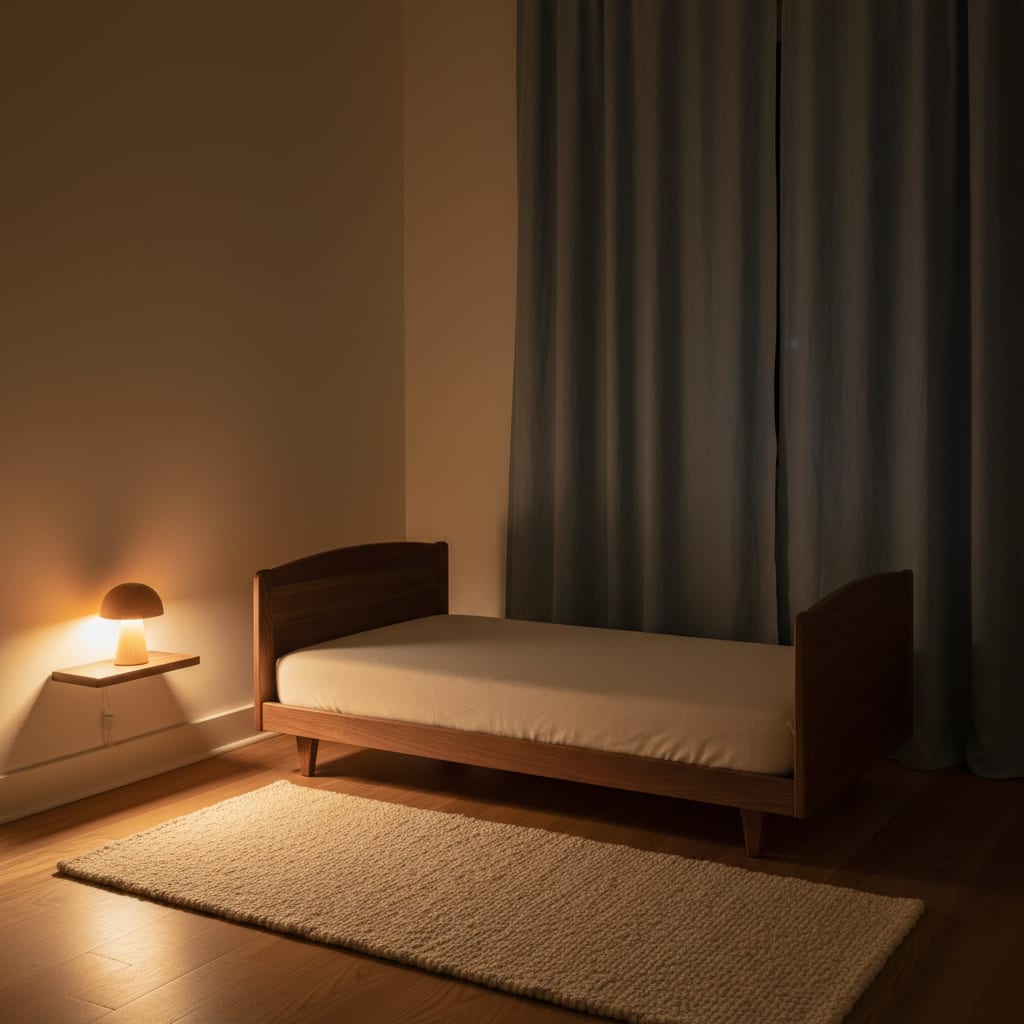
At night, it means the sleep space stops assuming a lying-down baby:
- Drop the crib mattress to its lowest setting the day pulling-up starts, not the week after the first climb-out.
- Nothing in the crib to stand on or over — no bumpers, no pillows, no toy pile, and move the crib away from anything climbable, including curtains and cords.
- Anchor every piece of furniture in the room, because a newly upright baby will try all of it.
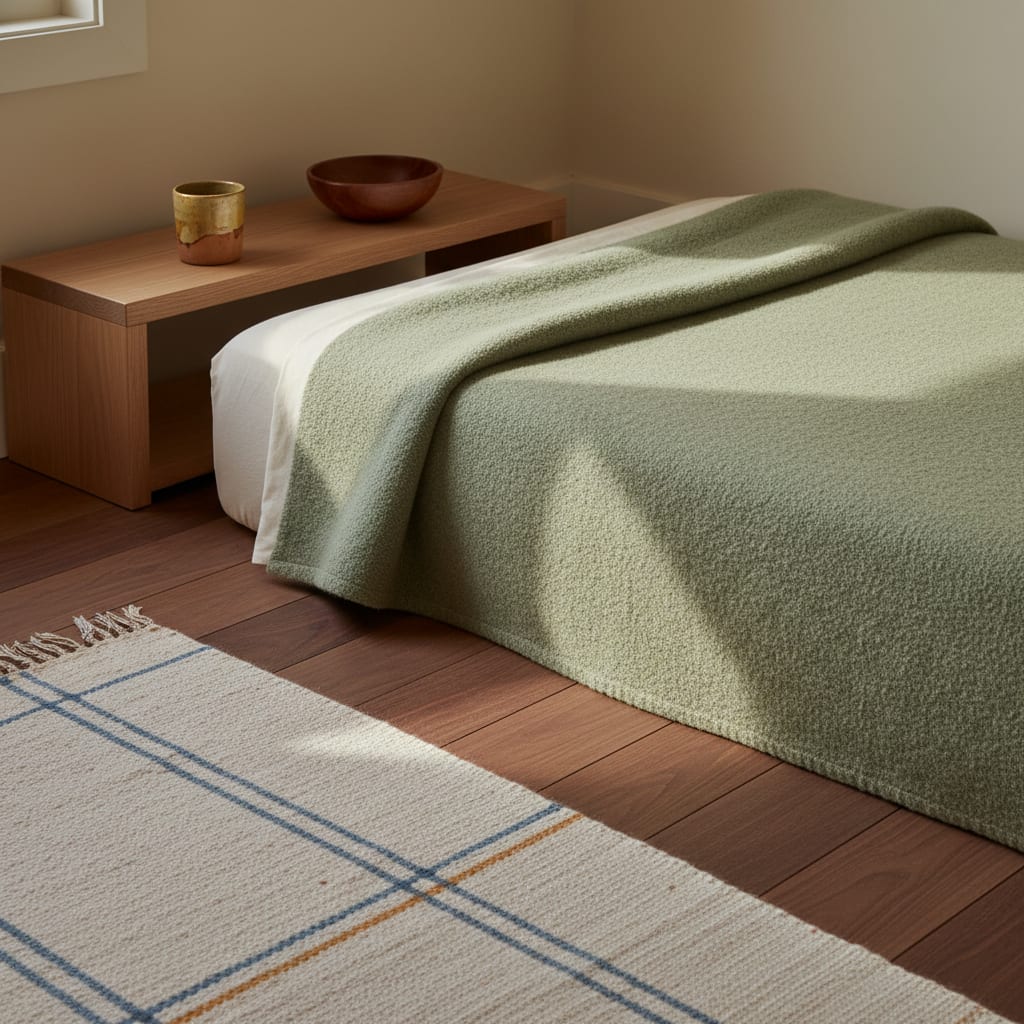
- A floor worth landing on: a rug beside the sleep surface, no hard edges within falling distance.
Where the floor bed sits in this
This is the age when families start asking whether a floor bed would solve the standing, and the honest answer is that it doesn’t — but the phase is a legitimate signal that the switch is on the horizon.
The safe-sleep floor comes first and doesn’t bend. For the first year, guidance points to a baby sleeping on their back on a firm, flat surface in a product that meets federal infant-sleep safety standards — a crib, bassinet, portable crib or play yard. A mattress on the floor is not one of those products, and no Montessori framing changes that. If your child is under twelve months and you want a floor bed anyway, that’s a conversation with your pediatrician about your specific room and mattress, not a decision to take from a blog. The full version of that argument is in what a Montessori floor bed actually requires.
Once a child is walking confidently and past a year, the readiness signs are worth reading properly — they’re in when to switch to a floor bed — and the room audit that has to happen first is the floor bed safety checklist. Making the change during an active standing-practice phase is the one bit of timing I’d avoid: you’d be introducing a new variable at the exact moment the old one is unstable.
The night response, which is deliberately boring
- Wait. Thirty seconds to a couple of minutes. A large share of standing episodes end with the child dropping to their knees and putting themselves back down, and arriving too fast prevents the very skill you want.
- If you go in, do less than feels natural. Low light, no talking beyond a few identical words, hands guiding them down rather than lifting.
- Lay them down and leave. Don’t stay to see it through; don’t start a feed that wasn’t already the plan.
- Same script every time, from both adults. Consistency is the mechanism, and the second week is where inconsistency shows up.
- Don’t add a new sleep approach mid-phase. Whatever you were doing before, keep doing, and reassess when the walking settles.
The timing underneath it
A standing-practice phase is far worse in an overtired child, which is where the boring schedule question comes back. Around the first birthday the day is usually in the middle of a nap change — the second nap wobbling, wake windows stretching — and an evening that’s forty minutes too late will turn a two-minute standing episode into an hour. Betteroo’s guide to wake windows at twelve months is a straightforward map of what the spacing should look like while all this is happening.
If you’d rather not do the arithmetic yourself, the Betteroo sleep planner builds a day-by-day schedule from your child’s age and your preferred approach. Fair report from this shelf: it’s good at the timing layer and it won’t teach anyone to sit back down — that part is daytime practice on a mattress, and it stays yours.
 New walker, wrecked nights?
Betteroo builds a personalized, gentle sleep plan around your child's age — wake windows, the nap change and a bedtime that fits — so a movement phase isn't landing on an overtired evening.
Take the 2-minute sleep quiz →
New walker, wrecked nights?
Betteroo builds a personalized, gentle sleep plan around your child's age — wake windows, the nap change and a bedtime that fits — so a movement phase isn't landing on an overtired evening.
Take the 2-minute sleep quiz →
When it isn’t just the milestone
Call your pediatrician rather than waiting it out if the waking comes with fever, ear-pulling, a change in feeding, or pain on being laid down; if a child who was walking stops; or if the standing episodes are still identical after six weeks with no downward trend. Milestone phases fade. Things that don’t fade are usually something else.
FAQ: standing up at night
Why does my baby stand up in the crib at night?
Because a new motor skill gets practiced at every opportunity, including the brief wakings between sleep cycles. It typically appears with pulling up, cruising or walking, somewhere around nine to fifteen months.
How long does the standing-up phase last?
Commonly one to three weeks, and shorter when the child gets plenty of daytime practice and has learned how to lower themselves back down. Longer than about six weeks with no improvement is worth a pediatrician conversation.
Should I lay my baby back down every time?
Wait first — many babies get themselves down within a minute or two, and that’s the skill you want. If you do go in, guide them down with minimal light and words, then leave.
Will a floor bed fix it?
No. Standing practice happens on any sleep surface, and for a baby under twelve months a floor mattress isn’t a safe-sleep product to begin with. Once a child is walking well and past a year, a floor bed is a reasonable next step — just not in the middle of the phase.