A Montessori Bedroom on a Budget: What Matters
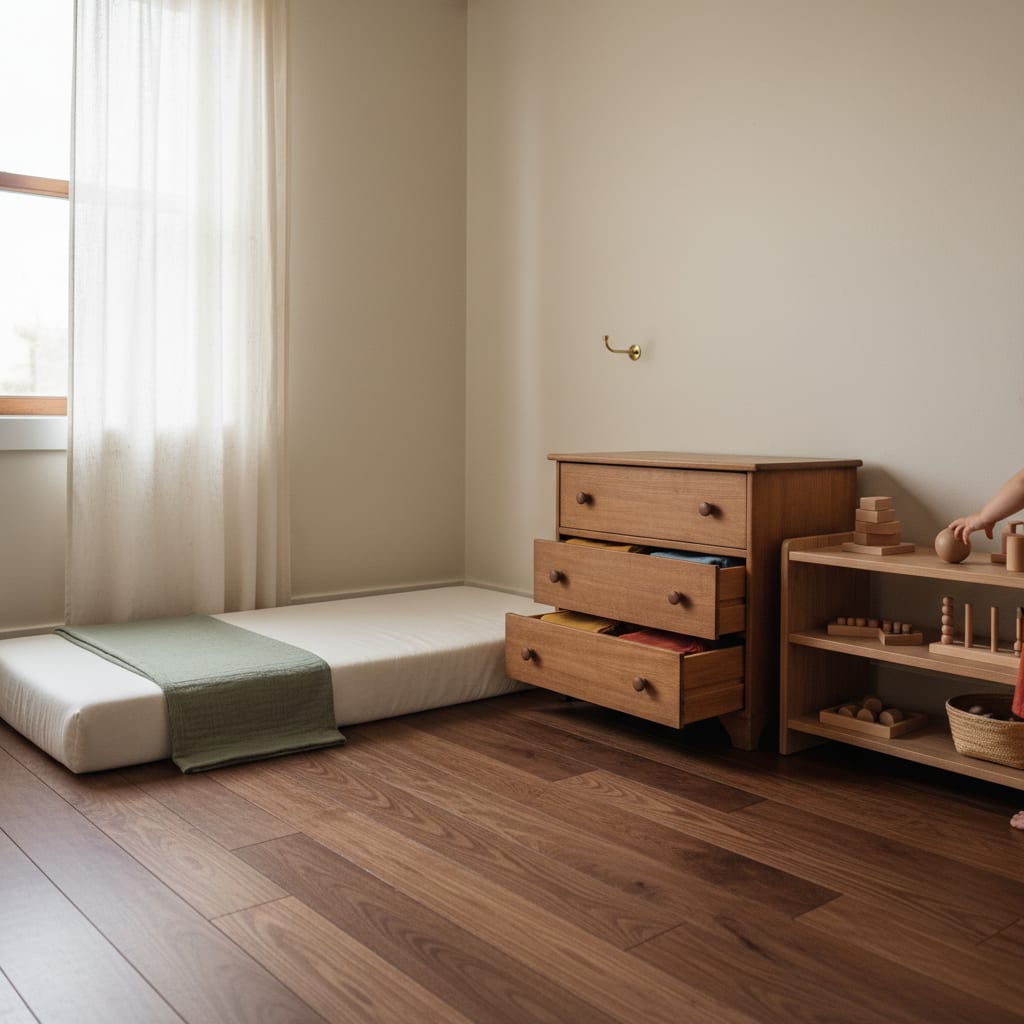
A Montessori bedroom on a budget is mostly free. The things that make a room genuinely usable by a child — lowering the clothes, lowering the art, turning book covers outward, taking two-thirds of the toys out, putting the mattress on the floor — cost nothing but an afternoon. The only category that deserves real money is safety hardware, because that is the part holding the whole arrangement up. Everything between those two poles is negotiable, and almost everything you see photographed is in the negotiable half.
If you want the room laid out zone by zone, that’s the Montessori bedroom setup guide. This one is about where the money goes.
The changes that cost nothing
Do these before you buy a single thing, because they will change what you think you need.
- Hand over the bottom two drawers. Move the child’s current clothes down and your storage up. That single swap does more for self-dressing than any piece of furniture sold for the purpose.
- Lower the art. Take everything down and re-hang it at the child’s eye line — roughly their standing height, not yours. One re-hammered nail.
- Turn the books face out. Five to eight covers visible in a basket beats forty spines on a shelf, and a basket you already own does it.
- Subtract. Move everything not in current use out of the room. A calm room at toddler eye level is the single most Montessori thing in the house, and it is achieved by removal.
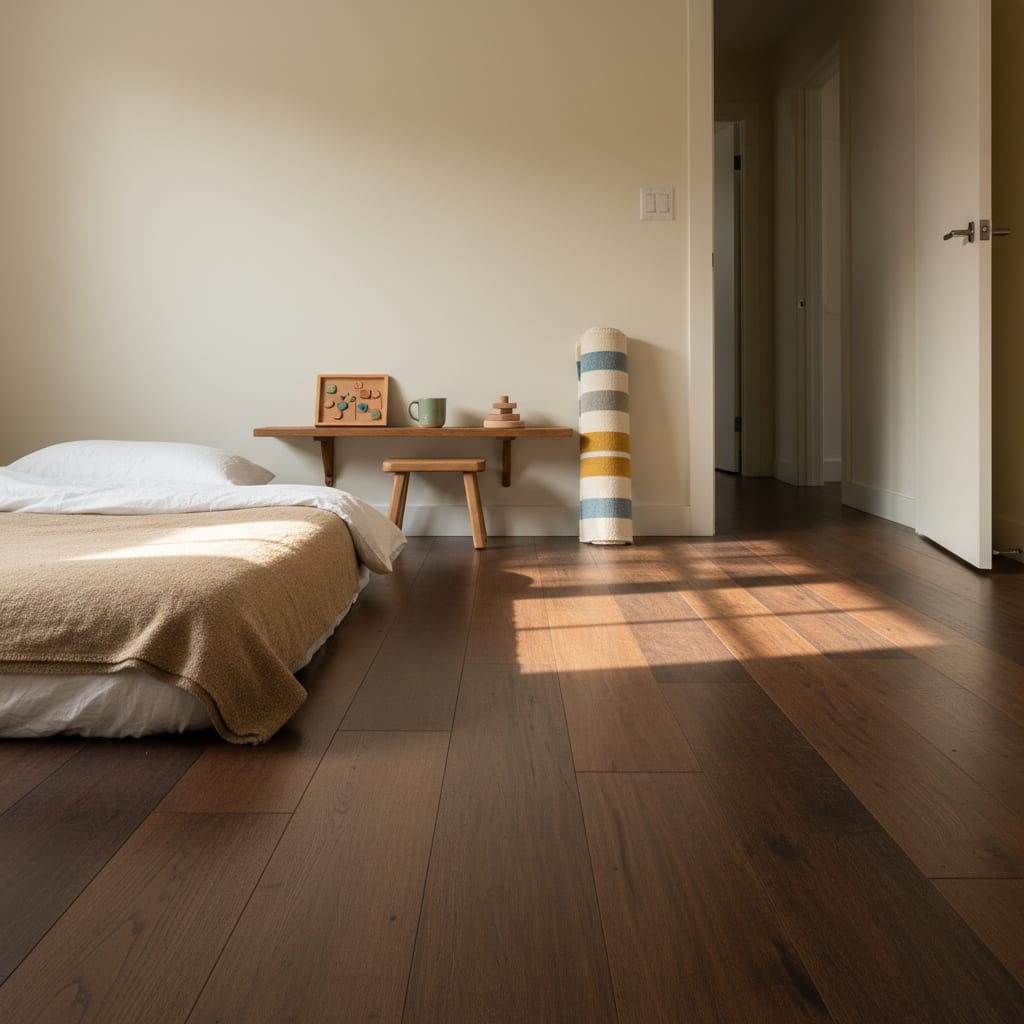
- Put the mattress on the floor. If you’re moving to a floor bed anyway, the original version is a firm mattress directly on the floor. Frames are aesthetics.
If you do only this list, you have a Montessori bedroom. Anything below is refinement.
The one category worth real money
Once a child can leave their bed unaided, the room is the sleep space, and it has to be held to the same standard a crib is. This is the spend that isn’t optional:
- Furniture anchors for every tall or heavy item — dressers, bookcases, shelves, wardrobes, and anything with drawers a child can climb. A strap kit like the QuakeHold furniture strap kit is a few dollars a unit and screws into a stud; buy enough for the whole room, not the two you remember.
- Outlet covers and cord management. Blind cords especially — cordless blinds or a properly fitted cleat, not a knot.
- A firm, well-fitting mattress. This is the item I would not buy used. Firmness degrades and fit is unforgiving, and it’s the surface a child sleeps on for years.
- A gate, if the doorway decision needs one. Cheaper than the alternative, which is childproofing an entire hallway.
Run the floor bed safety checklist on your knees before you decide what you still need to buy — half the list turns out to be free rearrangement, and the other half you now know is genuinely necessary.
What to buy secondhand, and how to check it
Secondhand is where a normal budget gets a good room. Low shelves, small tables and chairs, dressers, book baskets, floor cushions and rugs are all fine used — sand and repaint, and you have the item at a fraction of the price.
A few real checks before money changes hands:
- Search the item for a recall. The CPSC recall database is free and takes a minute. Children’s furniture is recalled more often than people expect.
- Skip drop-side cribs entirely. They have been off the US market since 2011 and should not be resold or used.
- Wobble it. Push the top corner hard. Anything that racks or flexes is going to be climbed by a two-year-old at some point.
- Be cautious with painted furniture that could predate 1978, when lead paint was banned for residential use in the US. If the provenance is unclear and the paint is chipping, strip it or pass.
- Check drawers and hinges for pinch points — the sort of thing you notice at the child’s height, not standing up.
What the showroom sells that you can skip
The Montessori bedroom has an expensive aesthetic attached to it that has nothing to do with the method. Things you can decline without guilt:
- House-frame and canopy beds. Beautiful, and functionally identical to a mattress on the floor.
- Matching baskets and neutral everything. The child does not read your palette. A mismatched basket holds books exactly as well.
- “Montessori” as a product label. There is no certification behind it — no body licenses the word for products, so it is a marketing adjective and prices accordingly. Judge the object: is it real, is it the child’s size, does it do one clear thing.
- A full material set bought at once. The complete floor bed guide covers the bed decision; for the shelf, four things a child uses beats twenty they don’t, and you don’t know which four until you watch.
- Wall decals and themed decor. Neutral not because neutral is Montessori, but because a busy wall opposite a bed is one more thing to look at instead of sleeping.
A spending order, cheapest first
If money arrives in stages, this is the order I’d use:
- Nothing. The free list above, done properly, over one weekend.
- Safety hardware. Anchors, outlet covers, cord fix, gate if needed.
- The mattress. New, firm, correctly sized.
- Low storage the child can reach — a rail, a low shelf, a hook. Secondhand or flat-pack.
- Light control. Blackout curtains if early light is genuinely waking your child, and a lamp the child can switch themselves.
- The frame, if you still want one. Last, honestly. It is the most photographed and least functional item on this list.
Most families stop somewhere around step four and have a room that works.
FAQ: a Montessori bedroom on a budget
How much does a Montessori bedroom cost?
There’s no single figure, because most of it is free — lowering, subtracting and rearranging cost nothing. The real spend is safety hardware and a firm mattress. Everything above that, including bed frames and matching furniture, is optional decor rather than method.
Can you do a Montessori bedroom with a crib still in it?
Yes. Low clothing storage, reachable books, art at the child’s eye line and a calm uncluttered room all work unchanged with a crib. The floor bed is the classic choice, not an entry requirement, and for babies under a year safe-sleep guidance points to a crib meeting federal safety standards anyway.
Is secondhand furniture safe for a child’s room?
Usually, with checks: search the model for a recall, wobble-test it, avoid drop-side cribs, and be careful with chipping paint on anything that might predate the 1978 lead-paint ban. Anchor everything to the wall once it’s in the room, regardless of where it came from.
What is the cheapest way to start a floor bed?
A firm mattress placed directly on the floor, in a fully prepared room. That is the original arrangement and it is entirely legitimate — the frame is aesthetics. Spend the money you saved on anchors and cord safety instead.