Toddler Opens the Bedroom Window: Fix the Room First
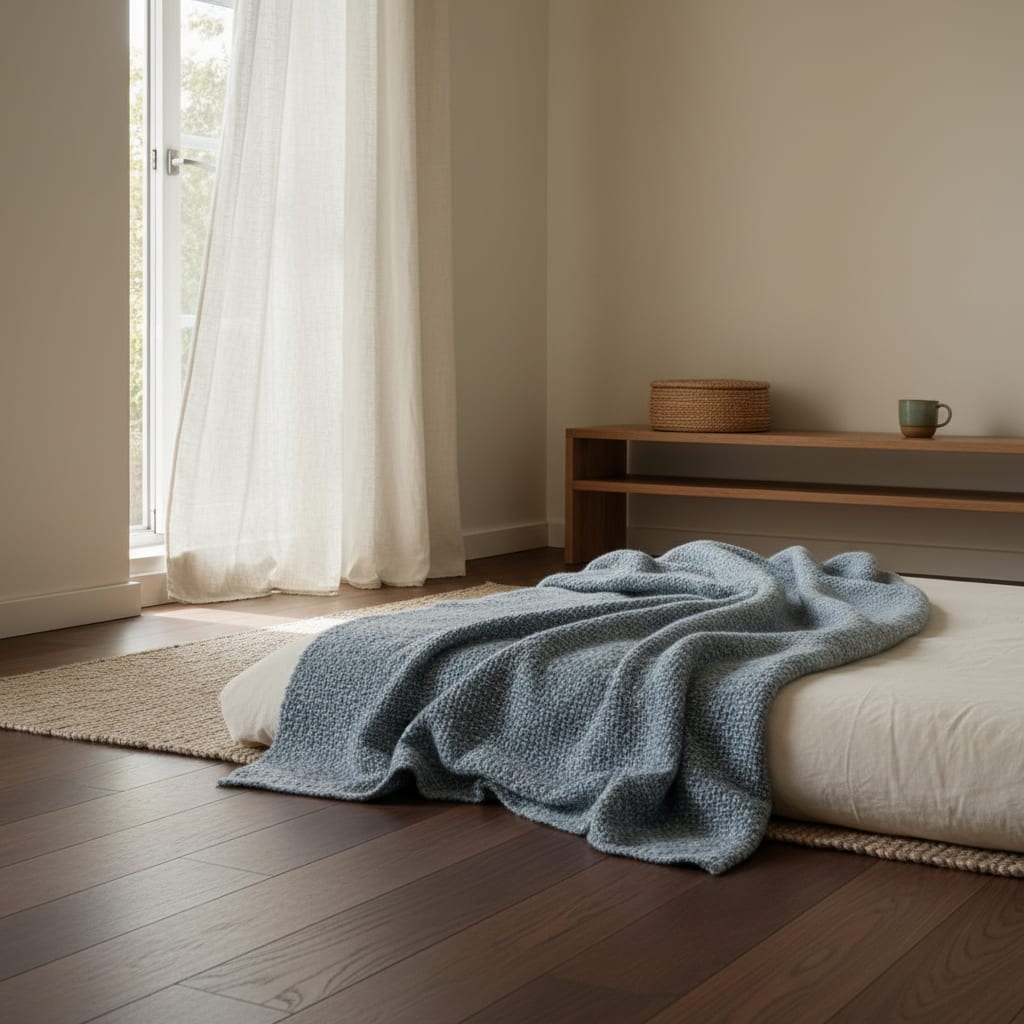
If your toddler has discovered that the bedroom window opens, the answer is a physical limit on the window, today, before anything about bedtime. Window screens do not hold a child’s weight. Fit window guards or stops so the sash cannot open more than about four inches, move the bed and every climbable piece of furniture away from the wall the window is on, and only then think about the night waking. This is the one Montessori situation where the room does not accommodate the child’s new skill — it removes the option, and it does so without a conversation.
The limit goes on the window, not on the child
Montessori people talk about freedom within limits, and it is easy to hear that as a discipline strategy. The American Montessori Society describes it as environmental: classrooms “carefully and thoughtfully designed to encourage children to move about freely and choose their own work, within reasonable limits,” with the limits held by ground rules and by the prepared environment itself rather than by an adult standing in the room. That is the whole idea here. A twenty-month-old cannot hold a rule about a window across a whole night, and should not be asked to. The window gets the limit.
I set up shelves for three years and I am not a certified guide, so take the pedagogy as framing and the safety below as the part that actually decides what you do this evening.
What the guidance says, and the sentence people skip
Nationwide Children’s Hospital’s injury-research centre states that “every year, over 3,300 children younger than 18 years of age are treated in U.S. hospital emergency departments for injuries related to falls from windows,” and that “falls from windows cause more severe injuries and deaths than any other type of fall.”
Their prevention list is short and specific:
- “In homes with children, install window guards on all second-story or higher windows.”
- “Use window stops to prevent windows from opening more than 4 inches.”
- “Window screens are not designed to stop a child from falling. A normal window screen is NOT enough to keep children safe.”
- “It is best to purchase window guards with a quick release mechanism,” so an adult can still open the window in a fire.
- “Install locks on sliding windows to prevent children from opening them.”
- “Move all furniture away from windows. Children can climb on furniture to access windows that are otherwise out of reach.”
- Create soft landing surfaces — bushes or planting — beneath windows.
The screen line is the one that changes minds. A screen sits in a light frame designed to keep insects out, and it gives under a lean.
The bedroom-placement rule comes from the American Academy of Pediatrics’ HealthyChildren guidance, which says plainly: “don’t place a crib—or any other child’s bed—near a window.” Their reason covers both hazards at once — the fall, and entanglement in cords from window blinds or draperies — and the page notes that the Consumer Product Safety Commission recommends cordless window coverings where possible.
Guards and stops are two different objects
A window guard is a barrier — bars or a grille that screws into the window frame so a child cannot pass through even when the window is fully open. This is the second-story answer. Buy the kind with a quick release, such as Guardian Angel’s adjustable window guards, and make sure every adult in the house knows how it works, because it sits between your child and a fire exit.
A window stop limits how far the sash can travel, so the window opens a few inches for air and no further. This is the cheap, sensible thing to fit on every window in the house including the ground floor, where the injury risk is lower but the escape risk is real.
Both are landlord territory if you rent. Ask in writing, and ask before you start a bedtime experiment; some jurisdictions have rules about guards in rented homes with young children, so it is worth checking what applies where you live rather than assuming it is a favour you are requesting.
A note on the floor-bed version of this, because it is the setup this site writes for: a floor bed hands the child the whole room, which means the room has to be finished in a way a crib lets you postpone. That is exactly what the floor bed safety checklist is for, and the window line on it stops being theoretical the day your child works out the handle. If you are still deciding, what a floor bed actually requires is the honest version of the room audit.
Then, the sleep part
Once the window is limited, you still have a child who has learned something interesting and wants to practise it — which is the ordinary shape of every new skill at this age, exactly like pulling to stand in the middle of the night. Three things help:
Let the practice happen in daylight. Open the window yourself in the morning, together, at the four inches the stop allows. Let them feel the air, look out, be done with it. A skill that gets aired at ten in the morning is less interesting at ten at night.
Take the climbing route out of the bedroom. The furniture rule above is the sleep fix as well as the safety fix. A low bookshelf under the window is a staircase; the same shelf on the opposite wall is a shelf.
Handle the night wake as a boundary, not a negotiation. Same words, same short return, every time. Betteroo’s guide to keeping a toddler in bed at night walks through the returning routine in more detail than fits here; the part it gets right is that consistency beats explanation with a child this age.
The temperature question comes up next, because for many families the window was open at night for a reason. A stopped window still ventilates. If the room is genuinely too warm at four inches, the fixes are a cooler bedtime layer and moving air through the doorway rather than a wider sash.
 New skill, broken nights?
Betteroo builds a gentle, personalized sleep plan around your child's age — wake windows, nap changes and a bedtime that fits — so a burst of new independence isn't landing on an overtired evening.
Take the 2-minute sleep quiz →
New skill, broken nights?
Betteroo builds a gentle, personalized sleep plan around your child's age — wake windows, nap changes and a bedtime that fits — so a burst of new independence isn't landing on an overtired evening.
Take the 2-minute sleep quiz →
When to ask someone else
Fitting a guard is a job you can do; deciding whether your window opening is safe once fitted is not always. If the window is unusual — a casement, a sash that opens outward, an old frame that will not hold a screw — ask a glazier or your building’s maintenance rather than improvising. And if your child is repeatedly waking distressed rather than curious, or the night waking arrived with anything else that is new, that is a conversation with your pediatrician, not a hardware problem.
FAQ: the toddler who opens the window
Is a window stop enough, or do I need a guard?
On a ground-floor window, stops are usually the sensible measure. Above the first floor, Nationwide Children’s recommends guards on all second-story and higher windows — a stop limits the opening, a guard blocks the gap even when the window is wide open. Many families fit both.
My window has a screen. Isn’t that a barrier?
No. “Window screens are not designed to stop a child from falling,” and a normal screen is explicitly not enough to keep a child safe. It is the single most common misreading of a bedroom window.
Does this mean the floor bed was a mistake?
No — it means the room audit is due. A floor bed gives a mobile child the run of the room, which is the point of it, and the trade is that every hazard in the room has to be handled before the child finds it rather than after. A window is the highest-consequence item on that list.
Should I explain the danger instead of fitting hardware?
Explain as well, not instead. Language matters at two and it builds the understanding you will need at four. It does not carry a limit through a nap, an early morning, or a visiting relative who opens a window for air. The hardware does.
Can I still air the room at night?
Yes. A stop that limits the opening to about four inches still moves air, and it is the version of ventilation that does not depend on anyone remembering to close a window before bed.