Toddler Asleep on the Floor by the Door: A Montessori View
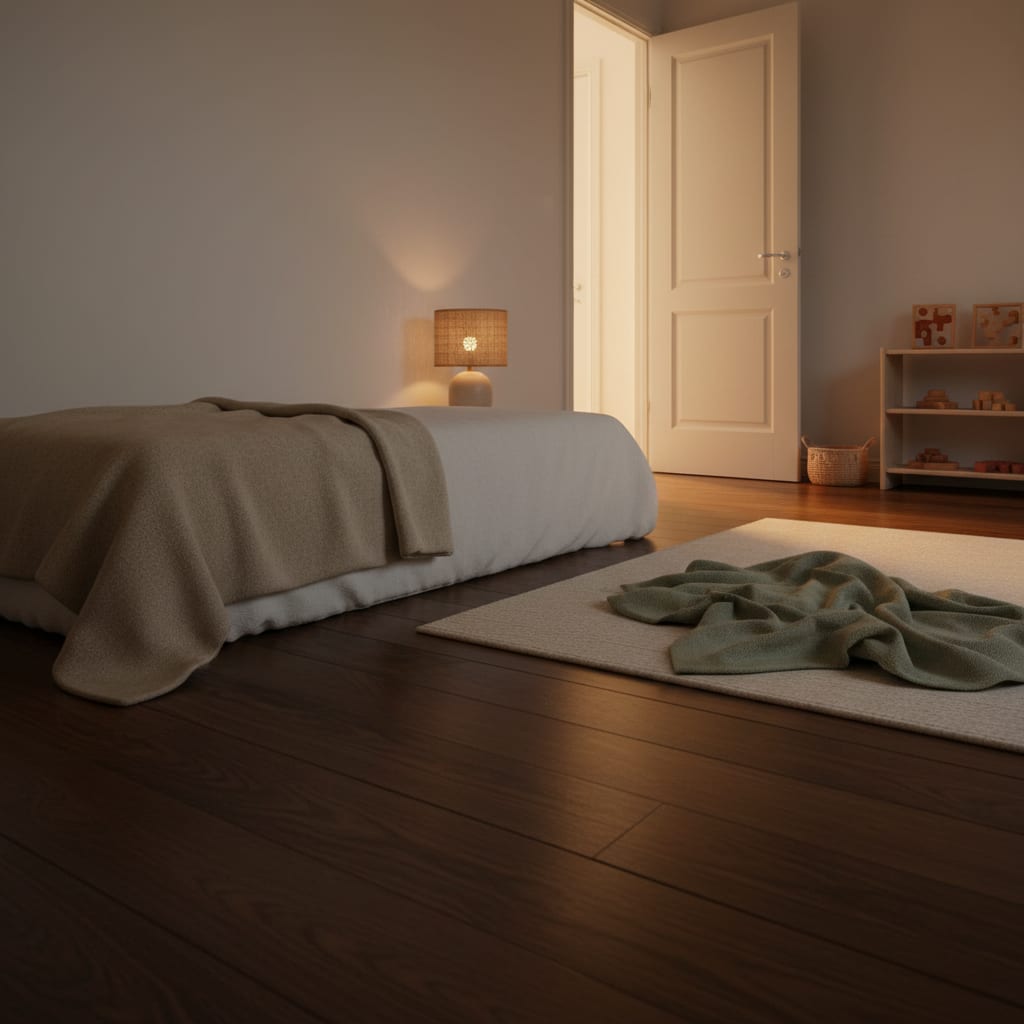
If your toddler keeps falling asleep on the floor by the bedroom door instead of in bed, the short answer is that it is usually fine for a child over one, and it is information. A child with a floor bed is free to move, and the doorway is where the light, the sound and the sightline to you all are. Make the doorway safe to end up in, decide calmly whether to move them once you go to bed, and then work on what the door is giving them that the bed is not. A baby under 12 months is different: move them to their own safe sleep space every time.
I was an assistant in a Montessori toddler community, not a certified guide and not a clinician. The safety points below come from the American Academy of Pediatrics and NIH pages named in each section, and the Montessori idea from the American Montessori Society.
Why the door, of all places
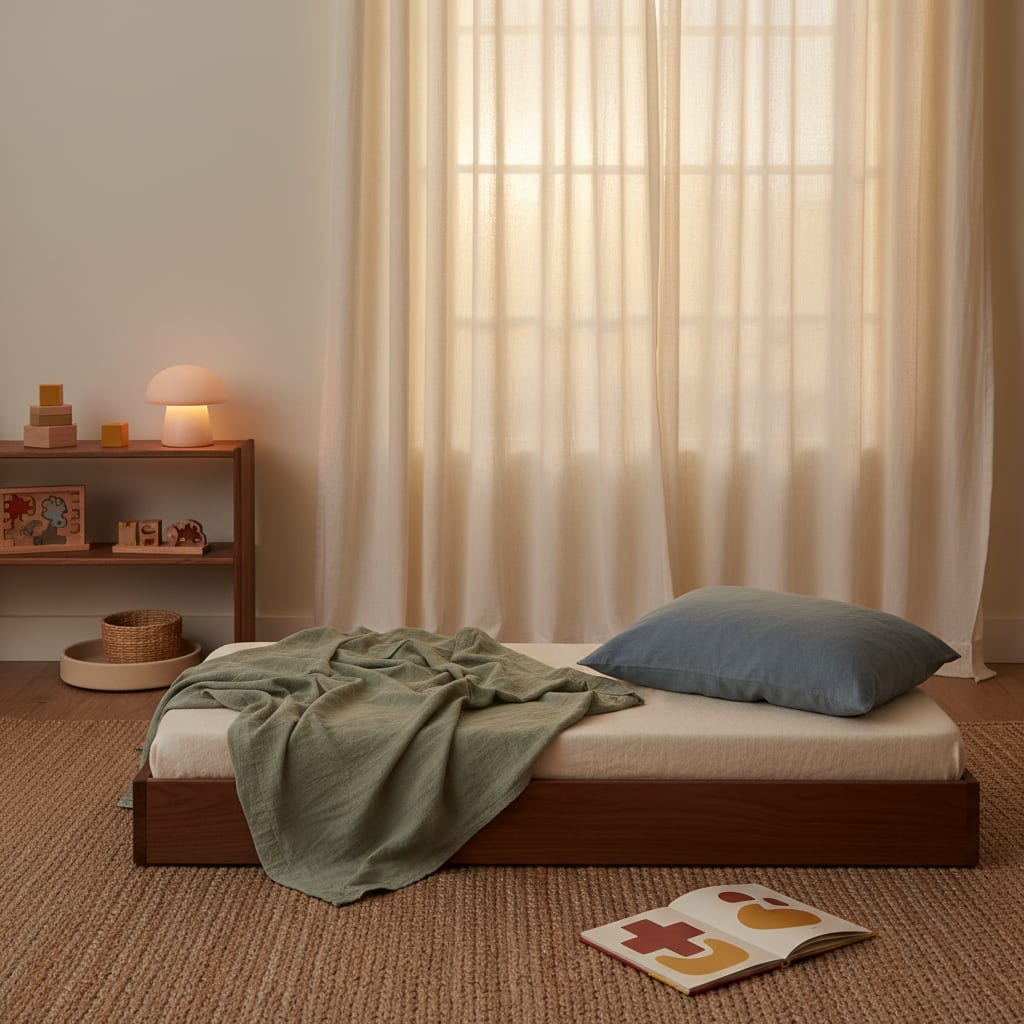
Montessori sleep at home runs on freedom of movement. The American Montessori Society describes the method’s environments as designed “to encourage children to move about freely and choose their own work, within reasonable limits of appropriate behavior.” A floor bed applies that to the night: there are no rails, so the child decides where they lie down. Sometimes they choose the bed. Sometimes they choose the rug by the door.
The doorway is rarely random. From the floor there, a toddler can usually:
- see the strip of hall light under or around the door;
- hear the house: voices, dishes, a sibling’s bath;
- be as close to you as the room allows.
That last one matters most between about one and two. The AAP’s page on separation anxiety and sleeping trouble calls separation anxiety “a normal stage in children’s emotional development” that “usually fades away somewhere around the second birthday.” Betteroo’s guide to separation worry at bedtime describes a common second wave “around 18 months as toddlers become more aware of comings and goings.” A child who falls asleep against the door is often just getting as near to you as they can.
Two other common reasons: plain tiredness, since a toddler who plays until they drop drops wherever they are, and the novelty of a new floor bed. The crib to floor bed transition plan on this site already notes that some children sleep on the rug or half off the mattress for the first weeks, and that this settles on its own.
First: under 12 months, always move them
The safe-sleep rules are different for babies, and they are not a Montessori question. The AAP’s parent guide to safe sleep asks for “a firm, flat sleep surface” with no blankets, pillows or soft toys, and says its recommendations are “for babies up to 1 year of age.” NIH’s Safe to Sleep campaign puts babies “on their backs to sleep until they are 1 year old.”
A rug by the door is not a firm, bare sleep surface, and it sits in the path of the door. So if a crawling baby falls asleep there, pick them up and lay them on their back in their own sleep space. Do it every time, even if it wakes them. If you are unsure about anything here, ask your pediatrician.
Over one: make the doorway safe to end up in
For a toddler, the realistic question is “what is near the door?” Check it in daylight, at the height of a lying-down child.
The door itself. A child asleep against the inside of the door gets hit when someone opens it. Many families with floor beds use a gate in the doorway and leave the door open behind it, so nobody has to push a door against a sleeping child. A pressure-mounted walk-through gate like the Regalo Easy Step is the usual choice for a doorway. Pressure gates belong in doorways, not at the top of stairs. If you keep the door instead, open it slowly and look down first.
Cords and windows. The AAP’s guide to making a baby’s room safe warns that children can be caught in “cords from hanging window blinds or draperies,” and advises against placing “a crib—or any other child’s bed—near a window.” The same thinking covers the spot a child picks for themselves: no blind cords, lamp cords or chargers within reach of the floor by the door.
Furniture. The AAP’s page on furniture and TV tip-overs says plainly: “Secure all furniture and mirrors with anti-tip devices.” It adds that many fatal tip-overs happen in bedrooms, “sometimes when parents think their kids are asleep.” A dresser beside the door is the obvious thing to anchor, but anchor everything tall in the room.
What the hallway holds. If the gate is ever left open, the floor by the door is one step from the rest of the house. The AAP’s safety guide for 1 to 2 year olds says to “lock the doors to any dangerous areas” and “use gates on stairways.”
The full room audit, including outlets and heat, is in the floor bed safety checklist.
Should you move them to the bed?
For a child over one, either answer is reasonable. Choose one and keep to it, so the child knows what happens.
- Move them when you go to bed. Lift them onto the mattress and cover them as usual. Most children barely stir. This is what most floor-bed families do.
- Leave them. If the floor by the door is safe, a toddler who sleeps soundly there and wakes rested has not been harmed. Put a blanket within reach so they can cover themselves.
What does not help is waking a sleeping child to make a point. The floor bed’s promise is that the child chooses where to lie down.
Then work on what the door is giving them
If it happens most nights, observe for a week before changing anything. That is the Montessori habit: watch what the child is choosing, and why. Then bring what they want at the door over to the bed.
If it is light, give the bed its own. A dim amber plug-in light near the bed, such as the GE SleepLite, means the door stops being the only bright edge in the room. The AAP asks for cool night-lights that are kept “away from drapes or bedding.”
If it is sound or you, move the bed, not the child. Put the mattress where the child can see the doorway from the pillow, still away from the window and out of the door’s swing. Many children want the sightline, not the floorboards. If the request is for the door at one exact gap, the door-gap post covers how to tell fear, order and stalling apart.
If it is separation, the AAP’s advice is simple: tell your child “in a matter-of-fact way when you have to leave them,” even for a minute: “I’ll be right back.” Short, predictable goodbyes at bedtime help more than slipping out.
If it is tiredness, look at the timing. A child who is still playing at the door when they fall asleep often needs bedtime moved a little earlier.

FAQ: the toddler who sleeps by the door
Is it OK for my toddler to sleep on the floor?
For a child over 12 months, sleeping on the floor of a safe, child-proofed room is generally fine. Check that nothing near the spot can fall, tangle or be opened. Under 12 months, move the baby to their own firm, flat sleep space every time.
Why does my toddler sleep by the door instead of in bed?
Usually because the door is where the light, the sound and the nearness to you are. Separation worry, tiredness and the novelty of a new floor bed are the common reasons.
Should I lock the bedroom door at night?
The usual Montessori-home answer is a gate in the doorway with the door left open, so the child can hear the house without roaming it. If you have a specific safety concern about doors at night, ask your pediatrician.
Does this mean the floor bed isn’t working?
No. A floor bed means the child chooses where to lie down. If they wake rested, it is working. If nights are hard as well, look at timing and separation before you change the bed.