Toddler Won't Stop Playing at Bedtime: A Montessori View
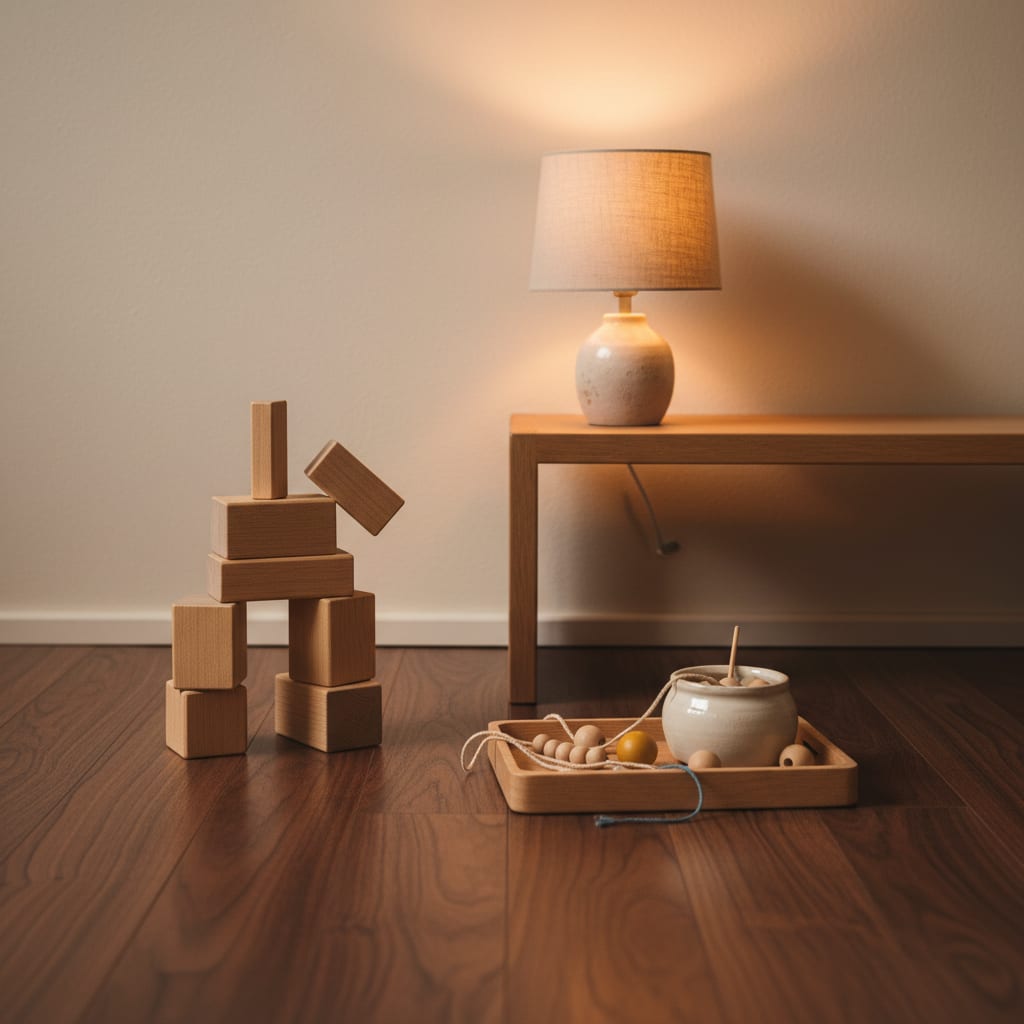
When your toddler is absorbed in play at bedtime, the Montessori move is to pause the work, not end it. Give one specific warning (“when this row of blocks is done, it’s bath time”). Offer a place where unfinished work can wait until morning, such as a tray on top of the shelf. Let the child do the last step, putting it away or onto that tray, themselves. Then start the same bedtime routine as every night. Most of the fight is about losing the work, not about bed. Once the child knows the work will still be there, most toddlers walk away from it far more easily.
I was an assistant in a Montessori toddler community, not a certified guide and not a sleep specialist. The Montessori ideas below come from the American Montessori Society, and the bedtime points from the American Academy of Pediatrics.
Why stopping feels so big to a toddler
Montessori classrooms are built to protect long, unbroken concentration. The American Montessori Society names the “uninterrupted work period” as one of its core components. It describes the work cycle in steps: “choosing an activity,” then “completing the activity to completion,” then “cleaning up and returning the materials to the proper place,” and finally “experiencing a sense of satisfaction to have fully completed the task.”
Look at what bedtime does to that cycle. It cuts in during the middle step and skips the last two. The child does not get to finish, does not get to put away, and does not get the satisfaction. A toddler who screams when the puzzle is swept into a box is often not protesting bed at all. They are protesting a cycle left unfinished.
This site’s guide to helping a child concentrate makes the same point from the daytime side: never interrupt deep work if you can avoid it, and when a transition has to happen, warn early and specifically. Bedtime is the one transition you cannot avoid every single day.
Bedtime still wins
None of this means play should run on until the child is done. The AAP’s advice for toddler bedtime trouble is clear on two points. “Make bedtime the same time every night. This helps your child know what to expect.” And set up a quiet routine before bed, because “active play may make your child too excited to sleep.”
So the aim is not to give in or to argue. It is to end the work in a way the child can accept.
Pause it, don’t end it
The most useful thing I learned in a toddler room is that most work does not have to be finished today. It just has to be safe until tomorrow.
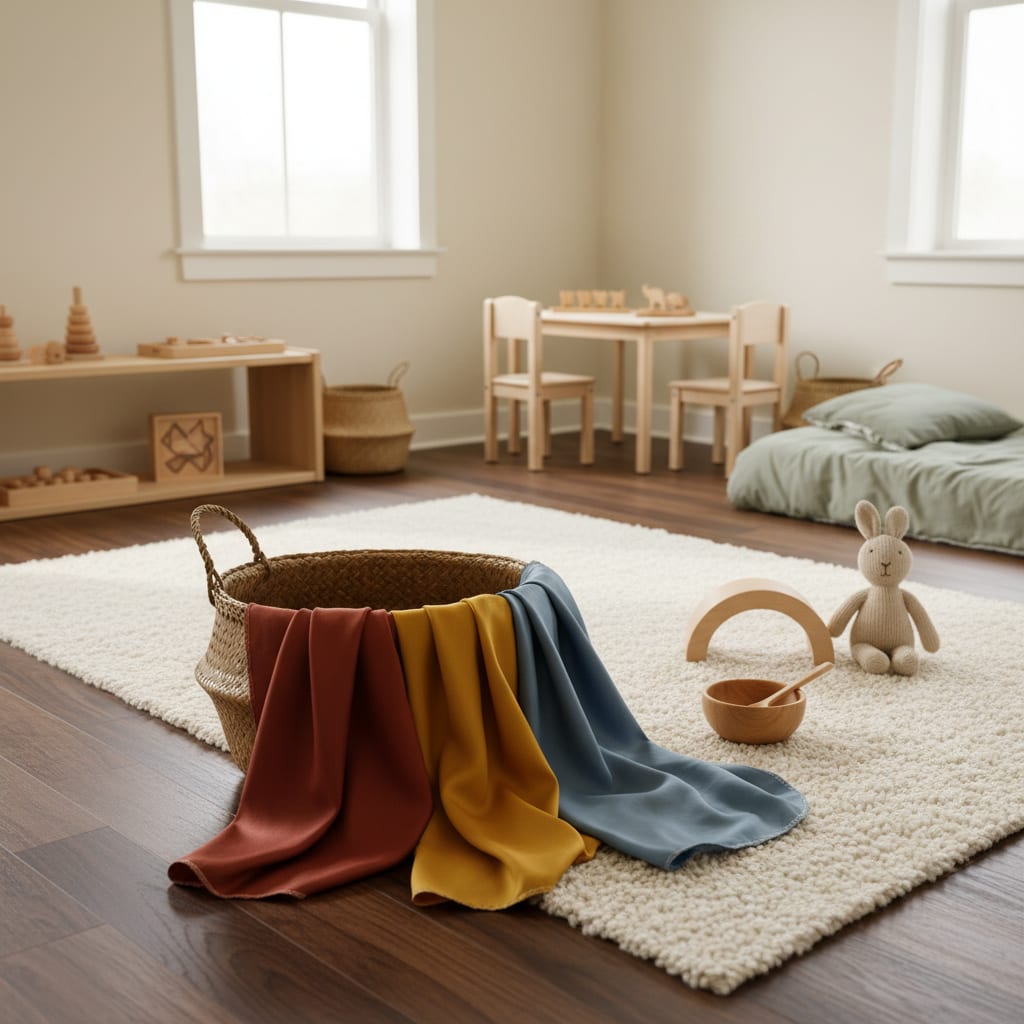
Make a saved-work spot. Pick one place where unfinished work can wait overnight: a tray on top of the shelf, a corner of the table, or one particular basket. A half-built block tower can stay where it stands if it is out of the walkway. A puzzle in progress can move onto a flat tray. A wooden tray such as the VERTORGAN acacia serving trays, sold in a pair, is a good size for a puzzle or a bead project.
Say what will happen to it. “Your tower will stay right here, and it will be here when you wake up.” Then keep that promise. If the tower gets knocked down overnight, the child learns that the promise means nothing, and the next pause will be a fight.
Morning first. Let the saved work be the first thing the child can choose in the morning. Many children go to bed more easily when they have something they are looking forward to.
One warning, made of the work itself
A warning only helps if the child can understand it. “Five more minutes” means little to a two-year-old. A warning tied to the work makes more sense to them:
- “When the train gets to the station, it’s bath time.”
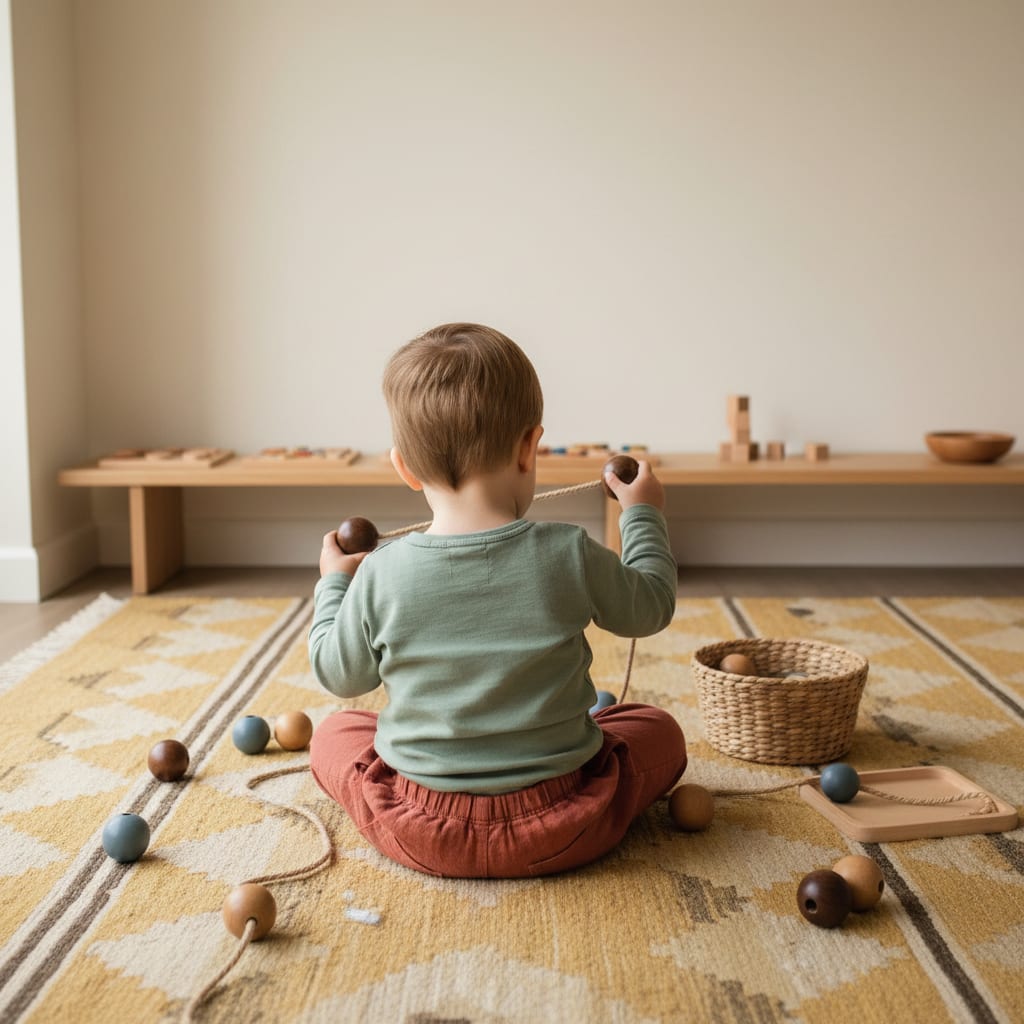
- “Two more beads, then the necklace goes on the tray.”
- “Finish this page, and we’ll put the book on your bed for tomorrow.”
Give the warning once, then follow through. A second and third warning teaches the child that the first one was a suggestion.
Let the child do the last step
The AMS work cycle ends with the child “cleaning up and returning the materials to the proper place.” At bedtime, that last step belongs to the child, not to you. Putting the beads in their pot or carrying the tray to the saved spot gives them back some control over the ending.
It also slows you down by a minute or two, so plan for it. Start the warning a little earlier than you would if you were tidying up yourself.
Then go straight into the same routine as every night. A child-run bedtime routine, where the child does each step in the same order, is laid out in Montessori bedtime routine. Moving from finishing the work to the first step of that routine is easier than moving to a vague “it’s bedtime.”
Move the deep work earlier
If bedtime is a battle every night, look at what is on offer in the last hour of the day.
- Introduce new materials in the morning. A new puzzle or a new set of blocks is the work most likely to absorb a child completely. Offer it when there is a whole morning ahead.
- Make the evening shelf familiar. Works the child already knows well, a basket of books, simple puzzles. These are easier to leave.
- Put the absorbing work in the long stretch of the day. The work cycle at home post describes what a protected stretch of play looks like in a real house. Morning is usually the best time for it.
When it happens every single night
Sometimes the problem is not the work at all. A child who is not yet tired will find a reason to keep playing. Betteroo’s article on bedtime requests starts with a schedule check before anything else, and notes that “a child put down before they are sleepy has nothing to do but call for you.” If your toddler is happily building at eight and asleep only at half past nine, the bedtime itself may need a second look before the play does.
 Deep in play at eight, wide awake at nine?
Betteroo builds a gentle, personalized sleep plan around your toddler's age, naps and routine, so bedtime lands when they are ready for it.
Take the free sleep quiz →
FAQ: ending play at bedtime
How do I get my toddler to stop playing at bedtime?
Give one warning tied to the work (“when the train gets to the station”), let the child put the work away or onto a saved-work tray themselves, and then start the same bedtime routine as every night. Promise the work will still be there in the morning, and keep that promise.
Is it bad to interrupt a child’s concentration for bedtime?
Bedtime is a transition you cannot avoid, and the AAP recommends the same bedtime every night. What helps is ending well: a clear warning, a way to save unfinished work, and letting the child do the last step.
Should I let my toddler finish the activity first?
Only if it will be finished in a minute or two. Otherwise, pause it rather than end it. A puzzle on a tray or a tower left standing can wait until morning.
What if my toddler is never tired at bedtime?
Check the schedule before changing anything else. A late or long nap, or a bedtime earlier than your child’s need for sleep, can make a toddler play on happily. If you are worried about how your child sleeps, ask your pediatrician.