A Montessori bookshelf is a low, front-facing shelf that shows a child the covers of a small number of books, placed where they can reach every one and put it back without help. The point is not the furniture style. It is that a child who can’t read yet chooses a book by its cover, so covers need to face outward, and a few books on view get more attention than forty spines in a row. Choose by function: a height your child can reach from the floor, ledges deep enough to hold board books and picture books, a stable base, and a way to fix it to the wall.
I was a classroom assistant in a Montessori toddler community, not a trained guide, so read this as practical setup advice. The Montessori reasoning is credited to Carine Robin of The Montessori Family, and the safety advice comes from the U.S. Consumer Product Safety Commission.
Why front-facing matters
In her guide to front-facing Montessori bookshelves, Carine Robin of The Montessori Family puts it plainly: “Children care more about the cover of a book than the spine.” She points out that young children “who haven’t learned how to read yet will like the colours and pictures more than the words,” and that adults do the same in a bookshop, drifting toward the display table.
An ordinary bookcase hides that information. To a two-year-old, a row of spines is a row of coloured stripes. Turn the same books around and the child can see the dog, the bus and the bath at a glance, and pick one.
What a Montessori bookshelf is not
Robin makes a second point that matters as much as the first: “a front-facing system is meant to present a small selection of books, not to store your child’s entire collection.” A front-facing shelf is a display, not storage. If you try to fit every book you own onto it, you end up with covers hidden behind other covers, which is a spine shelf with extra steps.
So you need two places for books: the low display your child chooses from, and somewhere else for the rest. A cupboard, a box in a wardrobe or an adult bookcase all work. Our post on toy storage in a Montessori home covers the same split for toys.
Choosing one: what to check
- Height. Your child should reach the top row from standing and the bottom row without lying down. Measure your child before you buy, and compare it with the listed height of the shelf.
- Ledge depth. Board books are thick and picture books are tall. Shallow ledges only take thin paperbacks, and books that keep falling out stop getting chosen. Robin notes of one model that “the two middle shelves can only accommodate small books.” Check whether yours will hold the books you actually own.
- Number of books on view. Four to eight covers is plenty for a toddler. A shelf that shows twenty does not need to be filled.
- Neutral finish. Robin’s checklist includes a shelf that is “neutral in decoration so the bookshelf doesn’t distract them from the actual books.” Plain wood or white lets the covers do the work.
- A way to anchor it. This is not optional, and it is covered below.
Anchor it to the wall
A front-facing bookshelf is exactly the kind of furniture a toddler climbs: low, with horizontal ledges that look like a ladder. The CPSC’s guidance is short: “Anchor TVs and furniture, such as bookcases and dressers, securely to the wall.” Its 2023 release reports that of 482 children killed in tip-over incidents from 2000 to 2021, 426, or 88%, were under 5.
Robin says the same of the shelf she uses at home: “You should secure it to a wall.” Use the anti-tip kit that comes with the shelf, or buy one if it doesn’t. Anchor it into a stud or with the right wall fixings, and check it again after every move.
A worked example
For a ready-made option, the Guidecraft EdQ Book Display is a natural-wood, five-tier front-facing shelf with no decoration to compete with the covers. Check its listed height against your child and plan to anchor it like any other bookcase.
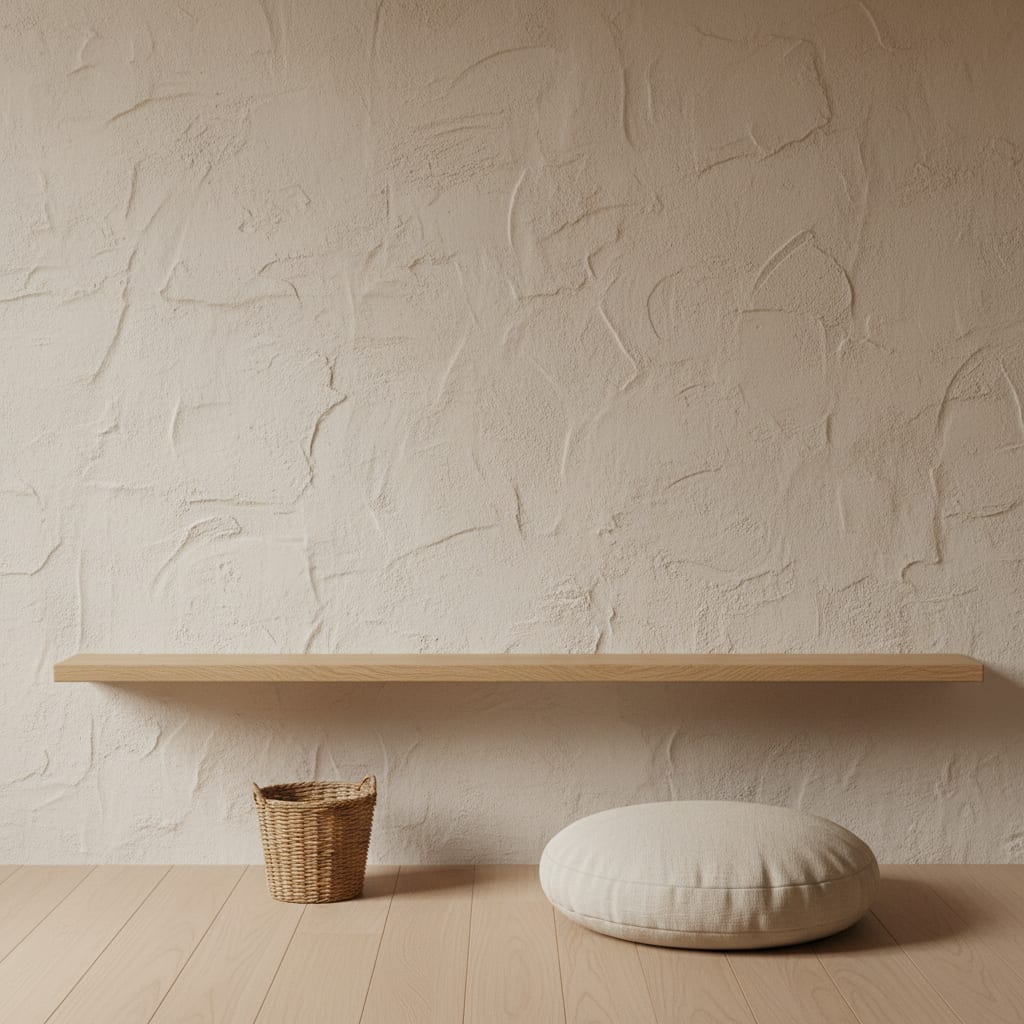
You don’t need to buy anything labelled Montessori. Robin describes using IKEA picture ledges and spice racks at home, and a single wall-mounted picture ledge at toddler height is a front-facing bookshelf in everything but name. In a small room, a basket of four books on the floor also works.
Filling it and rotating it
- Start with four to six books. Choose ones your child already likes and one or two new ones.
- Mix sizes. A board book, a picture book, a book with real photographs.
- Rotate on a rhythm. When a book hasn’t been chosen for a week or two, swap it for one from storage. Robin suggests rotating “according to your child’s interests, the seasons or a specific topic.” Our toy rotation system explains a weekly reset that works for books too.
- Keep the favourite. If your child takes the same book every night, it stays. Rotation is for the books being ignored, not the ones being loved.
- Show how to return a book. Model putting it back cover-out, once, slowly. Then let your child do it.
For what to put on the shelf, our list of Montessori books for toddlers explains the reality-first rule and sorts picks by stage.
Where to put it
Put the shelf where reading happens. For a lot of families that is the bedroom, close to the bed, with a lamp nearby. In a living room, a corner with a floor cushion or a low chair turns it into a reading spot. The shelf should face into the room, not tuck behind a door, so it is the first thing your child sees.
 One more book, then one more?
Betteroo builds a gentle, personalized sleep plan around your child's age, naps and bedtime, so story time ends in sleep, not a second round.
Take the free sleep quiz →
When the shelf is in the bedroom
A shelf next to the bed is lovely at story time and tempting at 5 a.m. If your child gets up early to read, that is a fine way to start the day for many families. If it is waking everyone, move the shelf out of reach of the bed, or keep only quiet board books on it overnight. A Montessori bedroom works best when everything within reach of the bed is something you are happy for your child to use alone.
FAQ: Montessori bookshelves
What is a Montessori bookshelf?
A low, front-facing shelf that shows a small number of books cover-out, at a height a child can reach. It lets a child who can’t read yet choose a book by its cover and put it back alone.
How many books should be on a Montessori bookshelf?
Four to eight for a toddler is plenty. Keep the rest elsewhere and rotate.
Do Montessori bookshelves need to be anchored?
Yes. The CPSC advises anchoring bookcases securely to the wall, and a low, ledged shelf is easy for a toddler to climb.
Can I make a Montessori bookshelf myself?
Yes. A wall-mounted picture ledge at toddler height, or a basket of a few books on the floor, does the same job as a bought shelf.