The Montessori Coat Flip (and a Winter Dressing Spot)
The Montessori coat flip is a way for a toddler to put on their own coat. The coat lies open on the floor, lining up, with the collar at the child’s feet. The child slides both hands into the armholes and flips the coat up over their head, and the sleeves fall onto their arms. Nicole Kavanaugh’s rhyme for it is “Tag to the toes, hands in the holes and FLIP!” Many toddlers can learn it somewhere between about 18 months and three years. Teach it at a calm time, not when you are late, and give it a fixed place by the door so the coat is always where the child expects it.
I was an assistant in a Montessori toddler community, not a certified guide. The how-to below credits the Montessori bloggers who wrote it up first, and the safety notes come from the American Academy of Pediatrics.
The flip, step by step
- Unzip or unbutton the coat fully. A coat that is half done up will not flip.
- Lay it on the floor, lining facing up. The outside of the coat touches the floor.
- Put the collar or hood at the child’s feet. The child stands facing the coat, with the top of the coat at their toes and the bottom hem furthest away. This is the “tag to the toes” part: the label inside the collar sits by their feet.
- Bend down and put both hands into the armholes, all the way in, so the hands are inside the sleeves.
- Lift the coat over the head. The arms go up, the coat swings over the head and down the back, and the sleeves slide onto the arms.
- Zip or button with help, for now. Fastening is a separate skill and usually comes later.
Kavanaugh’s post on the Montessori coat flip describes how she taught it. She laid the coat flat, pointed to the tag and said each part of the rhyme slowly, at first guiding her daughter’s hands into the holes and later letting her find them herself. She says she was reminded of the trick by How to Raise an Amazing Child the Montessori Way, Tim Seldin’s book for parents.
If the coat lands upside down, the collar was at the wrong end. Lay it out again together and try once more.
Why it works: care of self
The American Montessori Society’s definition of practical life includes “self-care and personal hygiene” next to housework, and says these activities “help toddlers and preschool-age children learn to work independently, develop concentration.” Putting on a coat is one of the first self-care jobs a toddler can finish alone from start to end.
It also matches what toddlers are already working on. The CDC’s 30-month milestone checklist includes “Takes some clothes off by himself, like loose pants or an open jacket,” and by 3 years it includes “Puts on some clothes by himself, like loose pants or a jacket.” The CDC counts a milestone as something most children (75% or more) can do by that age. The flip gives a child a way to do the putting-on part before their hands can manage a normal coat.
When it does not work
The flip is not instant, and the failures are ordinary.
The child refuses for weeks. Kavanaugh started showing her daughter at about 15 months. After an early burst of interest, her daughter said no every day for two months, and Kavanaugh “respected that and helped.” Then, at 19 months, she said yes. Having watched her mother and older brother flip their coats every day, she learned it within about a week. Keep doing it yourself, keep offering, and do not turn it into a test.
It falls apart when you are in a hurry. In a later post on preparing for winter, Kavanaugh gives the most useful advice for any self-dressing skill: offer the practice “outside of the stressful moments. When the pressure is off.” Practise the flip on a slow afternoon. On a school morning, help if you need to and say nothing about it.
The coat lands on a wet, dirty floor. Do the flip on a mat or a clean patch of floor by the door, not on the muddy entrance. A bench or a small rug in the dressing spot gives the coat a clean place to lie.
A thick snowsuit will not flip. Very puffy coats and all-in-one suits are hard to swing over the head. Use the flip for everyday coats and help with the bulky ones.
Setting up a winter dressing spot
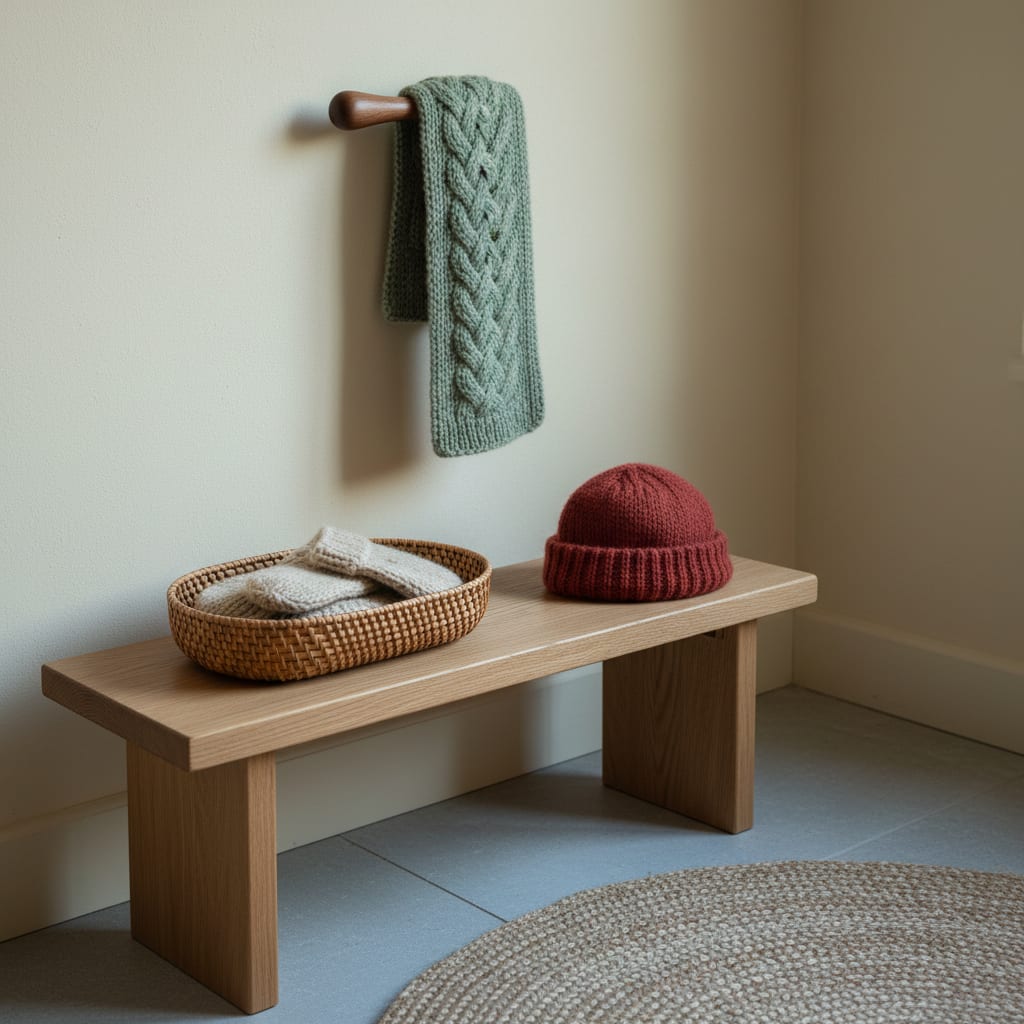
A child can dress themselves only if their things are where they can reach them. The AMS’s guide for 2-year-olds lists “a dressing area with mirror, hooks, and accessible clothing” among its environment tips. By the front door, that means:
- A hook at the child’s height. One hook, their coat, every day. Adhesive hooks such as Command Large Utility Hooks can go at toddler height and move up as the child grows.
- A low bench or stool to sit on for boots.
- A boot tray for wet boots, such as the Stalwart all-weather boot tray, so the child can put boots away without being told to wipe the floor.
- A small basket for a hat and mittens. Mittens come before gloves, because finding five finger holes is a much harder job.
Kavanaugh’s winter corner was a low shelf by the door with baskets of her daughter’s “REAL winter gear,” placed “exactly where she will be getting dressed and undressed all season.” That is the key: the practice happens where the real dressing happens.
The AAP’s winter safety tips say “wearing several thin layers will help keep kids warm and dry,” and call insulated boots, mittens or gloves, and a hat “essential.” They add that children should change out of wet clothes right away, which is another self-care job a dressing spot makes easy.
For the order in which to hand over other jobs, practical life activities by age goes stage by stage. If you are setting up your first Montessori corner of any kind, Montessori at home: where to actually start covers the access changes that pay off first.
The coat and the car seat
The flip has one more use. The AAP’s winter car seat safety tips say that “bulky clothing, including winter coats and snowsuits, should not be worn underneath the harness of a car seat,” because in a crash “fluffy padding in a coat immediately flattens out.” The page suggests taking the coat off before buckling and using “a coat or blanket over the straps.”
A child who can flip a coat on and off makes that routine quick: coat off at the car door, buckle up, coat over the straps, and flip it back on at the other end.
Where it leads
The flip is usually the first dressing job a toddler finishes alone, and it often leads to others: boots, then hat, then hanging the coat back on its hook. Montessori chores by age shows how those small self-care jobs grow into real family contributions.
 Out the door on time, but not asleep on time?
Dark winter mornings and the clock change can unsettle a toddler's sleep. Betteroo builds a gentle, personalized sleep plan around your child's age and routine.
Take the free sleep quiz →
FAQ: the Montessori coat flip
What is the Montessori coat flip?
A way for a toddler to put on a coat alone. The coat lies open on the floor, lining up, with the collar at the child’s feet. The child puts both hands in the armholes and flips the coat over their head so the sleeves slide on.
What age can a toddler do the coat flip?
Many children learn it somewhere between about 18 months and three years. The CDC lists putting on some clothes, like a jacket, among things most children do by three. Some learn earlier, some later.
Why does my toddler put the coat on upside down?
The collar was at the wrong end. The top of the coat, with the tag, must be at the child’s toes and the bottom hem furthest away.
Can my child wear a winter coat in the car seat?
The AAP advises against bulky coats and snowsuits under a car seat harness. Take the coat off before buckling and lay it or a blanket over the straps.