St Nicholas Eve With Kids: A Montessori Shoe-Polishing Night
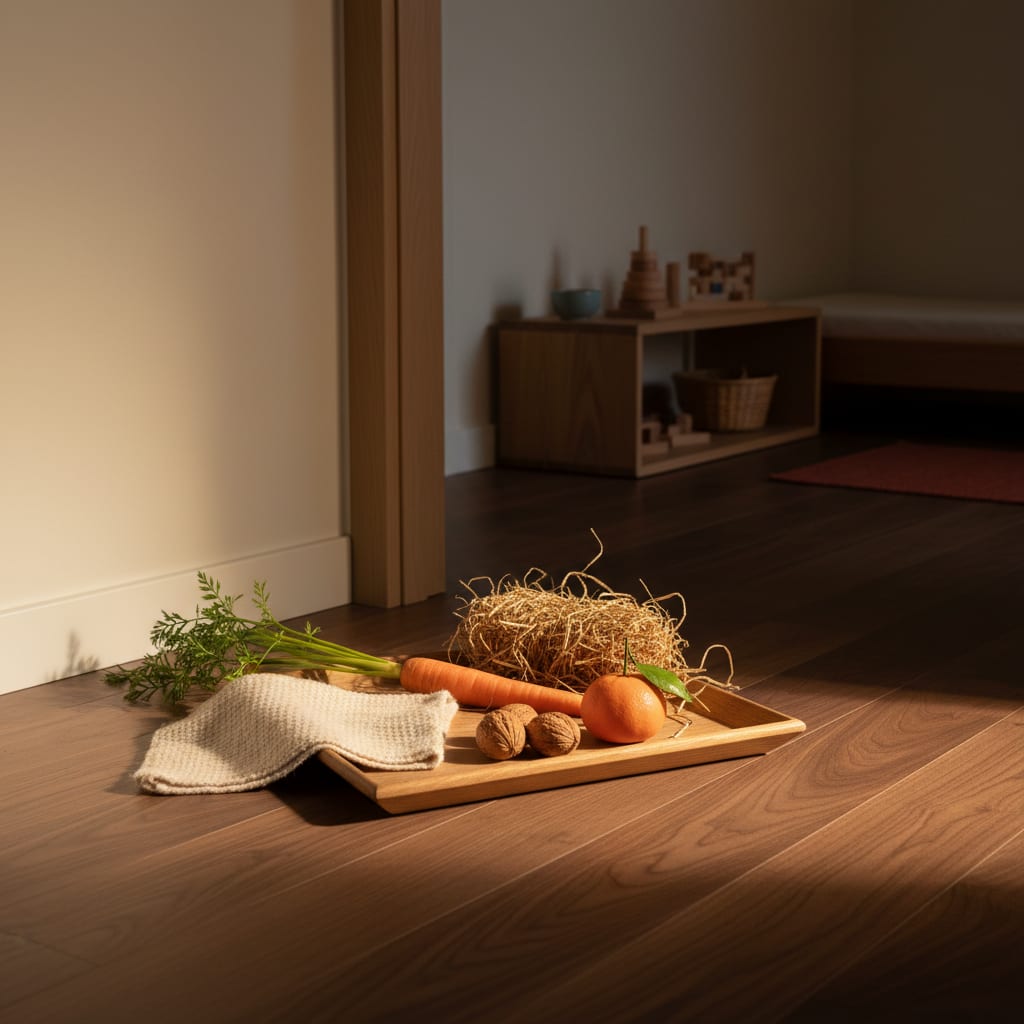
To mark St Nicholas Eve with young children the Montessori way, give the evening a real job and a normal bedtime. Tell the true story of Nicholas, a fourth-century bishop. In the afternoon, let your child brush or polish their own shoes. After dinner they set the clean shoes by the door, with a carrot or a twist of hay “for the horse.” Then run the usual bedtime routine, at the usual time. In 2026, December 5 falls on a Saturday. Anything that appears in the shoes waits until morning, after breakfast.
I’m not a trained Montessori guide. The tradition notes come from the St. Nicholas Center, the shoe-care steps from the Montessori Foundation, and the safety and sleep points from the American Academy of Pediatrics.
Who Nicholas was, told plainly
Montessori asks for reality before fantasy with the under-sixes, and there was a real man behind this tradition. The St. Nicholas Center’s biography of Nicholas says he was born in Patara, on what is now the southern coast of Turkey, became Bishop of Myra, and “became known throughout the land for his generosity to those in need, his love for children, and his concern for sailors and ships.” He died on December 6, AD 343, which became his feast day.
For a two-year-old, that is enough: “A long time ago, a kind man named Nicholas gave presents in secret.” A four- or five-year-old can find Turkey on a globe and hear how he gave quietly, without being thanked. If you want a book, Demi’s The Legend of Saint Nicholas is a picture-book telling of his life. Read it as a story about a real person, and say which parts are legend.
Why shoes, and why the 5th? It depends where you are
Customs vary a lot from country to country. The St. Nicholas Center’s FAQ page explains the date: church feast days “begin on the eve of the day,” so St. Nicholas Day is December 6 and the evening before is December 5. Its how-to-celebrate page gives December 19 for churches that keep the Julian calendar.
A few of the regional versions it records:
- Germany: its Germany page says that in Catholic areas such as Bavaria, “children clean and polish their shoes or boots in preparation for the saint’s visit.” On the evening of the 5th, children put out their boots, often with a letter and carrots for his horse or donkey.
- The Netherlands: its Netherlands page describes children setting out a shoe several times in the weeks before, with a drawing, a carrot or hay, “and maybe a saucer of water, for the horse.” The big family evening of presents is now December 5, called pakjesavond.
- The Center’s own suggestion for families: its celebrate-at-home page suggests children fill their shoes with carrot or hay, place them “outside bedroom doors or on the hearth,” and find a small treat by morning on December 6. It also suggests asking each child to do a kindly “Nicholas deed” for someone else.
Take what fits your family, faith and culture.
The practical-life job: shoes first
Getting the shoes ready is a real job with a real reason, which is what Montessori practical life is about. Our practical life activities by age list puts polishing in the three-to-four range.
Brushing, from about 16 months. The Montessori Foundation’s Making Montessori: Shoe Cleaning, by Sarah Moudry, gives this one for “16 months and up.” You need a tray with a shoe-shaped outline and one brush in a small dish. The adult shows it slowly: one hand inside the shoe, the other brushing, then turning the shoe “side to side so your child can see that you are looking for dirt.” Then the child has a turn, and can go and find other shoes in the house that need brushing.
Polishing, from about 3½. A lesson write-up on Sugar, Spice & Glitter, Polishing Shoes by Beth of A Montessori Lexicon, gives the full version for “3 1/2 +”. Its tray holds a hard brush, a cloth, “nontoxic shoe conditioner/polish,” an applicator, a soft brush and a buffing cloth, laid out left to right in the order you use them. The child brushes off the dirt, rubs on polish in small circles, waits a moment, brushes, then buffs. Clean-up is part of the work: lid on, cloths away, tray back on the shelf.
At home:
- Polish the child’s own shoes, as that lesson recommends. Rain boots and sneakers get the brush only.
- One good brush is enough. A small natural-bristle brush like the Cobbler’s Choice horsehair shoe brush brushes and buffs.
- The polish tin lives on an adult shelf. Choose one labelled nontoxic and give out a fingertip at a time.
- Do it in the afternoon, so the evening stays calm.
If you’re using our Montessori advent calendar, its “polish the shoes” day can be December 5.
Shoes by the door: setting them out
After dinner, the child carries their own shoes to the spot and sets them side by side, with the carrot or hay if that’s part of your version.
Plan what ends up in the shoe. The St. Nicholas Center’s shoe-treats page lists gold chocolate coins, a candy crozier and a clementine as traditional treats, and its customs pages add nuts and small gifts. The AAP’s choking prevention page lists “hard, gooey, or sticky candy,” “nuts and seeds” and raw carrot sticks among the foods to keep from children “until 4 years of age or older.” It also lists “toys with small parts.” So for under-fours, use a clementine and a book or one larger wooden toy. The carrot is the horse’s, and it “disappears” overnight.
The evening: a calm, usual bedtime
The anticipation is the hard part: a child may want to check the shoes more than once. Two things help:
- Keep the routine and the clock. The AAP’s Brush, Book, Bed page says a predictable nighttime routine “can help your child understand and learn to expect what comes next” and advises regular bedtimes: “stick to them.” The same page says “the last thing to touch the teeth before bed is the toothbrush,” which is another reason the chocolate waits for morning. Betteroo’s December activities guide says to keep late nights for one or two big events. A shoe left by the door is not one of them. If your child runs their own steps, as in our Montessori bedtime routine, let them run them tonight too.
- Answer the getting-up the same way every time. One short line (“The shoes are waiting, and so is your bed”), a walk back, and a tuck-in. Betteroo’s guide to keeping toddlers in bed calls for a calm, identical return every time. Put the shoes somewhere the child won’t pass on the way to the bathroom.
In the morning, the treats wait until after breakfast and the shoes go back on the shelf. For a quieter evening later in the month, see our winter solstice lantern walk.
 Too excited to sleep, every December night?
Betteroo builds a gentle, personalized sleep plan around your child's age, naps and wake-up time, so the busy weeks don't undo good nights.
Take the free sleep quiz →
FAQ: St Nicholas Eve with young children
Is St Nicholas Day December 5th or 6th?
St. Nicholas Day is December 6. The St. Nicholas Center explains that feast days begin on the eve, so shoes go out on the evening of December 5. Churches on the Julian calendar keep it on December 19.
What do children put in their shoes for St Nicholas?
In many traditions, a carrot or hay for the saint’s horse or donkey, and sometimes a drawing or a letter. By morning the shoes hold small treats, often fruit, chocolate coins or a little gift.
Is shoe polishing a Montessori activity?
Yes, it is a classic care-of-self job. The Montessori Foundation offers brushing from 16 months; polishing with a nontoxic polish usually comes at about three and a half.
Should bedtime change on St Nicholas Eve?
Keep it at the usual time, with the usual routine, and save the treats for after breakfast. If you have concerns about how your child sleeps, ask your pediatrician.